[Disclosure] This article contains affiliate links. We may earn a commission at no extra cost to you.
Planning solo female travel in Japan for 2026? You've already read the glossy brochures promising unparalleled safety. While Japan is undeniably one of the world's safest nations, particularly for women, a "safe" country doesn't mean zero risks or that every experience is universally comfortable. This guide cuts through the tourist-board narrative to give you a realistic, specific, and actionable breakdown of safety considerations, city-by-city insights, and practical strategies for solo female travelers in 2026. You'll learn how to navigate common scenarios, understand nuanced cultural expectations, and identify specific areas that demand a little extra awareness, ensuring your trip is not just safe, but genuinely empowering and unforgettable.
What You'll Get From This Guide
- Granular, city-specific safety ratings for Tokyo, Kyoto, Osaka, and regional areas.
- Real 2026 costs for common scenarios (transport, dining, accommodation) in ¥ and USD.
- "Local tips" that challenge common tourist assumptions about Japan.
- Practical advice on navigating transportation, accommodation, and nightlife as a solo woman.
- Identification of common tourist pitfalls and what areas to approach with caution.
- Direct answers to your most pressing solo female travel FAQs for Japan in 2026.
Understanding Japan's Baseline Safety for Solo Females in 2026
Japan's reputation for safety is well-earned. Violent crime rates are astonishingly low, and petty theft is rare. However, "safe" doesn't mean "risk-free" or "free from discomfort." For solo female travelers, the primary concerns aren't violent crime, but rather nuisances, cultural misunderstandings, and the occasional opportunistic individual.
The Myth of Absolute Safety
One common misconception is that Japan is a utopian crime-free zone. While lost wallets are famously returned and public spaces are meticulously clean, incidents of groping (chikan) on crowded trains, particularly during rush hour, still occur. Similarly, aggressive touting in certain entertainment districts can be intimidating. Japan is incredibly safe, but maintaining situational awareness, especially after dark or in very crowded areas, is still paramount. It's a low-risk environment, not a no-risk one.
Emergency Services & Support
In 2026, emergency services remain efficient. For police, dial 110. For ambulance/fire, dial 119. Most major cities have English-speaking operators available. The Japan National Tourism Organization (JNTO) also operates a Japan Visitor Hotline (050-3816-2787) for general travel inquiries and assistance, including emergencies, available 24/7. Always have a fully charged phone and a portable charger (a good quality 10,000mAh Anker charger costs around ¥3,800 / ~$25 USD on Amazon Japan) when venturing out.
Tokyo: Navigating the Metropolis Safely
Tokyo is a bustling, expansive city, and generally extremely safe. Your biggest challenges will be crowds and navigating its intricate public transport.
Central Wards: Daytime & Evening Safety
Shibuya, Shinjuku, Ginza, Marunouchi: These areas are incredibly safe day and night. Well-lit, constantly populated, and with a strong police presence, you can generally feel comfortable walking alone even past midnight. The Shibuya Scramble Crossing, for example, is always full of people, making it safe though overwhelming. Shopping districts like Ginza are impeccably maintained.
Shinjuku (Kabukicho Area) Specifics: This entertainment district, while vibrant, is home to hostess clubs, bars, and some adult-oriented businesses. While generally safe, solo women might encounter persistent touts (particularly around Shinjuku-sanchome or the Golden Gai alleys, after 9 PM). A polite but firm "結構です (Kekkou desu)" - "No, thank you" – is usually sufficient. Avoid making eye contact if you feel uncomfortable. Walking through Kabukicho from Shinjuku Station's East Exit is unavoidable for some destinations; stick to the main, well-lit streets.
Public Transport: Rush Hour & Late Night
Tokyo's train and subway system is world-class.
Rush Hour (7:30-9:30 AM & 5:00-7:00 PM): Trains become extremely crowded. This is where chikan (groping) incidents can occasionally occur. Many train lines now offer "Women-Only Cars" during peak hours. These are clearly marked with pink signs on the platform and train doors (e.g., JR Saikyo Line, Tokyo Metro Tozai Line). Utilize them if you're traveling during these times.
Late Night (after 11 PM): While trains run until around 1 AM, they become less crowded, and station staff presence decreases. Always be aware of your surroundings. Taxis are plentiful but expensive (e.g., a 15-minute ride from Shibuya to Shinjuku could cost ¥2,500-¥3,500 / ~$17-23 USD). Consider the Book Shibuya Sky / Tokyo Disneyland / Universal Studios Japan on Klook to experience the city views while it's still busy.
Kyoto: Culture, Calm, and Considerations
Kyoto generally feels calmer and more traditional than Tokyo, and its safety reflects this. It's an excellent city for solo exploration.
Gion & Pontocho: Evening Ambiance
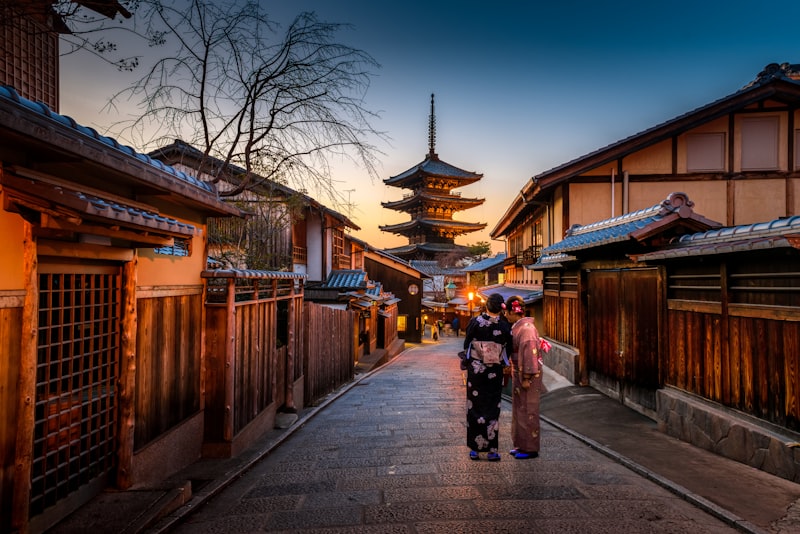
Gion: As the historic geisha district, Gion is enchanting in the evenings. Walking around Shirakawa Canal or Hanami-koji Street is generally very safe and pleasant, even late at night. The main concern here is respecting privacy if you encounter geiko or maiko (apprentice geisha) – do not chase or harass them for photos.
Pontocho Alley: This narrow alley, parallel to the Kamo River, is packed with restaurants and bars. It's busy and well-lit. While you might be invited into a restaurant, touting is much less aggressive than in Tokyo. Stick to established eateries; some smaller bars might cater to a local, male-dominated clientele and feel less welcoming to solo women.
Temples & Nature Walks
Exploring Kyoto's countless temples and shrines (e.g., Fushimi Inari Taisha, Kiyomizu-dera) is incredibly safe. Even the popular Fushimi Inari hike, which can extend into forested areas, is usually well-populated. However, if you venture onto less-traveled paths or into the deeper parts of Arashiyama Bamboo Grove at dusk, awareness is key as these areas become isolated. Always inform someone of your plans if you're going off the main tourist routes.
Osaka: Urban Energy and Nightlife Nuances
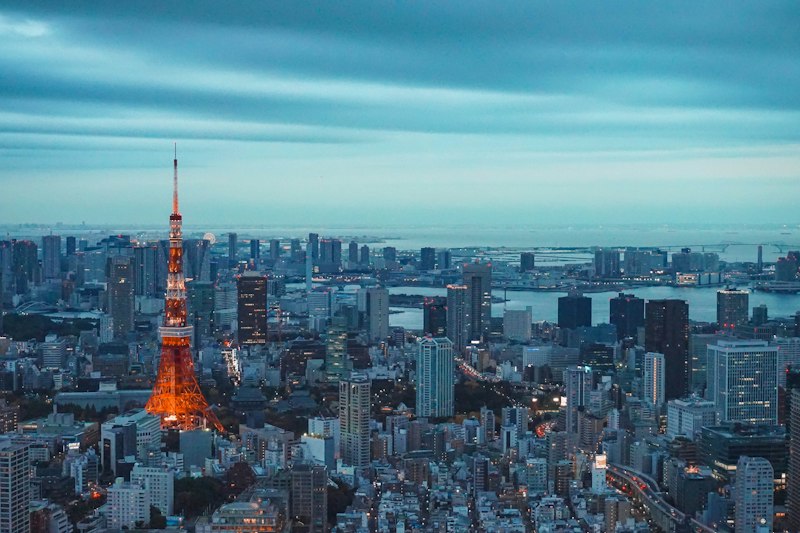
Osaka offers a different vibe—more boisterous, direct, and famous for its food and nightlife. It's also very safe but has its own specific considerations.
Dotonbori & Namba: Entertainment Hubs
Dotonbori: Osaka's iconic entertainment district is always buzzing. It's lively and well-lit, making it generally safe for solo women at night. The sheer number of people (even at 2 AM) provides a sense of security. The biggest "risk" is probably getting lost in the sensory overload or overspending on street food!
Namba (especially around Nanba Hips or Ura-Namba): Similar to Dotonbori, Namba is a major hub. The area around Namba Parks and the station is highly developed and safe. Ura-Namba, with its warren of smaller bars and eateries, is popular with locals. While generally welcoming, some tiny bars might not have English menus or be accustomed to solo female foreign travelers. Use discretion if a place feels uncomfortable.
Shinsekai & Tennoji: Historic Charm with a Twist
Shinsekai: Home to the Tsutenkaku Tower and a retro atmosphere, Shinsekai has a reputation for being a bit rougher around the edges than other major tourist areas, but this is largely exaggerated for 2026. It's perfectly safe during the day and early evening for exploring. Late at night, like any entertainment district, it can attract a different crowd, but violent crime is still extremely rare. Focus on enjoying the kushikatsu and nostalgic charm.
Tennoji: Once considered less desirable, Tennoji has undergone significant redevelopment around Abeno Harukas. The area is now very modern, clean, and safe, boasting department stores and restaurants.
Beyond the Big Cities: Regional Safety Spotlight
Venturing outside the major hubs often means even lower crime rates and a more relaxed atmosphere.
Nara: Deer, Temples, and Tranquility
Nara is exceptionally safe. The main attractions—Todai-ji Temple, Kofuku-ji Temple, and Nara Park with its famous deer—are within easy walking distance of Nara Station (JR and Kintetsu). The town is quiet after dark, and there's virtually no risk. Be mindful that the deer can be quite persistent for crackers (around ¥200 / ~$1.30 USD a packet) but are harmless.
Hiroshima: History and Resilience
Hiroshima is a modern, peaceful city. The Peace Memorial Park and Museum are solemn, respectful spaces. The city center (around Hondori shopping street) is vibrant and safe day and night. Even the ferry ride to Miyajima Island (covered by JR Pass) is incredibly safe. Hiroshima is a welcoming city where solo female travelers can feel completely at ease.
General Regional Travel Tip:
While incredibly safe, English signage and English speakers might be less prevalent in very rural areas. Having a good translation app (e.g., Google Translate, DeepL) and offline maps downloaded is highly recommended. Always carry some cash, as smaller, independent shops or ryokans might not accept credit cards (a typical ramen shop in a regional town might cost ¥950 / ~$6.30 USD, cash only).
Practical Safety Strategies for Solo Female Travelers in Japan 2026
Accommodation Choices & Considerations
Choosing your accommodation can significantly impact your comfort.
- Hostels: Many hostels now offer "female-only" dorms. These are a great option for budget travelers (a bed in a female-only dorm in Tokyo in 2026 averages ¥4,500-¥6,500 / ~$30-43 USD). Look for reputable chains like J-Hoppers or Grids Hostel.
- Business Hotels: Excellent value, privacy, and security. Chains like Toyoko Inn, APA Hotel, and Dormy Inn are reliable. A single room in Tokyo or Kyoto typically costs ¥10,000-¥15,000 / ~$67-100 USD in 2026. These hotels often have key card access to floors and well-staffed receptions.
- Capsule Hotels: Many now cater to women with dedicated female-only floors and enhanced amenities (e.g., Nine Hours, The Millennials). Expect ¥5,000-¥8,000 / ~$33-53 USD. They offer a unique, minimalist experience. Search best hotels in Japan on Booking.com for a wide range of options.
Solo Female Accommodation Options & Costs 2026
| Accommodation Type | Key Features | Avg. Cost (¥) | Avg. Cost (USD) | Safety/Comfort Level for SFT* |
|---|---|---|---|---|
| Female-Only Dorm (Hostel) | Budget-friendly, social, shared facilities, privacy curtain | ¥4,500 - ¥6,500 | ~$30 - $43 | Good (choose reputable places with lockers) |
| Capsule Hotel (Female-Only Floor) | Unique experience, privacy pod, shared lounge/bath | ¥5,000 - ¥8,000 | ~$33 - $53 | Very Good (dedicated space, typically modern) |
| Business Hotel (Single Room) | Private room & bath, quiet, reliable, chain security | ¥10,000 - ¥15,000 | ~$67 - $100 | Excellent (standard privacy, amenities) |
| Ryokan (Traditional Inn) | Cultural experience, often includes meals, private room | ¥15,000 - ¥30,000+ | ~$100 - $200+ | Excellent (high service, private, serene) |
*SFT: Solo Female Traveler
Navigating Nightlife Safely
- Bars vs. Clubs: Most izakayas (Japanese pubs) are welcoming. Stand-up bars (tachinomiya) can be a fun, local experience. Clubs, especially in Shibuya/Roppongi, can have touts trying to lure you into specific (sometimes overpriced or shady) venues. Stick to well-reviewed establishments.
- Drinks: It goes without saying, but always keep an eye on your drink. While drink spiking is exceedingly rare in Japan, it's a universal best practice.
- Know Your Last Train: Public transport stops around 1 AM. Missing the last train means an expensive taxi or waiting until 5 AM for the first train. Always check schedules on Google Maps or apps like Japan Transit Planner (Jorudan) and plan your exit.
- Local Tip: Avoid Roppongi's "Friendship" Bars: Unlike the open, friendly vibe of a genuine izakaya, Roppongi, particularly after 10 PM, has a reputation for "gaijin bars" (foreigner bars) where unsuspecting tourists, both male and female, can be scammed into paying exorbitant prices for drinks. These are often small, dark, and located on upper floors of buildings. Stick to established, well-lit venues or specific, well-reviewed jazz/cocktail bars. If someone overly friendly approaches you on the street offering a "great deal," politely decline and keep walking.
City Safety Comparison for Solo Female Travelers 2026
| Feature / City | Tokyo | Kyoto | Osaka | Nara |
|---|---|---|---|---|
| Overall Safety Rating | 9.5/10 (Extremely safe, minor nuisances) | 9.8/10 (Nearly perfect, very calm) | 9.3/10 (Very safe, lively nightlife) | 9.9/10 (Extremely peaceful, idyllic) |
| Nightlife Safety | High, but some areas (Kabukicho, Roppongi) need awareness of touts. Women-only train cars helpful. | Very High, generally quiet. Pontocho is safe. | High, Dotonbori lively and safe, some specific bars in Ura-Namba might feel less welcoming. | Very High, limited nightlife. |
| Public Transport | Excellent, extensive. Rush hour can have chikan, use women-only cars. |
Excellent, less crowded than Tokyo. | Excellent, busy but usually manageable. | Excellent, compact and walkable. |
| Solo Dining Comfort | Very comfortable, many solo-friendly restaurants (e.g., Ichiran Ramen). | Very comfortable, many small eateries. | Very comfortable, casual dining is common. | Very comfortable. |
| English Speaker Availability | High in tourist areas, medium elsewhere. | High in tourist areas, lower elsewhere. | High in tourist areas, lower elsewhere. | Lower overall, but easy to navigate. |
| Areas for Extra Awareness | Kabukicho (Shinjuku), Roppongi (late night) | Secluded temple paths at dusk | Some smaller bars in Ura-Namba (late night) | None significant |
Frequently Asked Questions
Q: Is it truly safe to walk alone at night in Japan as a solo woman in 2026?
A: Yes, generally it is exceptionally safe to walk alone at night in most areas of Japan as a solo woman in 2026. The vast majority of cities, including major hubs like Tokyo, Kyoto, and Osaka, have extremely low rates of violent crime, and public spaces are typically well-lit and well-maintained. Unlike many Western cities, you'll rarely encounter aggressive panhandling or feel overtly threatened in residential or even many entertainment districts. However, "safe" doesn't mean "naive." In specific areas, like Shinjuku's Kabukicho or parts of Roppongi in Tokyo, you might encounter persistent touts for bars or clubs. A firm "結構です (Kekkou desu)" (No, thank you) and continuing to walk without engaging is usually sufficient. On crowded trains during rush hour, especially on lines like the JR Saikyo Line or Tokyo Metro Tozai Line, be aware of chikan (groping) and utilize the clearly marked women-only cars if available. Outside of these very specific scenarios, you can expect a high level of personal safety and comfort, far exceeding what you might find in many other countries. It's more about being street-smart and aware, rather than fearing for your physical safety.
Q: How much should a solo female traveler budget for daily expenses in Japan in 2026?
A: For a solo female traveler in Japan in 2026, a realistic daily budget, excluding major transport passes like the JR Pass and long-distance travel, would be approximately ¥12,000 - ¥20,000 / ~$80 - $133 USD. This accounts for a comfortable but not extravagant experience. Here's a breakdown:
- Accommodation: A bed in a female-only hostel dorm averages ¥4,500-¥6,500 / ~$30-43 USD. A private single room in a clean business hotel (like Toyoko Inn or APA Hotel) would be ¥10,000-¥15,000 / ~$67-100 USD.
- Food: Expect to spend ¥3,000-¥5,000 / ~$20-33 USD. A convenience store breakfast (onigiri, coffee) is around ¥600 / ~$4 USD. Lunch at a ramen shop like Ichiran costs about ¥1,200 / ~$8 USD. Dinner at a mid-range izakaya with a drink could be ¥2,500-¥4,000 / ~$17-27 USD.
- Local Transport: Daily city travel (subway/bus) typically costs ¥800-¥1,500 / ~$5-10 USD, easily managed with a Suica or Pasmo digital card.
- Attractions/Activities: A museum entry might be ¥1,000-¥2,000 / ~$7-13 USD. Popular attractions like Shibuya Sky are ¥2,200 / ~$15 USD if booked online. Budget around ¥2,000-¥4,000 / ~$13-27 USD depending on your itinerary.
- Miscellaneous/Buffer: Always good to have ¥1,000-¥2,000 / ~$7-13 USD for snacks, souvenirs, or an emergency. This budget allows for good food, comfortable lodging, and engaging activities without constantly worrying about finances.
Q: What's the best way to handle communication barriers if I don't speak Japanese?
A: While English proficiency is increasing in Japan, especially in major tourist areas and younger generations, it's not universally spoken. The best way to handle communication barriers in 2026 is a combination of preparation, technology, and polite gestures.
- Translation Apps: Download Google Translate or DeepL to your phone and download the offline Japanese language packs. This allows for real-time text and speech translation even without Wi-Fi. Google Translate's camera function is excellent for menus or signs.
- Phrasebook Essentials: Learn a few key phrases like "Sumimasen" (Excuse me/Sorry), "Arigato gozaimasu" (Thank you), "Konnnichiwa" (Hello), "Kekkou desu" (No, thank you), "Eigo wakarimasu ka?" (Do you understand English?). Even a small effort goes a long way.
- Visual Aids: Pointing, showing photos on your phone (e.g., of a dish you want to order, or your hotel entrance), or having your destination written down in Japanese characters (ask your hotel to write it for you) are incredibly effective, particularly for directions.
- Patience and Politeness: Japanese culture highly values politeness. Be patient, smile, and bow slightly. Most Japanese people are genuinely eager to help, even if they struggle with English. Frustration will not help your cause.
- Wi-Fi/eSIM: Ensure you have reliable internet access (e.g., a Japan eSIM, pocket Wi-Fi, or international roaming) for using online maps and translation tools.
Q: Are there any specific areas or situations in Japan that solo female travelers should actively avoid?
A: While Japan is overwhelmingly safe, there are a few specific areas or situations where solo female travelers should exercise increased caution or avoid altogether, particularly after dark:
- Roppongi's "Gaijin Bars" (late night): In Tokyo, especially in the entertainment district of Roppongi, particularly after 10 PM, be wary of small, often dimly lit bars or clubs that aggressively tout for foreign customers. There have been consistent reports over the years of patrons, both male and female, being overcharged dramatically for drinks, sometimes leading to bills in the tens of thousands of yen for a few simple cocktails. Stick to reputable, well-known bars, hotel bars, or venues with clear pricing.
- Kabukicho (Shinjuku) late night touts: While Kabukicho itself is not inherently dangerous, the aggressive touts trying to usher people into hostess clubs, massage parlors, or other adult establishments can be intimidating for a solo woman. They often target foreigners. Politely but firmly decline and continue walking without engaging.
- Secluded areas at night: This is a universal travel rule. While Japan's parks and residential areas are generally safe, any isolated park, quiet street, or wooded path (e.g., deeper parts of Inari Shrine hike or Arashiyama Bamboo Grove at dusk) after dark will naturally be less safe simply due to isolation. Stick to well-lit, populated routes.
- Train
chikan: As mentioned, avoid extremely crowded rush hour trains if possible, or utilize women-only cars if traveling on lines where they are offered. While not an "area" to avoid, it's a specific situation to be aware of. Generally, Japan doesn't have "no-go zones" like some other countries, but exercising common sense and situational awareness, especially in entertainment districts or isolated spots after dark, is always wise.
Q: What's one local tip for solo female travelers that tourist guides often miss?
A: Tourist guides often emphasize Japan's spotless reputation for safety, which is largely true, but they sometimes miss a nuanced cultural aspect that can affect solo female comfort: the "gaze" or unintentional attention you might receive, particularly in more rural areas or traditional settings.
Local Tip: Don't be surprised or alarmed if you experience prolonged staring, especially outside of major metropolitan centers like Tokyo or Osaka. This isn't usually malicious or threatening. For many Japanese, particularly older generations or those in less-internationalized regions, a foreign solo female traveler (especially if visibly different in appearance) is a genuine novelty. The stare often comes from curiosity, not hostility or judgment. While it can feel uncomfortable or even a bit alienating if you're not used to it, it's rarely a precursor to negative interaction.
Many tourist guides will only talk about how friendly everyone is, which is also true, but they don't prepare you for this kind of passive observation. Instead of reacting with suspicion or discomfort, try to acknowledge it with a small, polite smile (if you feel comfortable) and then go about your business. It's simply a part of the cultural landscape where overt expression can be reserved, and visual observation is a common form of interaction with the unfamiliar. It's not a safety issue, but it's an aspect of solo travel in Japan that can be unexpectedly draining if you're not prepared for it.
Q: How reliable are Google Maps and other navigation apps for public transport in 2026?
A: For 2026, Google Maps remains an incredibly reliable and indispensable tool for navigating public transport in Japan, especially in major cities. It provides accurate train and bus routes, estimated travel times, platform numbers, and even pricing in real-time. The integration of live departure and arrival times for most major train lines is excellent.
However, there are a few specific nuances that solo female travelers should be aware of, which major guides often gloss over:
- Last Train Times on Weekends/Holidays: While Google Maps is usually precise, on some regional lines or during specific holiday periods, the last train times might vary slightly or be less frequent than on weekdays. If your plan involves catching the absolute last train, especially if you're connecting to another line, always double-check with a dedicated transit app like "Japan Transit Planner" (Jorudan) or "Navitime Japan Travel" as a secondary verification, or even confirm with station staff. Missing the last train can leave you stranded in an unfamiliar area.
- Bus Route Specificity: For intricate bus routes in smaller cities or residential areas, Google Maps is good, but sometimes local bus stop names can be confusing. Taking a screenshot of your destination in Japanese (e.g., from your hotel's website) to show the driver or other passengers can be very helpful.
- Underground Complexity: Major stations like Shinjuku, Shibuya, or Umeda (Osaka) have incredibly complex underground labyrinths. While Google Maps gives directions, it can sometimes struggle with the multi-level aspect and numerous exits. Pay close attention to station signage (which usually has English) and the "floor number" when navigating exits. For example, knowing you need "Shinjuku Station South Exit, B1F" can save a lot of time and confusion.
Overall, trust Google Maps for 95% of your navigation, but for critical "last leg" journeys or very complex transfers, a quick cross-reference or confirmation can save you stress.
Bottom Line
Solo female travel in Japan for 2026 promises an enriching, generally safe, and deeply memorable experience. While Japan consistently ranks among the world's safest nations, particularly for women, an informed traveler is an empowered traveler. Don't fall for the naive belief that "nothing ever happens" – maintain situational awareness, especially in specific entertainment districts after dark, and utilize practical strategies like women-only train cars and reputable accommodation. This guide is for the solo female traveler who wants to move beyond the superficial, understand the subtle nuances of Japanese safety, and travel with confidence and deep local insight. It is NOT for someone looking for a party-hard, club-hopping vacation with zero personal responsibility, or for those unwilling to engage with cultural subtleties.
📝 この記事について
監修・運営: Futuristic Imagination LLC
専門分野: 日本旅行・インバウンド
AI技術と専門家の知見を組み合わせ、信頼性の高い情報をお届けします。