[Disclosure] This article contains affiliate links. We may earn a commission at no extra cost to you.
What is the reality of being a digital nomad in Japan in 2026? Ever since the Japanese government officially launched the "Specified Visa: Digital Nomad" in early 2024, the internet has been flooded with romanticized Instagram reels of influencers typing away in Kyoto tea houses. But as an English-speaking solo traveler, you need to know the unvarnished truth. The honeymoon phase is over, and the practical realities of living and working in Japan have set in.
Why should you care? Because navigating Japan's rigid bureaucracy, finding short-term housing without a local guarantor, and dodging overpriced tourist-trap cafes requires hyper-specific local knowledge. Major travel sites skip the crucial details—like the fact that the highly touted Nomad Visa doesn't actually grant you a Japanese Residence Card (Zairyu Card), locking you out of standard apartment leases and basic cell phone contracts. In this guide, you will learn the exact 2026 prices for coworking spaces, why Fukuoka is thoroughly beating Tokyo as a remote work hub, and how to legally secure housing and internet without falling into the classic expat traps.
What You'll Get From This Guide
- The 2026 Visa Reality: What the 6-month Digital Nomad Visa actually allows (and restricts).
- Best Nomad Cities Ranked: Why tier-two cities offer double the value of Tokyo.
- Verified Coworking Spaces: Real names, floor numbers, and exact JPY/USD drop-in prices.
- Housing Hacks: How to rent an apartment legally without a local Resident Card.
- Local Cost Breakdown: A side-by-side comparison of monthly expenses in Tokyo vs. Fukuoka.
The Reality of Japan's Digital Nomad Visa in 2026
When Japan introduced its digital nomad visa, it sounded like a dream: 6 months of living in Japan. However, two years later, we have enough data to see exactly where tourists get this wrong.
The biggest misconception? Travelers assume this visa makes them an official "resident." It does not.
The Financial Requirements
To qualify in 2026, you must prove an annual income of ¥10,000,000 (roughly ~$68,965 USD at current exchange rates). You also must hold private health insurance covering your stay, as you cannot enroll in Japan's National Health Insurance (NHI).
The "No Residence Card" Trap
Because this visa classifies you under "Specified Activities" without issuing a Zairyu Card (Residence Card), your daily life is functionally identical to a tourist's.
- You cannot open a traditional Japanese bank account (like Shinsei or JP Post).
- You cannot sign a standard 2-year apartment lease.
- You cannot get a standard voice/data plan from major carriers like Docomo or SoftBank.
Local Tip: Don't waste days arguing with Japanese real estate agents (fudosan). They are legally bound by guarantor companies that require a Residence Card. You must use "Monthly Mansions" (short-term furnished apartments) or international sharehouse networks like Hmlet or Oakhouse. While you sort out your long-term monthly rental, search best hotels in Japan on Klook for your first 1-2 weeks.
Tokyo is Overrated: The Best Cities for Nomads in 2026
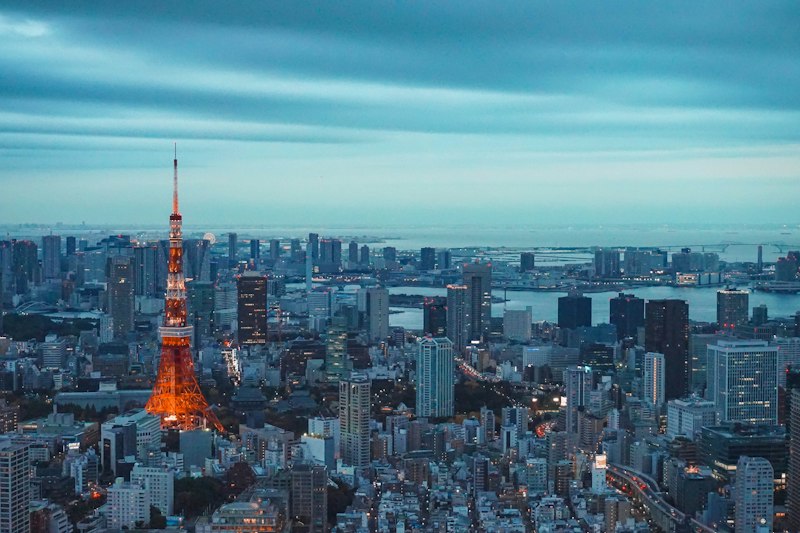
If you plan to stay in Japan for 3 to 6 months, working from central Tokyo (Shibuya, Shinjuku, Roppongi) is the most overrated decision you can make. The cafes are heavily policed with 60-minute seating limits, and short-term rents have skyrocketed. Here is where you should actually go.
1. Fukuoka (The True Nomad Capital)
Fukuoka city (specifically the Tenjin and Daimyo districts) has aggressively courted startups and nomads. The city is highly compact—the airport is exactly 6 minutes by subway to Hakata Station.
- Vibe: Laid back, coastal, massive startup scene, world-class food culture (Hakata ramen).
- Key Coworking Space: Fukuoka Growth Next (FGN)
- Location: 2-6-11 Daimyo, Chuo-ku. A 7-minute walk from Tenjin Station (Exit 2).
- Price: ¥16,500 / ~$114 USD per month for a free-address desk.
2. Kyoto (For Slow-Paced Creatives)
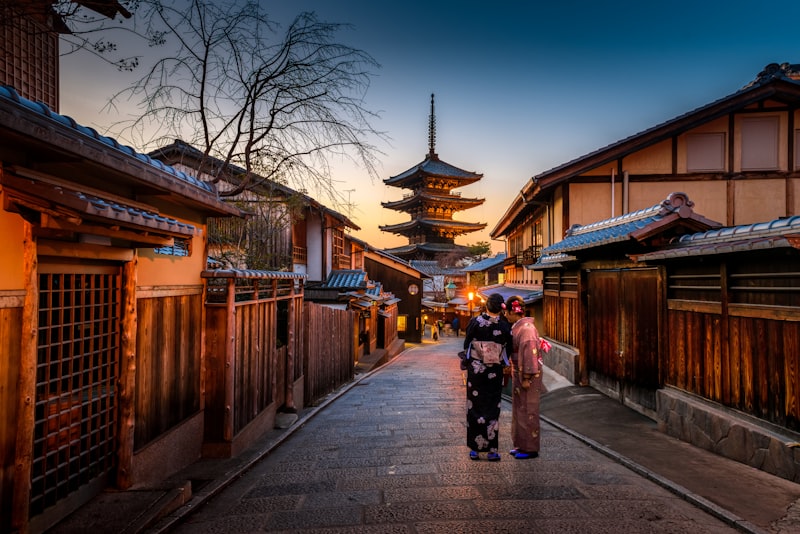
Kyoto is notoriously overrun by tourists, but the business district around Karasuma and Gojo stations remains relatively functional and quiet for remote workers.
- Vibe: Traditional inspiration, heavily bicycle-dependent, quiet evenings.
- Key Coworking Space: .andwork Kyoto
- Location: 5F of The Millennials Kyoto, 235 Yamazakicho, Nakagyo-ku. A 5-minute walk from Kyoto Shiyakusho-mae Station.
- Price: ¥3,000 / ~$20.60 USD per day drop-in, or ¥25,000 / ~$172 USD per month.
3. Tokyo: West Side Only (Koenji & Nakameguro)
If you must do Tokyo, skip the Yamanote line hubs. Look to the west side (Chuo-Sobu line) for better prices and actual neighborhood communities.
- Key Coworking Space: MIDORI.so Bakurocho (Wait, Bakurocho is East Tokyo! Yes, the East side wholesale district has become the new Brooklyn of Tokyo). For the West Side, use Basis Point in Kichijoji.
- Location (MIDORI.so): 1-5-15 Nihonbashi Bakurocho, 1F-7F (Desks on 3F/4F). 2-min walk from Bakurocho Station.
- Price: ¥30,000 / ~$206 USD per month.
2026 Monthly Cost Comparison: Tokyo vs. Fukuoka
Is Japan cheap? Thanks to the weakened Yen, yes—for those earning USD or EUR. But local inflation has pushed up groceries and utilities. Here is a realistic 30-day budget for a solo digital nomad utilizing short-term furnished housing in 2026.
| Expense Category | Central Tokyo (Shinjuku/Shibuya) | Fukuoka (Tenjin/Hakata) |
|---|---|---|
| Furnished Studio (Monthly) | ¥180,000 (~$1,240 USD) | ¥95,000 (~$655 USD) |
| Coworking Hot Desk (Month) | ¥35,000 (~$241 USD) | ¥16,500 (~$114 USD) |
| Food (Eating out 1x/day) | ¥75,000 (~$517 USD) | ¥55,000 (~$380 USD) |
| Transit & Gym | ¥25,000 (~$172 USD) | ¥15,000 (~$103 USD) |
| Total Estimated JPY | ¥315,000 | ¥181,500 |
| Total Estimated USD | ~$2,170 USD | ~$1,252 USD |
Note: Short-term rentals (Monthly Mansions) carry a 30-50% premium over standard 2-year leases, which is reflected in the housing costs above.
Top Coworking Spaces: The "No-BS" List
Brochures will tell you to "just work from Starbucks!" This is a terrible idea. In 2026, most central Tokyo Starbucks (like Shibuya Tsutaya) have taped over their electrical outlets and actively enforce a 60-minute limit via QR code receipts. You need a dedicated space.
| Coworking Space Name | City / Exact Station | Drop-in Price | Monthly Price | Vibe & Amenities |
|---|---|---|---|---|
| .andwork Shibuya | Tokyo (Shibuya, 5 min walk) | ¥3,000 (~$20.60 USD) | ¥30,000 (~$206 USD) | Trendy, free evening beer on 3F, gets noisy. |
| Fukuoka Growth Next | Fukuoka (Tenjin, 7 min walk) | ¥2,000 (~$13.80 USD) | ¥16,500 (~$114 USD) | Former elementary school, heavy startup focus, great networking. |
| Lodge (Yahoo!) | Tokyo (Nagatacho, 1 min walk) | ¥1,500 (~$10.30 USD) | N/A | Cheap day rate, stunning views on 17F, strict ID check required. |
| The Company | Fukuoka (Canal City Hakata) | ¥2,200 (~$15.15 USD) | ¥22,300 (~$153 USD) | Sleek, attached to a mega-mall, dual monitors available. |
| Kante Kyoto | Kyoto (Karasuma, 3 min walk) | ¥1,800 (~$12.40 USD) | ¥18,000 (~$124 USD) | Silent work zones, lots of local designers, standing desks. |