[Disclosure] This article contains affiliate links. We may earn a commission at no extra cost to you.
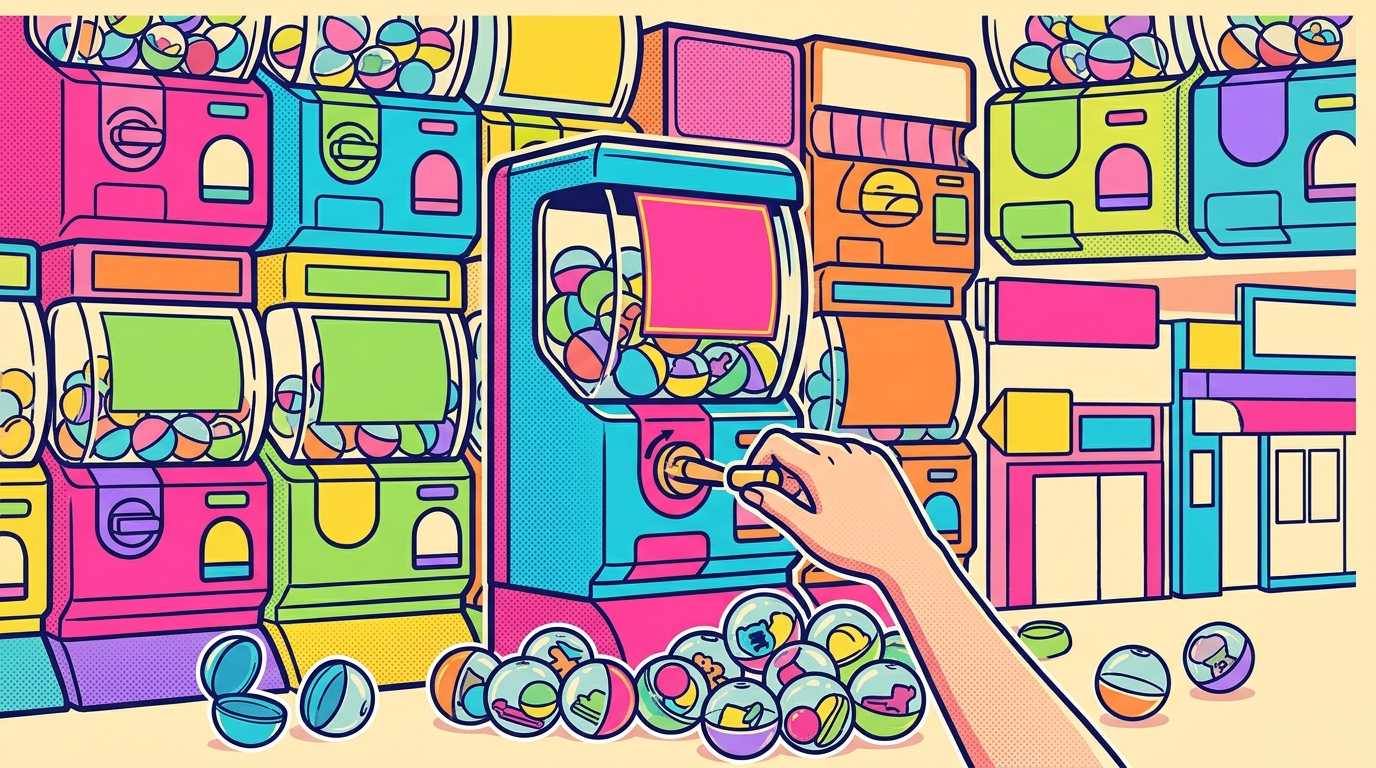
If you are hunting for gachapon (capsule toys) in Tokyo, chances are you’ve been told to walk blindly down Akihabara’s Chuo Dori. That is exactly what every other tourist is doing, and it is the fastest way to elbow your way through crowded, overpriced resale shops. So, what is the real gachapon scene in 2026? It is a heavily localized, multi-tiered ecosystem ranging from cheap ¥300 anime trinkets to ultra-premium ¥1,500 miniature architectural models and functional electronics.
You should care because the capsule toy industry has grown up. Today, local collectors prioritize quality and authenticity, bypassing street-corner machines for massive, dedicated department store floors that restock daily. In this guide, we are skipping the vague "must-visit" platitudes. You will get exact floor numbers, 2026 machine prices, walking times from specific station exits, and the hard truth about why Ikebukuro—not Akihabara—is now the undisputed capsule toy capital of the world.
What You'll Get From This Guide
Real 2026 Prices: Exact JPY and USD breakdowns for standard and premium machines.
The Ikebukuro Secret: Why local collectors head to Sunshine City over Akihabara.
Hidden Akihabara Floors: Where to spin in peace away from the tourist hordes.
Tourist Mistakes: Why you should never hoard ¥100 coins before you arrive.
Gachapon Etiquette: How to handle the empty plastic shells.
The 2026 Gachapon Reality (Tech, Prices & Traps)
Before you drop a single coin, you need to understand how the market operates this year. The biggest mistake tourists make is assuming gachapon is still just "cheap plastic junk for kids."
Cashless Machines are Taking Over
While traditional ¥100 coin slots still dominate the older alleys, "Smart Gachapon" machines are everywhere in major hubs. These machines accept Suica, Pasmo, and even QR code payments like PayPay. If you are staying at a central hotel—perhaps you used Booking.com to search the best hotels in Japan—you can easily tap your digital IC card via your Apple Wallet and spin without ever touching physical cash.
The Resale Trap
Local tip: Do not buy loose gachapon toys in the glass "rental showcases" in places like Akihabara Radio Kaikan unless the machine is completely sold out nationwide. These shops routinely charge ¥1,500 to ¥3,000 for a highly sought-after toy that costs ¥400 inside a machine. It ruins the thrill of the pull and drains your wallet.
Best Gachapon Spots in Ikebukuro (The True Capital)
Tourist brochures still push Akihabara as the center of otaku culture, but for capsule toys, Ikebukuro won the war years ago. It offers cleaner spaces, wider aisles, and significantly larger machine counts.
Gashapon Department Store (Sunshine City)
Location: Sunshine City, World Import Mart Building, 3rd Floor.
Access: 8-minute walk from Ikebukuro Station (East Exit).
The Reality: This is the flagship store and the current Guinness World Record holder for the largest number of capsule toy machines in one location (over 3,000 machines). It is heavily staffed, meaning jammed machines are fixed in seconds, and restocks happen constantly. They feature a massive wall of ryougaeki (coin exchange machines) that accept ¥1,000 and ¥5,000 bills.
Gachagacha no Mori (Sunshine City Alta)
Location: Sunshine City Alta, 1st Floor.
The Reality: While the 3rd floor is Bandai-owned (heavy on anime like One Piece and Gundam), this 1st-floor competitor specializes in quirky, non-character items. If you want hyper-realistic miniature retro stereos, office furniture, or weird animal figurines from indie makers like Kitan Club, this is your spot.
Best Gachapon Spots in Akihabara (Classic & Hidden)
If your itinerary only allows for Akihabara, you can still find incredible machines—if you know which floors to target.
Yodobashi Camera Multimedia Akiba
Location: 1-1 Kanda Hanaokacho, 6th Floor.
Access: 1-minute walk from Akihabara Station (Showa-dori Exit).
The Reality: Forget the main tourist strip of Chuo Dori. The 6th floor of Yodobashi Camera houses an enormous, air-conditioned gachapon section with over 1,000 machines. The aisles are wide enough for luggage (a rarity in Akihabara), and they carry the highly coveted ultra-premium "Ken Elephant" brand miniatures. If you want to check out their quality before arriving, you can search ケンエレファント on Amazon Japan.
Akihabara Gachapon Kaikan
Location: 3-15-5 Sotokanda, 1st Floor.
Access: 7-minute walk from Akihabara Station (Electric Town Exit).
The Reality: This is the "historic" gritty shop everyone films for YouTube. It crams about 500 machines into a tiny, claustrophobic room. It is atmospheric and undeniably classic, but on weekends, it is shoulder-to-shoulder with tourists. Go on a weekday morning or skip it for Yodobashi.
Store & Price Comparisons (2026 Data)
Knowing where to go is half the battle; knowing what to expect pays dividends. Here is how the top spots stack up.
Store Name
Station
Walk Time
Machine Count
Vibe / Best For
Gashapon Dept Store (3F)
Ikebukuro
8 mins
3,000+
Mega-store, massive anime variety, spotless
Gachagacha no Mori (1F)
Ikebukuro
8 mins
800+
Weird concepts, interior decor miniatures
Yodobashi Camera (6F)
Akihabara
1 min
1,000+
Easy access, wide aisles, tech/premium toys
Gachapon Kaikan
Akihabara
7 mins
500+
Gritty, nostalgic, very crowded on weekends
2026 Gachapon Price Tiers
Inflation has pushed gachapon prices slightly higher over the last few years. Here is what you are actually paying when you drop your coins.
Tier
Price (JPY)
Price (USD)*
Typical Quality / Contents
Standard
¥300 - ¥400
~$2.00 - $2.67
Acrylic keychains, standard rubber straps, small PVC figures
The days of widespread ¥100 and ¥200 gachapon machines are largely over, outside of very old, faded machines in rural supermarkets. In 2026, the absolute baseline for a standard capsule toy in Akihabara or Ikebukuro is ¥300 (about $2.00 USD). However, the sweet spot for high-quality items—like detailed mini-furniture, miniature food replicas, and popular anime figures—is now firmly at the ¥400 to ¥500 mark ($2.67 to $3.33 USD). There is also a rapidly growing "Premium Gashapon" sector featuring massive, highly detailed models that accept cashless payments and cost between ¥1,000 and ¥1,500 ($6.67 to $10.00 USD). Always check the price sticker next to the coin slot before twisting.
Q: Do I need to bring 100-yen coins to the capsule toy stores?
Absolutely not, and this is one of the most common tourist misconceptions. You do not need to hoard heavy ¥100 coins in your pockets for days leading up to your Akihabara visit. Every single dedicated gachapon store, including Yodobashi Camera and the Sunshine City locations, is equipped with multiple automated exchange machines called ryougaeki. You simply insert a ¥1,000 bill, and it instantly dispenses ten ¥100 coins. One vital caveat: most of these smaller exchange machines do not accept ¥10,000 or ¥5,000 bills. You will need to break your larger bills at a convenience store beforehand, or ask a roaming floor attendant for assistance.
Q: Are Gachapon machines safe and accessible for solo travelers?
Gachapon hunting is one of the most solo-friendly, low-stress activities you can do in Japan. There is zero Japanese speaking required, nobody pressures you to buy anything, and the environments are entirely self-serve. Regarding accessibility, there is a stark difference between locations. Street-side shops in Akihabara (like Gachapon Kaikan) are incredibly cramped, with machines stacked floor-to-ceiling and almost no room to navigate a wheelchair or large luggage. Conversely, the Gashapon Department Store in Ikebukuro’s Sunshine City and the 6th floor of Yodobashi Camera in Akihabara are modern, brightly lit, and feature wide, fully accessible aisles with elevators directly from the station.
Q: How can I find a specific character or anime gachapon?
Hunting for a specific character from a YouTube video you watched three months ago is a recipe for disappointment. Gachapon turnover is fiercely rapid; machines are often swapped out weekly, and popular sets can sell out nationwide in a matter of days. To find specific items in 2026, tech-savvy locals use the official "Gashapon Navi" website (run by Bandai), which allows you to search by character and shows real-time stock levels at major stores. If your desired toy is completely sold out from machines, your only recourse is to check the secondhand rental showcases in Akihabara (like Radio Kaikan) or Nakano Broadway, though expect to pay a heavy "tourist tax" markup.
Q: How do I get my capsule toys home without taking up luggage space?
The plastic capsules themselves are the biggest enemy of suitcase space. The standard local practice—and a highly recommended space-saver—is to open your gachapon immediately in the store. Every major gachapon location has tall, specialized mesh bins designed specifically for recycling the plastic shells. Discard the bulky plastic orb, but always keep the small paper insert (the "mini-book") that comes inside with the toy. The mini-book proves the item's authenticity and shows the rest of the set. Just bring a few ziplock bags in your daypack to safely store the loose toys and papers, leaving plenty of room in your luggage for bigger souvenirs.
Bottom Line
If you want the best capsule toy experience in 2026, stop limiting yourself to the cramped, tourist-heavy street shops of Akihabara and make the trip to Ikebukuro’s Sunshine City instead. The sheer volume, cleanliness, and variety found at the Gashapon Department Store outclasses anything on Chuo Dori. This guide is not for casual tourists who just want to spin one machine for a photo op; but if you are serious about scoring premium, high-quality Japanese miniatures without paying outrageous secondhand resale markups, prioritize Ikebukuro or the upper floors of Yodobashi Camera. Take your time, bring your ¥1,000 bills, and remember to recycle your shells.
🧾 Before you buy: tax-free, payment and getting it home
Tax-free basics
Bring your passport and spend at least ¥5,000 at one shop on the same day.
Since 1 November 2026 you pay the full price including consumption tax in the shop and complete a refund procedure before you leave Japan. Buying tax-free at the register has ended.
The same reform abolished the general-goods/consumables split, the ¥500,000 daily cap on consumables and the special sealed packaging. What changes on 1 November 2026 →
⚠️ Since 1 April 2025, goods shipped to your home country by international parcel are no longer tax-exempt. If you want the tax break, carry the item out yourself as baggage — shipping is for convenience, not for saving tax.
Paying
Big electronics and chain stores take international cards. Small card shops and second-hand stalls are often cash-only, so keep some yen on you.
Wallets from 17 countries and regions work at PayPay's QR terminals through Alipay+ — including Singapore, Hong Kong, Malaysia and the Philippines. You pay with your own app and the yen amount converts automatically. Cards from the US, UK and Australia are not part of this, so use your card or cash there.
Sources: Japan National Tourism Organization (japan.travel) / PayPay (about.paypay.ne.jp)
Disclosure: This article contains affiliate links. We may earn a commission at no extra cost to you.