[Disclosure] This article contains affiliate links. We may earn a commission at no extra cost to you.
You’ve devoured the basic Tokyo travel guides. You know about the major sights, the train lines, and the general buzz. But when it comes to choosing where to actually plant your roots for a few days – or even a week – in this sprawling metropolis, the generic advice often falls short. Should you stay in the neon-drenched canyons of Shinjuku, the youth-quake epicenter of Shibuya, or the polished elegance of Ginza? This isn't just about finding a hotel; it's about selecting a neighborhood that defines your entire Tokyo experience.
This guide is for the discerning traveler who wants to understand the true personality of these iconic areas. We’ll cut through the tourist clichés to reveal the specific vibes, the genuine costs, and the little-known local insights for each, helping you decide which district truly aligns with your travel style in 2026.
What You'll Get From This Guide
- Hyper-Specific 2026 Data: Current prices for dining, hotels, and attractions in Yen and USD.
- Unvarnished Area Personalities: Beyond the headlines, understand the genuine atmosphere and daily rhythm of each district.
- Local Transportation Hacks: The best train lines, transfer points, and walking times to maximize your efficiency.
- Dining & Nightlife Deep Dive: From hidden izakayas to Michelin-starred establishments, with real recommendations.
- Overrated Tourist Traps & Genuine Gems: What to skip and what to prioritize for an authentic experience.
- Comprehensive Comparison Tables: Quick-glance data to help you weigh your options effectively.
Shinjuku: The Urban Jungle for the Energetic Explorer
Shinjuku is Tokyo in overdrive – a vibrant, often overwhelming, but undeniably exciting district. It’s a major transportation hub, a business powerhouse, and a playground for both locals and tourists once the sun sets. If you thrive on constant energy and want to be at the nexus of everything, Shinjuku could be your perfect base.
The Shinjuku Vibe: Neon & Nooks
Shinjuku effortlessly blends towering skyscrapers with intimate alleyways. The east side, particularly around Shinjuku Sanchome and Kabukicho, pulsates with neon lights, department stores like Isetan and Lumine EST, and countless dining options. The west side is dominated by the Tokyo Metropolitan Government Building and its observation decks, plus luxury hotels. Shinjuku Gyoen National Garden offers a serene escape, a stark contrast to the surrounding urban chaos.
Shinjuku's Unbeatable Connectivity
Shinjuku Station is one of the world's busiest, servicing numerous JR lines (Yamanote, Chuo, Saikyo, Shonan-Shinjuku) and private lines (Odakyu, Keio, Seibu Shinjuku, Tokyo Metro Marunouchi, Toei Shinjuku, Toei Oedo). You can literally get anywhere from here with minimal transfers. For example, a direct ride on the JR Yamanote Line will get you to Shibuya in ~7 minutes (¥170 / ~$1.15 USD) or to Tokyo Station in ~14 minutes (¥200 / ~$1.35 USD).
Dining & Nightlife: From Gritty Alleys to High-End Views
Local Tip: Many tourists flock straight to Kabukicho for nightlife, but true gems are often found off the main drag. Omoide Yokocho (Memory Lane) near the west exit of Shinjuku Station offers tiny yakitori and ramen stalls like "Kikuya" serving bowls for around ¥1,200 / ~$8 USD. Golden Gai, while famous, can be a tourist trap if you don't know which tiny bar to enter. Look for bars with "No Cover Charge" signs or a friendly owner at the door. Bar "Shinjuku Pit Inn" (jazz club) and "The Open Book Bar" (literature-themed, around ¥1,000 / ~$6.75 USD cocktails) are local favorites. For a splurge, consider a cocktail at the New York Bar on the 52nd floor of Park Hyatt Tokyo (cover charge usually around ¥3,000 / ~$20 USD, plus drink costs).
Shopping & Attractions: Beyond the Brochure
Beyond the luxury of Isetan Shinjuku (main building, B2 food hall is amazing) and Takashimaya Times Square (home to Tokyu Hands on floors 2-8), explore Lumine EST for trendy fashion. A commonly overlooked attraction is the free observation deck at the Tokyo Metropolitan Government Building (Tokyo-tocho), on the 45th floor of the North and South Towers, open 9:30 AM to 10 PM. You'll get similar views to the expensive Skytree without the ¥2,100 / ~$14 USD ticket.
Shibuya: The Youthful Pulse for Trendsetters & Pop Culture Enthusiasts
Shibuya is where Tokyo's youth culture explodes, a district synonymous with fashion, music, and the iconic Shibuya Crossing. If you crave vibrant energy, trendy shopping, and a finger on the pulse of what's new and exciting, Shibuya offers an unforgettable stay.
The Shibuya Vibe: Energetic & Ever-Evolving
Shibuya is a dynamic district constantly reinventing itself. From the moment you emerge from Shibuya Station into the controlled chaos of the Shibuya Scramble Crossing, you're immersed in a world of bold fashion statements, cutting-edge technology, and an infectious youthful energy. It’s less about old-world charm and more about experiencing modern Tokyo at its most energetic.
Shibuya's Excellent Transit Links
Shibuya Station is another major hub, albeit slightly less complex than Shinjuku. It serves JR lines (Yamanote, Saikyo, Shonan-Shinjuku), Tokyo Metro (Ginza, Hanzomon, Fukutoshin), Tokyu lines (Toyoko, Den-en-toshi), and Keio Inokashira Line. Direct access to Harajuku (Yamanote Line, ~2 mins, ¥140 / ~$0.95 USD) and Ginza (Ginza Line, ~8 mins, ¥170 / ~$1.15 USD) makes it incredibly convenient.
Dining & Nightlife: Eclectic & Buzzing
Shibuya's dining scene is diverse. From gourmet burgers at "Shake Shack Shibuya" (inside Miyashita Park, around ¥1,500 / ~$10 USD for a burger combo) to traditional tonkatsu at "Tonkatsu Maisen" (around ¥2,500 / ~$17 USD for a set menu) in Aoyama, there's something for every palate. For nightlife, explore the alleys of Dogenzaka for small izakayas like "Uonoumi" (¥3,000-5,000 / ~$20-34 USD for food and drinks) or grab a drink at one of the rooftop bars in Miyashita Park. The area around Shibuya Stream also has many trendy restaurants and bars.
Shopping & Attractions: Iconography & Innovation
Of course, the Shibuya Scramble Crossing is a must-see. For the best aerial view, head to Book Shibuya Sky, located on the rooftop of Shibuya Scramble Square. Tickets typically cost ¥2,200 / ~$15 USD if booked in advance. Other shopping highlights include Shibuya 109 for youth fashion, Mega Don Quijote Shibuya for quirky souvenirs and late-night essentials, and Tokyu Hands (Shibuya Branch, on floors 2-7) for unique Japanese goods and stationery. Miyashita Park, a multi-use complex with shops, restaurants, and a rooftop park, is also a great place to spend an afternoon.
Ginza: The Refined Retreat for Luxury & Culture Aficionados
Ginza represents Tokyo's sophisticated side – a district of high fashion, art galleries, kabuki theater, and elegant dining. If you appreciate refined experiences, impeccable service, and a slightly more subdued atmosphere than Shinjuku or Shibuya, Ginza offers a premium Tokyo stay.
The Ginza Vibe: Elegant & Exclusive
Ginza is synonymous with luxury. Its broad, tree-lined streets, particularly Chuo-dori (closed to traffic on weekends, 12 PM - 6 PM), are lined with flagship stores of international fashion houses, high-end department stores like Mitsukoshi and Wako, and Michelin-starred restaurants. It exudes an air of understated wealth and cultural appreciation, offering a stark contrast to the boisterous energy of its western counterparts.
Ginza's Refined Accessibility
Ginza Station is served by the Tokyo Metro Ginza, Marunouchi, and Hibiya lines, offering direct access to major areas like Shibuya (Ginza Line, ~8 mins, ¥170 / ~$1.15 USD), Shinjuku (Marunouchi Line, ~15 mins, ¥200 / ~$1.35 USD), and Ueno (Ginza Line, ~8 mins, ¥170 / ~$1.15 USD). Higashi-Ginza Station (Hibiya Line, Toei Asakusa Line) is particularly convenient for direct access to Narita and Haneda airports via the Access Express.
Dining & Nightlife: Gourmet & Graceful
Ginza is a culinary paradise. For an authentic sushi experience, consider "Sushi Aoki" (Omakase course around ¥20,000-30,000 / ~$135-200 USD). For more accessible but equally delicious options, explore the basement food halls of Mitsukoshi Ginza (B1F, B2F) or Ginza Six (B2F) for gourmet deli items and desserts. Cafe culture here is sophisticated; try "Ginza West" for classic pastries and coffee (around ¥800 / ~$5.40 USD). Nightlife leans towards elegant cocktail bars like "Bar High Five" (average cocktail ¥2,500 / ~$17 USD) or hotel bars, rather than boisterous clubs.
Shopping & Attractions: World-Class & Cultural
The main draw is high-end shopping along Chuo-dori, featuring brands like Chanel, Louis Vuitton, and UNIQLO Ginza (12 floors of fashion, including a dedicated UT floor). Ginza Six is a modern luxury complex with art installations and a beautiful rooftop garden. For a cultural immersion, experience a performance at the Kabuki-za Theatre (Higashi-Ginza Station, exit 3). You can even purchase a single act (Hitomaku-mi) ticket for around ¥1,000-4,000 / ~$6.75-27 USD, which is a great local tip for experiencing Kabuki without committing to a full, long show.
Key Differences & Overrated Aspects
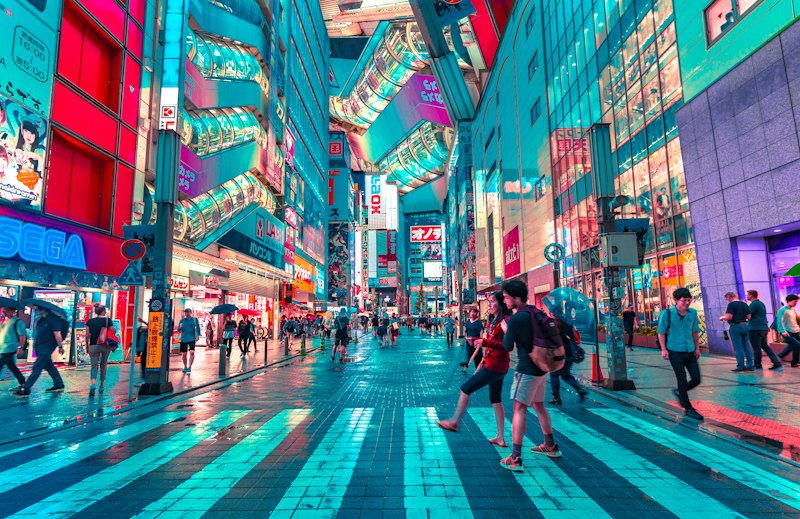
Tourist Mistake #1: Assuming Ginza is "boring" because it lacks the overt flashiness of Shibuya or Shinjuku. Ginza's charm is subtle, rewarding those who seek quality over quantity, and it offers incredible cultural experiences alongside its luxury shopping.
Overrated: The "robot restaurants" or "themed cafes" that sometimes get pushed onto tourists in Shinjuku/Shibuya. While they can be fun, they often come with inflated prices (¥5,000-10,000 / ~$34-68 USD) for an experience that's less "authentic Tokyo" and more "made for Instagram." Prioritize local izakayas or genuine cultural experiences instead.
Local Tip: For late-night snacks or drinks in Shibuya, venture slightly beyond the main crossing towards Sakuragaoka-cho or Udagawacho. You’ll find more local bars and eateries with better value than the tourist-heavy spots immediately around Hachiko.