[PR] This article contains affiliate links.
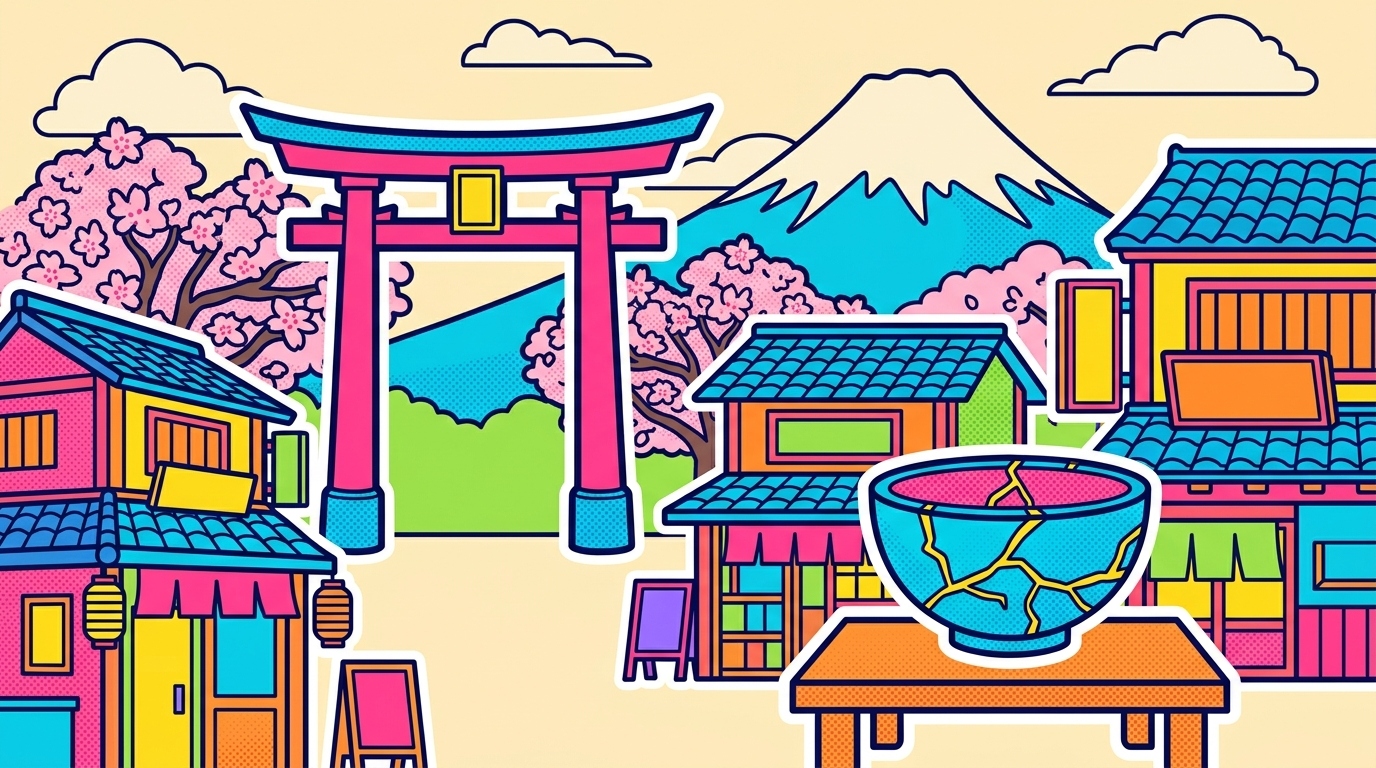
Japan is a country where ancient traditions seamlessly blend with modern life, and for inbound tourists in 2026, the demand for immersive, hands-on cultural experiences has never been higher. Rather than simply buying a pre-packaged souvenir in a department store, modern travelers are seeking out authentic connections to Japanese heritage. Enter the Kintsugi experience in Tokyo—a captivating, interactive workshop where you learn the centuries-old Japanese art of repairing broken ceramics with lacquer and gold.
Kintsugi (literally "golden joinery") is much more than a simple repair technique; it is a physical manifestation of the Japanese philosophy of wabi-sabi, which embraces flaws, impermanence, and the beauty of imperfection. By treating breakage and repair as part of the history of an object rather than something to disguise, kintsugi transforms a shattered bowl or cracked plate into a stunning masterpiece that is arguably more beautiful than before it was broken.
Across Tokyo, a thriving market of independent studios now caters to international visitors, offering English-friendly kintsugi workshops designed to fit perfectly into a busy travel itinerary. This exhaustive 2026 guide covers everything you need to know about booking and enjoying a kintsugi workshop in Japan’s bustling capital—from what a typical session involves and the critical differences between traditional and modern techniques, to navigating the best neighborhoods and booking platforms.
What is Kintsugi? The Philosophy Behind the Gold
Before diving into the practicalities of booking a workshop, it is essential to understand what you are actually doing when you practice kintsugi.
Historically, when a beloved ceramic piece broke in Japan—such as a cherished tea bowl used in the traditional tea ceremony—discarding it was viewed as a waste, a concept tied closely to the Japanese idea of mottainai (a sense of regret over waste). Legend has it that in the 15th century, the Japanese shogun Ashikaga Yoshimasa broke his favorite Chinese tea bowl and sent it back to China for repairs. When it returned, it was held together with ugly metal staples. Displeased, Japanese craftsmen sought a more aesthetic, pleasing method of repair.
The result was kintsugi. Using urushi (tree sap lacquer) as an incredibly strong natural adhesive, artisans would glue the broken shards back together. They would then use the same lacquer as a base to dust the distinct crack lines with powdered gold, silver, or platinum.
For the modern traveler, participating in a kintsugi workshop is a deeply meditative process. You are not just crafting a beautiful souvenir to take home; you are participating in a historical art form that teaches patience, resilience, and the acceptance of life's inevitable wear and tear.
The 2026 Tokyo Kintsugi Workshop Scene: What to Expect
In 2026, you do not need to be an apprentice in a rural craft village to learn kintsugi. Multiple independent studios across Tokyo offer tourist-oriented, English-friendly workshops. These studios are commonly found in highly accessible, culturally rich areas such as Shibuya, Harajuku/Omotesando, and Asakusa, making it incredibly easy to weave a class into your daily sightseeing route.
A Typical Workshop Walkthrough
While the exact flow will vary from studio to studio, a typical hands-on kintsugi workshop in Tokyo follows a standardized format designed for beginners. The standard session length across these studios is roughly 60 to 90 minutes, making it an ideal morning or afternoon activity.
-
Selecting the Ceramic Piece: When you arrive at the studio, you will typically begin by selecting a piece to repair. Some workshops allow you to bring your own broken ceramic from home (provided it meets their size and material guidelines), but most tourists opt to use a piece provided by the studio. In many premium experiences, studios provide genuine antique ceramics—sometimes decades or even a century old—for you to repair, adding immense historical value to your souvenir.
-
Piecing It Together: Under the close guidance of an English-speaking instructor, you will study the broken shards like a puzzle. Using the studio's designated adhesive (more on the vital differences in adhesives below), you will carefully bind the pieces back together, ensuring the seams are as flush as possible.
-
Filing and Smoothing: Once the initial adhesive is set, you will use small tools or sandpaper to gently scrape away excess glue, ensuring the joined cracks are smooth to the touch. This step requires focus and a gentle hand.
-
Applying the Gold: The climax of the 60-to-90-minute session is the application of the gold. You will trace the repaired cracks with a final layer of lacquer or binding agent, and then delicately brush gold powder or apply gold leaf over the seams. The moment the gold adheres to the crack, transforming the jagged break into a glowing vein of precious metal, is universally described as the most satisfying part of the experience.
English-Speaking Instruction
You do not need to worry about a language barrier. Because these independent studios actively cater to the inbound tourist market, English-speaking instruction is commonly offered as standard at these workshops. You will be able to follow the subtle, detailed instructions required to perfect your gold lines without needing a translator.
CRITICAL WARNING: Traditional Urushi vs. Quick Synthetic Resin
If there is only one section of this guide you read before booking your 2026 trip, make it this one.
Among the various independent studios operating in Tokyo, there are two distinct technique types offered, and this materially affects the end result—specifically, when you can take your souvenir home. Which method a given studio uses is not standardized across the market, and it is entirely up to you to verify which technique is being utilized before you finalize your booking.
Method 1: Traditional Urushi (Real Lacquer)
Urushi is the natural, traditional sap tapped from the lacquer tree. It has been used for millennia in Japanese crafts.
- The Process: Working with authentic urushi is highly traditional and results in a beautiful, historically accurate finish. Furthermore, fully cured urushi is generally food-safe.
- The Catch (Timing): Urushi does not "dry" like standard glue; it cures through a chemical process of polymerization that requires very specific, high-humidity conditions. The repair needs weeks to fully cure.
- The Result for Tourists: Because the piece is wet and toxic until fully cured, you cannot take it with you when you leave the studio. The piece is typically shipped to the participant later rather than taken home same-day. If you choose a studio utilizing this method, you will need to arrange (and likely pay extra for) international shipping to your home country, and wait weeks or months to receive your masterpiece.
Method 2: Quick Kintsugi (Synthetic Resin)
To accommodate tourists who only have a few days in Tokyo, many studios have developed modern variations of the craft.
- The Process: This method uses a simplified, fast-curing synthetic-resin or epoxy substitute in place of natural tree sap, though the visual application of the gold powder/leaf remains similar.
- The Catch (Usage): Synthetic resins are generally decorative and may not be food-safe for hot soups or active dining use (they are best used for display, jewelry dishes, or dry snacks).
- The Result for Tourists: The major benefit here is time. Because the synthetic resin cures rapidly, the repaired piece can usually be taken home the same day. You can carefully pack it in your suitcase and fly home with it immediately.
How to Check Which Method a Studio Uses
Do not assume. We cannot stress this enough: it was not possible to confirm a single universal standard because every independent studio operates differently. You must confirm the lacquer type and the pickup/shipping timeline directly with the studio or via the booking listing before you pay. If you are a traveler leaving Japan in a day or two and you want to take your bowl with you, you must ensure you are booking a "quick kintsugi" (synthetic resin) class, or verify that the studio offers a same-day take-home option.
Top Tokyo Neighborhood Hubs for Kintsugi Workshops
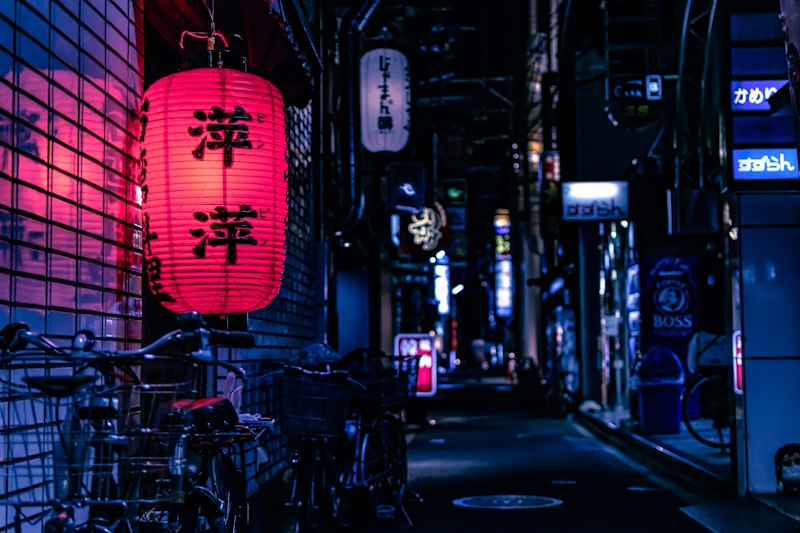
While specific studio addresses and exact meeting points vary by the individual business and must be checked on your specific booking confirmation, the kintsugi market in Tokyo is heavily clustered around a few major, highly accessible tourist hubs.
When planning your itinerary, we recommend choosing a workshop located in a neighborhood you already plan to explore. Remember to grab the right transit card to navigate the city easily—check our guide on What is the Best IC Card for Tourists in Japan 2026? | Suica vs Pasmo vs ICOCA before hopping on the trains.
1. Shibuya: Modern Energy Meets Traditional Craft
Shibuya is the beating heart of modern youth culture, famous for the Shibuya Crossing and high-end shopping complexes like Shibuya Sky. However, tucked into the quieter side streets of Shibuya and nearby Daikanyama are numerous independent artisan studios. Booking a class here provides a brilliant juxtaposition: stepping off the hyper-modern, neon-lit streets into a quiet, meditative space to repair antique ceramics.
- Access: Shibuya Station is a major hub accessible via the JR Yamanote Line, Saikyo Line, Tokyo Metro Ginza, Hanzomon, and Fukutoshin lines.
2. Harajuku & Omotesando: The Aesthetic Epicenter
Omotesando is Tokyo’s sophisticated, tree-lined avenue often compared to the Champs-Élysées, while neighboring Harajuku is the capital of kawaii street fashion. This area is a magnet for creatives and designers, making it a prime location for kintsugi workshops. A morning class in Harajuku pairs perfectly with an afternoon of custom shopping—perhaps checking out Custom Okayama Denim in Harajuku: The Ultimate Japanese Fashion Souvenir.
- Access: Harajuku Station is on the JR Yamanote Line; Omotesando Station is a 10-minute walk away, accessible via the Chiyoda, Ginza, and Hanzomon subway lines.
3. Asakusa: Deep Historical Immersion
If you want your traditional kintsugi experience to be surrounded by traditional architecture, Asakusa is the place to be. Home to the iconic Senso-ji Temple, the streets of Asakusa are lined with traditional craft shops, kimono rentals, and old-school eateries. Taking a kintsugi class here feels like stepping back in time. After your class, you might cap off the cultural day with a nearby evening event; check out our Asakusa Sumo Show & Chanko Nabe Dinner Guide 2026 | No Tournament Needed.
- Access: Asakusa Station is easily reached via the Tokyo Metro Ginza Line, Toei Asakusa Line, and the Tobu Skytree Line, making it highly accessible from Ueno or Ginza.
4. Ueno & Okachimachi: The Artisanal Underbelly
Adjacent to Asakusa, the Ueno and Okachimachi areas (especially the 2k540 Aki-Oka Artisan alley built under the train tracks) are famous for independent craftmakers. Several kintsugi and ceramics studios operate in this broader northeastern quadrant of Tokyo.
- Access: Ueno Station is a massive transit hub served by the JR Yamanote Line, Keihin-Tohoku Line, and Shinkansen routes, just a 5-minute ride north of Akihabara. (If you're staying nearby for tech shopping, see our guide on Best Hotels Near Akihabara 2026 | Value Location Convenience).
How to Book Your Kintsugi Class (and What it Costs)
 In stock now on Rakuten¥1,000
Because there is no single official, government-run kintsugi institution, tourists must rely on booking independent studios. Thankfully, these studios are heavily integrated into major global travel platforms, meaning you don't necessarily need to navigate Japanese-only websites to secure a spot.
Where to Book
These workshops are commonly bookable via third-party tourism platforms such as Klook, VELTRA, GetYourGuide, and Viator, as well as through some studios' own proprietary websites.
- Using platforms like Klook or VELTRA often provides the benefit of instant confirmation and clear, English-language cancellation policies.
- Platforms like GetYourGuide and Viator often feature aggregated reviews from other international travelers, helping you gauge the patience of the instructor and the quality of the provided ceramics.
Pricing Information
There is no single reliable or fixed public price for a kintsugi experience in Tokyo. Do not expect a standardized fee. Based on cross-referenced listings across Klook, VELTRA, LiveJapan, Magpie, and byFood, prices ranged from roughly 1,500 yen up to 6,600+ yen in 2026.
Why such a massive range? The price fluctuates drastically depending on:
- The specific studio's prestige and location.
- Which platform you book through (some charge aggregator fees, others offer discounts).
- The package selected (e.g., repairing one small chopstick rest vs. a large, genuine antique bowl).
- Inclusions (whether hotel pickup, green tea, or traditional sweets are included).
- The materials used (real gold powder vs. brass/gold-colored alternatives).
Actionable Advice: Because prices change and currency exchange rates fluctuate, you must check the exact current price in yen on the specific studio or platform page you intend to book. If you are paying on-site for upgrades (like choosing an older antique piece), make sure you know whether the studio accepts credit cards or only yen. Check out our guide on Cash vs Card in Japan 2026: How Much Cash Do You Need? to prepare your wallet.
The Fine Print: What to Verify Before You Book
Because this is a decentralized, commercial workshop experience, policies vary wildly from studio to studio. You cannot assume that what applies to one workshop will apply to another. As you browse listings on Viator, Klook, or VELTRA, you must check the specific listing's terms for the following details:
- The Exact Studio Address and Meeting Point: Do not assume a "Shibuya" listing is right next to the famous crossing. It might be a 15-minute walk away in a residential area. Always check your booking confirmation for the precise address and exact session times.
- Group Size Limits: Some studios offer intimate 1-on-1 sessions, while others accommodate larger groups of 10-15 people around a shared workbench. If you want a private, romantic experience, confirm the group size limits on the listing.
- Minimum Age Requirements: Working with lacquer, resin, and sharp ceramic shards requires dexterity and focus. While many studios welcome children, the minimum age is not consistently confirmed across the market. Always check the specific listing's terms if you are traveling with a family.
- Cancellation Policies: Some platforms offer free cancellation up to 24 hours in advance, while smaller independent studios booking through their own sites might require a non-refundable deposit. Verify the cancellation policy figures before locking in your date.
- The Lacquer Type & Shipping Requirement: (As emphasized earlier) Check if it is urushi (requires shipping weeks later) or synthetic resin (take home same day).
Frequently Asked Questions (FAQ)

Do I need prior artistic experience to do kintsugi?
Not at all! These 60-to-90-minute workshops are specifically designed for beginners and tourists. The English-speaking instructors will guide you through every single step, ensuring you leave with a beautiful piece regardless of your artistic background.
Can I bring my own broken ceramic piece?
Many studios do allow participants to bring a broken piece from home, provided it is made of real ceramic or porcelain (glass and wood are often not permitted or require a different class type). However, you must check the specific studio's rules beforehand, as some only allow you to repair the pieces they provide. If bringing your own, ensure it is thoroughly cleaned and that you have all the broken fragments.
Is my repaired kintsugi bowl safe to eat from?
This entirely depends on the technique the studio uses. Traditional urushi lacquer, once fully cured over several weeks, is generally considered food-safe and historically used for daily dining. However, the quick-curing synthetic resin used in "same-day" tourist workshops is usually not food-safe and is intended strictly for decorative purposes. Always ask your instructor before using a resin-repaired bowl for hot liquids or wet foods.
What should I wear to a kintsugi workshop?
While most studios will provide you with a work apron to protect your clothing, you will be dealing with adhesives, fine powders, and potentially sticky lacquers. It is highly recommended that you wear comfortable, casual clothing that you wouldn't mind getting a tiny speck of glue on, just in case.
How can I make a full day out of my workshop?
Because workshops generally take roughly 60 to 90 minutes, they fit perfectly into a broader itinerary. If your class is in Harajuku, you can follow it up by hunting down the Best Matcha Desserts in Tokyo | Top Sweets Shops. If you take an afternoon class in Shibuya, transition straight into the vibrant evening nightlife.
Conclusion: The Ultimate Japanese Souvenir
There is arguably no better souvenir from a trip to Japan than a piece of kintsugi ceramic that you repaired with your own two hands. It perfectly encapsulates the aesthetic spirit of the country: quiet resilience, the honoring of history, and finding profound beauty in imperfection.
By navigating the platforms available in 2026—whether you use Klook, VELTRA, GetYourGuide, Viator, or book directly—you can easily secure an English-friendly session in popular areas like Shibuya, Omotesando, or Asakusa. Just remember the golden rule of booking: always verify whether the studio uses traditional urushi or synthetic resin, so you aren't caught off guard when it comes time to take your masterpiece home.
Embrace the cracks, dust them with gold, and take home a memory that will last a lifetime.
FAQ
Q: Do I need prior artistic experience to do kintsugi?
Not at all! These 60-to-90-minute workshops are specifically designed for beginners and tourists. The English-speaking instructors will guide you through every single step, ensuring you leave with a beautiful piece regardless of your artistic background.
Q: Can I bring my own broken ceramic piece?
Many studios do allow participants to bring a broken piece from home, provided it is made of real ceramic or porcelain. However, you must check the specific studio's rules beforehand, as some only allow you to repair the pieces they provide.
Q: Is my repaired kintsugi bowl safe to eat from?
This entirely depends on the technique the studio uses. Traditional urushi lacquer is generally considered food-safe once fully cured, but the quick-curing synthetic resin used in 'same-day' tourist workshops is usually not food-safe and is intended strictly for decorative purposes.
Q: Can I take my kintsugi souvenir home the same day?
If you book a 'quick kintsugi' class that uses synthetic resin, yes, you can take it home the same day. However, if the studio uses traditional urushi lacquer, the piece will need weeks to cure and must be shipped to you internationally.
Q: What should I wear to a kintsugi workshop?
While most studios will provide you with a work apron to protect your clothing, you will be dealing with adhesives, fine powders, and potentially sticky lacquers. It is highly recommended that you wear comfortable, casual clothing that you wouldn't mind getting a tiny speck of glue on.
Q: How long does a typical kintsugi class take?
The standard session length across most independent studios in Tokyo is roughly 60 to 90 minutes, making it an ideal morning or afternoon activity to fit into your travel itinerary.