[PR] This article contains affiliate links.
If you are an inbound traveler visiting Japan in late 2026, you are likely carrying a shopping list heavily skewed toward electronics, anime merchandise, and gaming hardware. At the absolute top of that list for countless tourists is the Nintendo Switch 2. Ever since its highly anticipated global launch on June 5, 2025, the successor to the original hybrid console has dominated sales charts. Featuring a gorgeous 7.9-inch 1080p LCD touch screen, 4K dock output, and the revolutionary magnetic Joy-Con 2 controllers equipped with mouse controls, the console represents a massive leap forward in gaming technology.
However, buying a Nintendo Switch 2 in Japan in late 2026 is no longer a simple grab-and-go transaction. In response to unprecedented currency exchange fluctuations and rampant mass-exporting by resellers, Nintendo enacted a strict dual-SKU policy for the Japanese domestic market, splitting the console into a cheaper, region-locked "Japan-Only" model and a premium "Global" multi-language model. If that wasn't complicated enough, the Japanese government radically overhauled the tourist tax-free shopping system on November 1, 2026. The days of instantly saving 10% at the cash register are over; you now have to navigate a strict "Pay First, Refund Later" digital system at your departure airport.
This massive, exhaustive guide is designed to navigate you through the minefield of buying a Nintendo Switch 2 in Japan in 2026. We will break down exactly how to avoid the dreaded Japanese Language Lock, how the new airport customs tax refund system works, the updated physical vs. digital game pricing dynamics, and provide a curated list of the absolute best physical stores in Tokyo and Osaka to secure your hardware.
The Hardware Evolution: What Makes the Switch 2 a Must-Buy in 2026?
Before diving into the logistics of your purchase, it is vital to understand the exact specifications of the hardware you are hunting for. The Nintendo Switch 2 represents a major architectural upgrade over the 2017 original and the subsequent OLED model, bringing it closer in raw processing power to dedicated home consoles while maintaining its hybrid portability.
Display, Resolution, and Framerate
The centerpiece of the Switch 2 is its vibrant 7.9-inch 1080p LCD touch screen. While some enthusiasts initially mourned the lack of a launch-day OLED panel, the HDR support and capability to display up to 120 frames per second (fps) in handheld mode for supported titles more than makes up for it. When seated in its updated dock, the Switch 2 outputs at full 4K resolution to compatible televisions, ensuring that flagship first-party titles like the highly acclaimed The Legend of Zelda: Ocarina of Time remake look breathtaking on a large living room display.
The Joy-Con 2 and Magnetic Architecture
Perhaps the most universally praised hardware change is the transition to the Joy-Con 2 controllers. Abandoning the physical slide-rails of the previous generation, the new controllers snap onto the sides of the 7.9-inch screen using powerful magnetic connectors. This dramatically reduces mechanical wear and tear. Furthermore, each Joy-Con 2 features an integrated optical sensor that allows it to function as a wireless mouse when detached, opening up entirely new control schemes for strategy games and first-person shooters.
GameChat and Storage Expansion
Nintendo finally integrated comprehensive voice and video communication directly into the system OS with the introduction of "GameChat." By pressing the dedicated C-Button on the right Joy-Con 2, players can instantly initiate voice chat, share their gameplay screen in real-time, or even connect via video chat using compatible USB-C accessories. Internally, the console ships with 256GB of onboard storage, which is a welcome upgrade, though serious gamers will immediately want to utilize the new microSD Express expansion slot for lightning-fast read speeds.
Backwards Compatibility
Crucially for tourists who already own a massive library of games, the Nintendo Switch 2 is fully backwards compatible with original Nintendo Switch physical cartridges and digital eShop libraries. You do not have to leave your old games behind when upgrading to the new hardware.
The Dual-SKU Trap: The Japan-Only Language Lock Explained
If there is only one section of this guide you read, make it this one.
In early 2025, the Japanese Yen was trading at historically weak levels against the US Dollar and the Euro. Realizing that foreign buyers and organized reselling syndicates would empty Japanese store shelves to export the consoles for a profit abroad, Nintendo of Japan made an unprecedented, controversial decision announced in April 2025: The Switch 2 hardware sold in Japan would be split into two separate retail SKUs.
SKU 1: The "Japan-Only" Domestic Model (49,980 Yen)
To keep hardware in the hands of domestic Japanese consumers, Nintendo released a heavily restricted model priced at 49,980 Yen (tax included). This is the model you will see stacked high at the front of electronics stores, often accompanied by red warning placards.
If you purchase the Japan-Only SKU, you are agreeing to the following hardcoded restrictions:
- Language Lock: The operating system language is permanently locked to Japanese. There is no menu option to change the system text to English, Spanish, French, or any other language.
- eShop Region Lock: This console will only allow you to link a Nintendo Account whose country is set to Japan. You will only be able to browse, purchase, and download digital games and DLC from the Japanese Nintendo eShop.
- Physical Game Card Uncertainty: While Nintendo states that physical Switch 2 Game Cards are not inherently region-locked, their official corporate wording regarding the Japan-Only model is highly specific: "We cannot guarantee that Game Cards purchased outside Japan will work on the Nintendo Switch 2 Japan-Only model." In practice, while many foreign cartridges will boot, attempting to download patches or DLC for a North American or European cartridge on a system locked to the Japanese eShop will frequently result in unresolvable region-mismatch errors.
Tourist Verdict: Do not buy this model unless you are perfectly fluent in Japanese, intend to only use a Japanese Nintendo Account, and plan to solely buy Japanese-region games.
SKU 2: The "Global Multi-Language" Model (69,980 Yen)
For foreign residents, expatriates, and tourists, Nintendo also distributes the identical global hardware model within Japan. However, it is priced at a steep premium to match international pricing parity: 69,980 Yen (tax included).
This is the exact same hardware sold in the United States, Europe, and Australia. It features:
- No Language Lock: You can select from 16 different OS languages upon boot-up, including English.
- No eShop Lock: You can link a Nintendo Account from any region (US, UK, AUS) and access your home country's digital storefront without issue.
- Full Game Card Compatibility: Physical cartridges purchased anywhere in the world are guaranteed to work seamlessly.
When shopping in Japan, you must explicitly verify that you are buying the Global Multi-Language SKU (グローバル版 / Multi-gengo ban). The packaging for the Global model features multi-language text on the back of the box, whereas the Japan-Only box features a prominent red box containing the text "日本国内専用 / Japanese Language Only".
2026 Price Economics: Is it Still Worth Buying in Japan?
You might be looking at that 69,980 Yen price tag for the Global model and wondering if the hassle is even worth it. The answer requires looking at international pricing dynamics as of late 2026.
The September 2026 Console Price Hike
When the Nintendo Switch 2 launched in June 2025, the US MSRP was $449.99. However, citing changing market conditions, inflation, and soaring memory production costs, Nintendo raised the official US price by $50 to $499.99, effective September 1, 2026. Retailers like Target, Best Buy, and Amazon instantly adjusted their baseline pricing, making discounts incredibly rare (though flash sales down to $459 occasionally occur on sites like Woot).
At an exchange rate of roughly 145 to 150 Yen to the US Dollar (a standard fluctuation range for late 2026), the 69,980 Yen Global SKU translates to approximately $465 to $480 USD before you factor in tax-free savings. Therefore, even when purchasing the premium unlocked model in Japan, you are generally paying less than or equal to the post-hike US retail price, with the added benefit of tax exemptions.
The New Digital vs. Physical Game Price Split
In May 2026, Nintendo quietly introduced a dual-track pricing model for first-party software that shocked the industry. For select major titles like Yoshi and the Mysterious Book, the physical cartridge costs $69.99, while the digital eShop download costs only $59.99.
In Japan, this disparity exists as well, but the physical cartridges are often heavily discounted at big-box electronics retailers. A new physical game that retails for 7,980 Yen might be sold at Yodobashi Camera for 6,980 Yen, and then further reduced by removing the 10% consumption tax. Because Switch 2 physical cartridges are region-free across the globe (provided you are using the Global console model), loading up on physical games in Akihabara or Shinjuku remains one of the best ways to bypass the $69.99 physical pricing threshold in Western markets.
The November 2026 Tax-Free Shopping Revolution
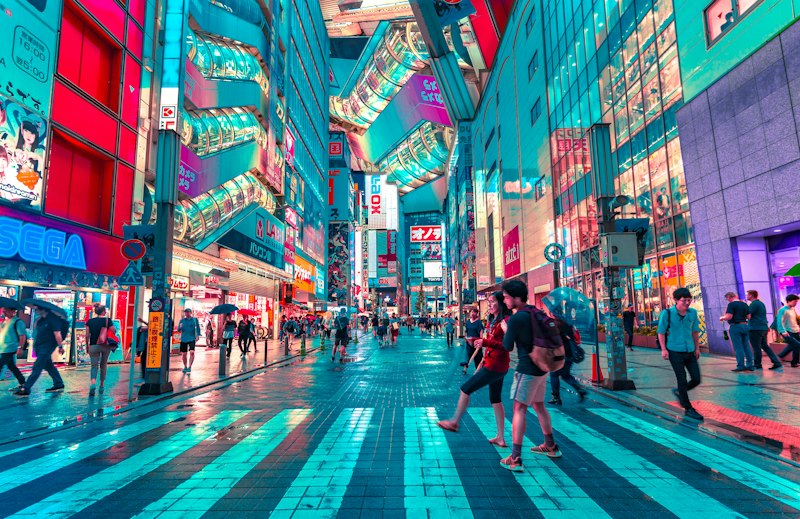
If you visited Japan before November 2026, you likely remember the incredibly convenient tax-free shopping system. You showed your passport with a tourist visa stamp at the cash register, the store deducted the 10% consumption tax on the spot, and you paid the discounted total. If you bought cosmetics or snacks, they were sealed in a special clear bag that you were forbidden to open until you left the country.
As of November 1, 2026, that system has been completely abolished.
In an effort to crack down on tax-free abuse (where organized groups would buy luxury goods tax-free and illegally resell them to domestic buyers inside Japan without exporting them), the Japanese government has transitioned to a strict Refund Method, mirroring the systems used in Europe and the APAC region.
Here is exactly how the new system works when buying your Nintendo Switch 2:
Step 1: Pay the Tax-Inclusive Price In-Store
When you approach the checkout counter at Bic Camera or Nintendo TOKYO, you will present your passport to prove your temporary visitor status. The clerk will register your purchase digitally with the tax authorities. However, you will now be required to pay the full, tax-inclusive price (e.g., the full 69,980 Yen for the Global Switch 2).
Step 2: The Airport Customs Validation Kiosk
You do not get your money back in the city. You must wait until your departure day. When you arrive at a major international airport (Narita, Haneda, Kansai, Chubu, Fukuoka, New Chitose, or Naha), you must complete the customs validation process BEFORE you check your luggage.
Look for the newly installed Tax-Free Procedure Terminals (kiosks) in the departure hall. You will scan the biometric page of your passport at the kiosk. The machine communicates with the purchase database and will give you one of two results on the screen:
- Green Result (No Inspection): The system has verified your digital records and determined you are low-risk. The customs confirmation is complete. You may now put your Switch 2 inside your checked suitcase and head to the airline counter.
- Red Result (Inspection Required): The system requires a physical verification to prove you are actually taking the console out of Japan. You must proceed to the manned Customs Inspection Area and physically show the agent your unboxed or boxed Switch 2. Warning: If you receive a Red Result and you have already checked your suitcase containing the console, your tax refund will be permanently denied. Always verify first, check bags second.
Pro-Tip: To avoid the physical kiosk lines, you can now perform the initial validation via the Visit Japan Web app while connected to the dedicated airport Wi-Fi network in the departure lobby. The app will similarly yield a Green or Red result.
Step 3: Receiving Your Money
Customs only validates the export; they do not hand you cash. Once your export is confirmed by the Green Result or the physical inspection, the digital signal is sent back to the retailer (or their partner, like Global Blue). The 10% consumption tax will then be refunded to your designated credit card or bank account. Note that third-party refund processors (often used by department stores) may deduct a 1.5% to 2% processing fee from your refund, though major electronics chains like Yodobashi generally process the full 10% back to your card. Expect the funds to appear on your bank statement within two to three weeks.
A Note on Consumables and Sealed Bags
Under the pre-2026 system, "General Goods" (like the Switch 2) and "Consumables" (like matcha snacks and sunscreen) had different rules, and consumables were trapped in sealed bags. The November 2026 overhaul abolished the sealed bag requirement entirely. However, the minimum spend to qualify for tax-free shopping remains at 5,000 Yen (excluding tax) per store, per day. A Switch 2 easily clears this threshold.
The Ultimate 2026 Store Guide: Where to Buy the Switch 2 in Tokyo and Osaka
Finding the Global Multi-Language SKU requires navigating beyond the massive displays of the Japan-Only model. Below is a curated list of the best physical retail locations to secure your console, complete with text-based access directions.
When navigating between these flagship electronics stores, you'll be hopping on and off the JR Yamanote line constantly. Make sure your transit payment is sorted by reading our guide on What is the Best IC Card for Tourists in Japan 2026? | Suica vs Pasmo vs ICOCA.
1. Nintendo TOKYO (Shibuya PARCO)
- Location: 6th Floor of Shibuya PARCO, Shibuya, Tokyo.
- Access: A 5-minute walk from the world-famous Shibuya Scramble Crossing and JR Shibuya Station (Hachiko Exit). Walk up the gently sloping Koen-dori street until you see the massive PARCO building on your left. Take the escalator or elevator directly to the 6th floor, known as "Cyberspace Shibuya".
- Hours: 11:00 AM to 9:00 PM daily.
- Why Buy Here: It is the official flagship store. They carry guaranteed stock of the Global Multi-Language SKU (ask the staff specifically for the "Global Version"). The store itself is a tourist attraction, featuring life-sized statues of Link, Mario, and Isabelle. Buying directly from Nintendo ensures you get pristine packaging and access to official, exclusive carrying cases and accessories.
- Bonus: After picking up your console at Nintendo TOKYO, you can celebrate by hunting for exclusive capsule toys; check out our Animal Crossing Gachapon Guide for Nintendo Tokyo & Osaka for the best pulls. Also, if you love limited-edition merchandise, check out the Ultimate Guide to the BLOFFFu Pop-Up Store in Tokyo 2026, which frequently hosts events in the Shibuya area.
2. Yodobashi Camera Multimedia Akiba
- Location: Akihabara, Tokyo.
- Access: This monolithic building is impossible to miss. Exit JR Akihabara Station via the Showa-dori Exit, walk straight ahead for about 30 seconds across the small crosswalk, and you are at the entrance. The video game section is located on the 6th floor.
- Hours: 9:30 AM to 10:00 PM daily.
- Why Buy Here: Yodobashi Akiba boasts one of the largest video game retail floors in the world. They have dedicated, multi-lingual staff who are well-versed in the differences between the 49,980 Yen and 69,980 Yen models. Furthermore, Yodobashi is excellent at maintaining stock of high-demand physical game cartridges at discounted prices.
- Bonus: Carrying a massive shopping bag through Tokyo rush hour is miserable. If you plan to haul a Switch 2, monitors, and games, consider staying locally. Our guide to the Best Hotels Near Akihabara 2026 | Value Location Convenience will help you find a room just steps from Yodobashi Camera.
3. Bic Camera Shinjuku East
- Location: Shinjuku, Tokyo.
- Access: A 2-minute walk from the East Exit of JR Shinjuku Station. Walk towards the massive Studio Alta building screen, take a right, and the towering Bic Camera and Uniqlo joint-building (often branded as "Bicqlo" in the past, though now operating separately) will be on your left. Games are typically on the 5th floor.
- Hours: 10:00 AM to 10:00 PM daily.
- Why Buy Here: Bic Camera frequently runs promotions linking tourist tax-free purchases with Visa or Mastercard discounts. While the tax refund itself is processed at the airport, presenting a specific foreign credit card at the register can sometimes net you an additional 5% off the base retail price at the point of sale.
4. Yamada Denki LABI1 LIFE SELECT Ikebukuro
- Location: Ikebukuro, Tokyo.
- Access: Located directly across the street from the East Exit of JR Ikebukuro Station. You can actually see the massive LABI1 sign the moment you step out of the station doors.
- Hours: 10:00 AM to 10:00 PM daily.
- Why Buy Here: Ikebukuro is slightly less trafficked by inbound tourists looking for tech compared to Akihabara, meaning during hardware shortages, LABI1 often retains stock of the Global Switch 2 SKU longer than Yodobashi or Bic Camera. The gaming floor is incredibly spacious, allowing you to browse without the claustrophobic crowds of Shinjuku.
5. Nintendo OSAKA (Daimaru Umeda)
- Location: 13th Floor of the Daimaru Umeda Department Store, Osaka.
- Access: The Daimaru building is directly connected to the South Gate Building of JR Osaka Station. You do not even need to go outside; simply follow the signs for Daimaru from the central concourse and take the central elevators to the 13th floor.
- Hours: 10:00 AM to 8:00 PM daily.
- Why Buy Here: The Kansai equivalent of Nintendo TOKYO. If you are starting your trip in Osaka and flying out of Kansai International Airport (KIX), this is the definitive place to secure your Global SKU console.
6. Edion Namba Main Store (Osaka)
- Location: Namba, Osaka.
- Access: A 3-minute walk from Nankai Namba Station. Exit the station, cross the street towards the massive Ebisubashi-suji shopping arcade entrance, but look for the massive Edion tower dominating the skyline just to the east.
- Hours: 10:00 AM to 9:00 PM daily.
- Why Buy Here: Edion Namba is a crown jewel of Osaka electronics shopping. Their 7th floor is entirely dedicated to kids' toys, hobbies, and video games. They offer robust support for international tourists and have clearly demarcated sections separating the Japan-Only Switch 2 hardware from the Global editions.
7. The Used Market: Bookoff Super Bazaar Hachioji Minamino
- Location: Hachioji, Tokyo (Suburbs).
- Access: A 10-minute walk from Hachioji-Minamino Station on the JR Yokohama Line. From Shinjuku, take the Chuo Line to Hachioji, then transfer to the Yokohama Line (approx. 50 minutes total transit).
- Hours: 10:00 AM to 9:00 PM daily.
- Why Buy Here: If you want to save even more money and are willing to buy a second-hand unit, large suburban Bookoff "Super Bazaar" locations are treasure troves. Inner-city stores in Akihabara are picked clean by resellers, but suburban stores often have glass cases full of pristine, lightly used Switch 2 consoles. Be incredibly careful here: Make sure the used box is the Global Multi-Language edition. If you buy a used Japan-Only model, you cannot refund it just because you can't read the language.
8. GEO Super Shop Machida
- Location: Machida, Tokyo.
- Access: A 5-minute walk from the North Exit of JR Machida Station or the West Exit of the Odakyu Machida Station.
- Hours: 9:00 AM to 12:00 AM midnight daily.
- Why Buy Here: GEO is Japan's premier dedicated video game and media rental/resale chain. The Machida location is massive and frequently stocks both new and used Switch 2 consoles and games. Used physical games at GEO are often priced 30% to 40% lower than retail, making it a fantastic place to build your library.