[PR] This article contains affiliate links.
The crisp autumn air of Kyoto carries the faint, grounding scent of sandalwood incense and roasted green tea. As the sun dips behind the western mountains, the ancient capital does not go to sleep; instead, it prepares for one of the most breathtaking visual spectacles in the world. The autumn night illuminations of Kyoto are legendary, transforming centuries-old temple grounds into ethereal, glowing landscapes.
For inbound travelers planning their 2026 journey, the Higashiyama district offers the pinnacle of this experience. This historic eastern ward is home to two absolute heavyweights of Kyoto’s cultural heritage: Kiyomizu-dera and Kodaiji. While countless guidebooks treat these temples as separate daytime destinations, viewing them together under the autumn night sky is an entirely different masterclass in travel planning.
Because of a magical 10-day overlap in late November, you have a brief, golden window to witness both of these monumental illuminations in a single, perfectly orchestrated evening. This massive, exhaustive guide will take you step-by-step through the Kyoto Higashiyama Autumn Night Illumination 2026, offering exact dates, verified admission fees, historical context, photography tips, and a minute-by-minute walking itinerary designed to help you bypass the worst of the crowds and maximize your time in this mesmerizing nocturnal wonderland.
The Magic of Autumn Illuminations in Kyoto
In Japan, the viewing of autumn leaves is known as momiji-gari (literally "hunting for red leaves"). This tradition dates back over a millennium to the Heian period, when aristocrats would cruise in boats upon the ponds of their estates, composing poetry inspired by the vibrant reds and golds of the turning maples. Today, that tradition has evolved into the modern marvel of night illuminations (light-ups).
High-powered, strategically placed LED lights are angled to illuminate the canopies of maple and ginkgo trees, throwing them into sharp, brilliant contrast against the pitch-black sky. The light catches the translucent, star-shaped leaves, making them appear as though they are glowing from within. Ponds become perfect, glassy mirrors, reflecting the fiery colors so perfectly that it becomes difficult to tell where the earth ends and the water begins.
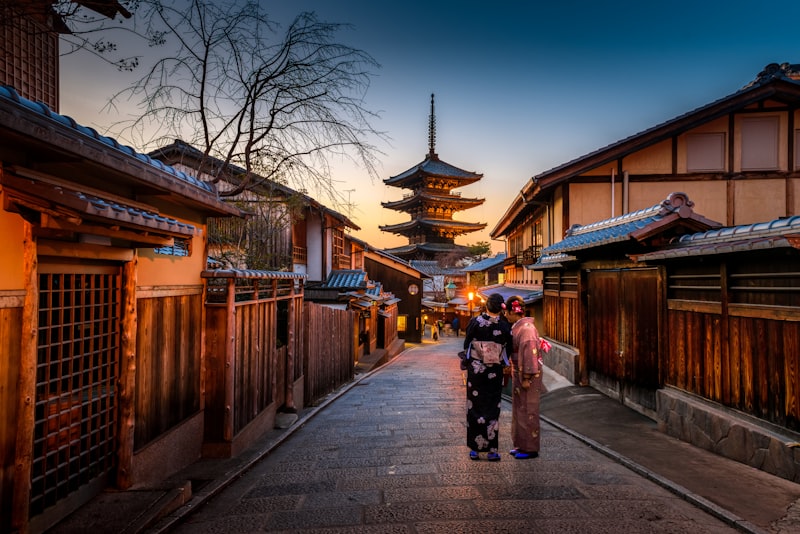
In the Higashiyama district, this natural beauty is combined with world-class, UNESCO-recognized architecture. The stone-paved streets of Sannenzaka and Ninenzaka—lined with traditional wooden machiya townhouses—connect Kiyomizu-dera and Kodaiji. By day, these streets are packed shoulder-to-shoulder with tourists. By night, after the daytime shops close and the lantern light spills onto the cobblestones, the area reclaims its ancient, mysterious atmosphere.
For an overview of the temple’s daytime history and general navigation, you can reference our companion Kiyomizu-dera Daytime Guide. However, the night experience requires entirely different logistics, timing, and expectations.
Kiyomizu-dera Autumn Night Illumination 2026: The Beacon of Higashiyama
Perched on the side of Mount Otowa, Kiyomizu-dera is arguably Kyoto's most famous temple. Its Autumn Night Illumination is a high-profile, highly anticipated event that draws visitors from across the globe.
Essential Information for 2026
- Dates: November 21 – November 30, 2026 (A strict 10-day window).
- Hours: 17:30 – 21:00 (Last admission at 21:00, temple grounds clear shortly after).
- Admission Fee: 500 JPY for adults, 200 JPY for elementary and junior high school students (Verified via the official temple administration for standard 2026 pricing).
The Blue Beam of Compassion
As you approach Higashiyama in the evening, the first thing you will notice is a brilliant, piercing blue laser beam shooting out from the mountain, cutting across the night sky over Kyoto city. This is the light of Kannon, the Buddhist deity of mercy and compassion to whom Kiyomizu-dera is dedicated. The blue beam represents Kannon's boundless compassion reaching out to the world. It serves as a visual beacon, guiding you up the winding slope of Matsubara-dori toward the temple gates.
The Illuminated Niomon Gate and Pagoda
Your journey begins at the towering Niomon (Deva Gate), painted in brilliant vermillion, which glows intensely under the floodlights. Just beyond it stands the Sanjunoto (Three-Storied Pagoda), the tallest of its kind in Japan. Surrounded by illuminated crimson maples, the pagoda looks spectacular against the dark backdrop. The night lighting accentuates the intricate woodwork and the vibrant colors that were painstakingly restored in recent years.
The Wooden Stage (Kiyomizu no Butai)
The undisputed climax of the Kiyomizu-dera visit is standing on the massive wooden veranda attached to the Main Hall (Hondo). Suspended 13 meters above the hillside without the use of a single nail, the stage is an architectural marvel. During the autumn night illumination, the valley below the stage—known as the Valley of Brocade (Kinko-un)—is transformed into a sea of fire. Over a thousand maple trees are lit from below, their red and orange canopies looking like glowing embers. Looking out over this glowing forest with the modern city lights of Kyoto twinkling in the far distance is a view that will stay with you forever.
The Descent to Otowa Waterfall
Following the designated path, you will walk down the hillside through the maple forest itself. The pathway is lined with low-level lanterns that cast a warm glow on the ancient stone steps. At the base of the hill lies the Otowa Waterfall, where three streams of pristine water fall into a stone basin. While the lines to drink from the waterfall can be long during the day, the night offers a more serene atmosphere to observe this sacred spring, softly illuminated amidst the darkness.
Kodaiji Temple Autumn Night Illumination 2026: The Masterpiece of Reflection
Just a 15-minute walk north of Kiyomizu-dera lies Kodaiji, a temple with a deeply romantic and slightly melancholy history. It was established in 1606 by Nene (also known as Kita-no-Mandokoro), the widow of Toyotomi Hideyoshi, one of Japan's great unifiers. She built the temple to pray for his soul and spent her final years here.
While Kiyomizu-dera relies on grand, sweeping vistas, Kodaiji’s illumination is intimate, meticulously curated, and profoundly artistic. It also offers a much wider date range, making it a fantastic standalone destination for travelers arriving in October or early December.
Essential Information for 2026
- Dates: October 23 – December 13, 2026.
- Hours: 17:00 – 22:00 (Last admission at 21:30).
- Admission Fee: 800 JPY for standard adult admission. (Note: A combination ticket that includes the nearby Entoku-in temple and the Sho Museum is typically available for 900 JPY, but if you are doing the dual-temple night itinerary, standard admission is sufficient).
The Projection Mapping at Hashintei Garden
Upon entering the temple complex and passing through the main buildings (where you must remove your shoes), you will come to the Hashintei, the temple’s main dry landscape (karesansui) zen garden. Kodaiji is famous for being incredibly innovative with its autumn illuminations. Instead of just lighting the garden, they employ state-of-the-art 3D projection mapping. Using the meticulously raked white gravel and the weeping cherry tree as a canvas, digital artists project mesmerizing, flowing imagery—often depicting dragons, changing seasons, or abstract Buddhist concepts. This 5-minute looping light show is a spectacular fusion of 17th-century Zen aesthetics and 21st-century technology.
The Mirror of Garyochi Pond
If you only see one thing in Kyoto at night, let it be the Garyochi (Lying Dragon Pond) at Kodaiji. The temple's gardeners and lighting technicians have perfected the art of the water reflection. The pond is kept incredibly still, and the surrounding maple trees and historic tea houses (the Kasatei and Shiguretei, designed by tea master Sen no Rikyu) are illuminated perfectly. The water acts as a flawless mirror, creating an optical illusion so perfect that it feels like you are looking down into another, subterranean world. The deep blacks of the water contrast sharply with the fiery reds and golds of the leaves.
The Illuminated Bamboo Grove
After passing the pond and hiking slightly up the hill to view the mausoleum of Hideyoshi and Nene, the exit path winds through a dense bamboo grove. While most tourists flock to the Ultimate Arashiyama Travel Guide 2026: Bamboo Grove, Tenryu-ji & Togetsukyo Bridge during the day, Arashiyama is far on the western side of the city and largely dark at night. Kodaiji offers a stunning alternative: a night-illuminated bamboo forest right in Higashiyama. Up-lighting turns the towering green stalks into glowing, surreal pillars that sway gently in the autumn wind, creating an eerie, beautiful end to the temple route.
The Ultimate 1-Night Higashiyama Overlap Itinerary (Nov 21-30, 2026)
Because Kiyomizu-dera's illumination strictly runs from November 21 to 30, and Kodaiji runs from October 23 to December 13, November 21 through November 30, 2026 is your golden window to see both in one night.
Tackling both requires stamina, planning, and precise timing. Kyoto in late November is at peak tourist capacity. By linking these two sites in a specific order, you can minimize waiting in line and maximize your experience.
16:30 – Arrive in Higashiyama and Prepare
Arrive in the Higashiyama area before the sun fully sets. Avoid taking the bus from Kyoto Station at this hour, as gridlock traffic is virtually guaranteed. Instead, take a train to Keihan Kiyomizu-Gojo Station or Hankyu Kyoto-Kawaramachi Station and walk, or take a taxi. Spend this time grabbing a quick, early dinner or a substantial snack. You want to be fueled up before the temples open. (See the Dining section below for specific recommendations).
17:15 – Line Up at Kiyomizu-dera
Walk up the steep incline of Matsubara-dori (the main shopping street leading to Kiyomizu-dera). By 17:15, a line will already be forming for the 17:30 gate opening. Joining the queue now ensures you are in the first wave of visitors. Have your 500 JPY ready in cash. Japan is modernizing its payment systems, and while many stores take cards, temple admissions are often cash-only to keep the line moving fast. (For a deep dive on currency in Japan, check our guide on Cash vs Card in Japan 2026: How Much Cash Do You Need?).
17:30 to 18:45 – Experience Kiyomizu-dera
As the gates open, move steadily through the complex. The crowds will naturally bottleneck at the main wooden stage to take photos. Be patient, wait your turn at the railing, and capture your shots of the illuminated maples below. Take your time walking down the stairs toward the Otowa Waterfall, enjoying the view of the wooden stage from below.
18:45 to 19:15 – The Night Walk Down Sannenzaka and Ninenzaka
Exit Kiyomizu-dera and head right, turning onto the famous Sannenzaka (Three-Year Hill) stairs, which lead down into Ninenzaka (Two-Year Hill). This is a magical 30-minute transition. While the souvenir shops will mostly be closed, the traditional lanterns outside the wooden machiya houses will be lit. This provides incredible photo opportunities without the daytime throngs. Walk carefully on the stone steps—local legend playfully warns that if you trip and fall on Sannenzaka, you will have three years of bad luck!
19:15 to 20:30 – Experience Kodaiji Temple
Ninenzaka leads directly to the southern approach of Kodaiji. Head up the large stone staircase to the temple entrance. Because it is now past 19:00, the initial rush of visitors to Kodaiji will have dispersed, and the line to enter (800 JPY) should be minimal.
You will need to remove your shoes to enter the main hall to view the Zen garden projection mapping. The temple provides plastic bags to carry your shoes with you. The wooden floors are breathtakingly cold in November, so wear thick socks. After enjoying the light show, put your shoes back on and head to the Garyochi pond for the reflection views, before finishing your tour through the illuminated bamboo grove.
20:30 Onward – Late Dinner in Gion
Exiting Kodaiji, you are just a 10-minute walk down into the heart of the Gion district (Yasaka Shrine area). Here, you can find late-night izakayas, warm bowls of udon, and atmospheric bars to reward yourself after a long evening of walking.
10 Essential Stops on Your Evening Walk (Dining & Shopping)
While the temples are the main event, the journey between them is packed with culinary and cultural gems. Note that many shops on the path close around 17:00 or 18:00, making them perfect for your pre-illumination preparation, while others in Gion stay open late. If you have specific dietary needs, such as nut or dairy allergies, we highly recommend reading our guide on Allergy Travel Japan | Nut Egg Dairy Free Dining with Translation Cards before dining in traditional Kyoto establishments.
Here are 10 specific, practical stops along the Higashiyama route:
1. Inoda Coffee (Kiyomizu Branch)
Location: 3-334 Kiyomizu, Higashiyama-ku. Hours: 9:00 – 17:00. Details: Before the night chill sets in, stop here around 16:30. Inoda Coffee is a legendary Kyoto institution. Enjoy their classic "Arabian Pearl" dark roast coffee (approx. 700 JPY) and a slice of lemon pie in a retro, Taisho-era setting overlooking a beautiful garden. It’s the perfect caffeine boost before the steep climb.
2. Donguri Kyowakoku (Studio Ghibli Store) Ninenzaka
Location: 2-225-2 Kiyomizu, Higashiyama-ku. Hours: 9:30 – 18:00. Details: Located seamlessly inside a traditional wooden townhouse, this official Studio Ghibli merchandise shop is magical. Because it closes at 18:00, you should visit it either before your 17:30 Kiyomizu entry, or rush here immediately after. It offers exclusive Kyoto-themed Totoro and Spirited Away goods.
3. Starbucks Coffee Kyoto Ninenzaka Yasaka Chaya
Location: 349 Masuya-cho, Higashiyama-ku. Hours: 8:00 – 20:00. Details: You will pass this right on your transition from Kiyomizu to Kodaiji. This is the world’s first Starbucks located inside a 100-year-old traditional Japanese machiya with tatami mat seating. Look for the simple wooden sign with the siren logo on the noren curtain. Grab a hot Matcha Tea Latte (approx. 550 JPY) to warm your hands as you walk.
4. Maccha House (Matcha Tiramisu)
Location: 3-337 Kiyomizu, Higashiyama-ku. Hours: 9:00 – 18:00 (often extended slightly during illumination season). Details: Famous across Japanese social media for its Uji Matcha Tiramisu served in a traditional wooden masu box (approx. 800 JPY). The sharp bitterness of the premium matcha powder cuts perfectly through the rich, sweet mascarpone cream.
5. Kasagiya (Traditional Sweet Shop)
Location: 3-349 Masuya-cho (Right on the Sannenzaka stairs). Hours: 11:00 – 18:00 (Closed Tuesdays). Details: A tiny, incredibly atmospheric teahouse that looks like a movie set. They serve handmade ohagi (sweet rice balls coated in red bean paste) and frothy, hot matcha (approx. 900 JPY for a set). It has been operating for over 100 years and is beloved by local artists and writers.
6. Kiyomizu Junsei Okabeya
Location: 2-239 Kiyomizu, Higashiyama-ku. Hours: 10:30 – 17:00 (Check for extended night hours during November). Details: Kyoto is famous for its pure water, making it the tofu capital of Japan. Okabeya specializes in Yudofu (hot tofu hotpot). For around 3,500 JPY, you can get a multi-course tofu meal that is incredibly warming and gentle on the stomach, perfect for vegetarians or those seeking a delicate, traditional dinner before the illuminations.
7. Omen (Kodaiji Branch)
Location: 362 Masuya-cho, Higashiyama-ku (Just steps from Kodaiji). Hours: 11:00 – 20:30. Details: If you want dinner after Kiyomizu-dera but before Kodaiji, Omen is the perfect stop. They are renowned for their signature udon noodles served with a massive plate of seasonal roasted vegetables, fresh ginger, and sesame seeds to mix into the dipping broth (approx. 1,500 to 2,000 JPY).
8. Hisago (Oyakodon)
Location: 484 Shimokawara-cho, Higashiyama-ku. Hours: 11:30 – 19:30 (Closed Mondays). Details: Located near Kodaiji, this restaurant is famous for its Oyakodon (chicken and egg over rice). The eggs are sourced from local farms and are cooked to a perfect, creamy consistency, seasoned with Kyoto green onions and sansho pepper (approx. 1,300 JPY). Expect a short line, as it is highly rated by locals.
9. Gion Tsujiri (Gion Main Store)
Location: 573-3 Gionmachi Minamigawa, Higashiyama-ku (Down in Gion, after the temples). Hours: 10:00 – 20:00. Details: After finishing Kodaiji, walk 10 minutes down to Shijo-dori. Gion Tsujiri has been selling tea since 1860. On the ground floor, you can buy incredible tea to take home. Upstairs is Saryo Tsujiri, where you can order massive, decadent matcha parfaits loaded with mochi, matcha ice cream, and sweet red beans (approx. 1,500 JPY).
10. Kyoto Gion Tempura Yasaka
Location: Inside the Gion area, near Yasaka Shrine. Hours: Evening seating typically 17:30 – 22:00. Details: For a luxury conclusion to your evening, book a counter seat at a tempura restaurant in Gion. Watching a master chef fry seasonal autumn vegetables (like lotus root, sweet potato, and matsutake mushrooms) right in front of you is mesmerizing. Expect to pay between 8,000 to 15,000 JPY for a high-end course, requiring advance reservations.