[PR] This article contains affiliate links.
Stepping onto the massive wooden stage of Kiyomizu-dera Temple, suspended high above the ancient capital of Kyoto, is a profound rite of passage for any traveler. Surrounded by the dense, seasonal foliage of Mount Otowa and looking out over the sprawling city below, you are standing on a masterclass of traditional Japanese architecture that has endured for centuries without a single nail.
As one of Kyoto's most iconic UNESCO World Heritage sites, nestled above the beautifully preserved historic Higashiyama district, Kiyomizu-dera commands a place on almost every single inbound tourist's itinerary. However, navigating the logistics of a visit in 2026 requires careful planning. Between shifting opening hours, seasonal illumination events, complex public transit routes, and famously intense crowds, arriving unprepared can lead to an overwhelming experience rather than a spiritual one.
This exhaustive, extensively researched 2026 visitor guide provides everything you need to know to master your visit to Kiyomizu-dera Temple. From navigating the steep slopes of Kiyomizu-zaka to understanding the exact admission fees, access routes, and strict temple etiquette, we have left no stone unturned.
1. Essential Information: 2026 Admission Fees & Opening Hours
When planning your itinerary, the most crucial elements to nail down are when to arrive and how much it will cost. Kiyomizu-dera operates on a schedule deeply tied to the natural seasons and spiritual calendar of Kyoto.
Opening Hours: The 6:00 a.m. Rule
According to the official temple guidelines, Kiyomizu-dera opens its gates at 6:00 a.m. every single day of the year.
However, there is no single, year-round closing time. The temple's closing hours differ significantly depending on the season, daylight hours, and special ongoing nighttime events. Because these hours are fluid and subject to change, you must check the "Open Hours" section on the official Kiyomizu-dera website (kiyomizudera.or.jp/en/) directly to verify the exact closing time for your specific visit date. Do not rely on third-party aggregators for closing times, as they frequently display outdated, static information.
Admission Fees
Entering the outer grounds of the temple is free, but to progress beyond the towering Niōmon Gate and enter the inner paid area—which includes the famous Main Hall (Hondo) and the wooden stage—a ticket is required.
While you should always verify the price at the ticket gate upon arrival, multiple independent, current travel-information sources consistently report the general admission fee for the paid area in 2026 as:
- Adults: ¥500
- Elementary & Junior High School Students: ¥200
Traveler Tip: It is highly recommended to bring exact cash in Japanese Yen for your tickets. While Japan is rapidly digitizing, card acceptance at temple entry booths is never completely guaranteed, and handing over a physical ¥500 coin keeps the famously long lines moving swiftly. If you need advice on balancing physical currency and digital payments during your trip, read our guide on Cash vs Card in Japan 2026: How Much Cash Do You Need?.
2. Special Events: The 2026 Spring Special Night Viewing
Kiyomizu-dera is world-renowned for its breathtaking nighttime illuminations, where high-powered blue lasers shoot across the Kyoto night sky, representing the compassion of Kannon, the temple's principal deity. During these periods, the temple grounds and surrounding foliage are spectacularly lit up.
For inbound tourists traveling in early 2026, the official event calendar confirmed the 2026 Spring Special Night Viewing ran strictly from March 27 through April 5, 2026.
- Special Extended Hours: During this specific event window, the temple remained open until 9:30 p.m.
- Last Entry: Visitors had to enter by 9:00 p.m.
Important Note: This schedule reflects a special illumination period and is absolutely not the regular daily schedule. If you are visiting during the summer, autumn leaf season, or any other time of the year, do not assume these nighttime hours apply. You must check the official event calendar for night viewing dates relevant to your own visit, as the exact weeks shift annually based on foliage predictions and the lunar calendar.
3. How to Get to Kiyomizu-dera Temple in 2026
Kiyomizu-dera sits halfway up Mount Otowa in the eastern part of Kyoto (Higashiyama). Because there is no train station directly at its doorstep, understanding the bus and walking routes is critical.
The Only Official Entrances
Before discussing transit, you must understand a critical geographical fact about the temple: the temple grounds can only be entered via the Niōmon Gate at the top of the Kiyomizu-zaka slope, or via the emergency-road entrance on Chawan-zaka.
Many tourists find themselves lost because modern mapping apps sometimes route visitors to residential backroads south of the temple that dead-end into steep retaining walls and dense forest, nowhere near an actual entry point. Always set your map destination specifically to the Niōmon Gate (Kiyomizu-dera).
Access via Kyoto City Bus (Recommended Route)
According to the official site, the absolute nearest bus stop to the temple approach is "Gojozaka."
If you are departing from Kyoto Station, head to the bus terminal located directly outside the central north exit (Karasuma side). You have two primary options:
- City Bus No. 206 (Heading toward Kitaoji Bus Terminal)
- City Bus No. 100 (Heading toward Ginkaku-ji Temple)
Both buses will drop you off at the Gojozaka bus stop. From there, it is roughly a 10-minute, entirely uphill walk east to reach the temple gates.
Weekend Note: If you are traveling on Saturdays, Sundays, or Japanese national holidays, Kyoto Bus No. 18 also serves the Gojozaka stop and requires the exact same onward walk.
Access via Train (Keihan Railway)
For those who prefer to avoid Kyoto's famously congested buses, the train is an excellent alternative, though it requires a longer walk. The nearest railway station to the temple is Keihan Railway's "Kiyomizu-Gojo" Station.
From the station exits, it is approximately a 25-minute walk eastward, uphill along Gojo-dori and then up the temple approaches, to reach the Niōmon Gate. This walk is pleasant and takes you through some beautiful, quieter local neighborhoods before you hit the main tourist arteries.
Navigating these transit systems is infinitely easier with an IC Card. If you aren't sure which one to get or whether the global chip shortage still affects them, read our comprehensive guide: What is the Best IC Card for Tourists in Japan 2026? | Suica vs Pasmo vs ICOCA.
4. The Approach: Conquering the Higashiyama Slopes
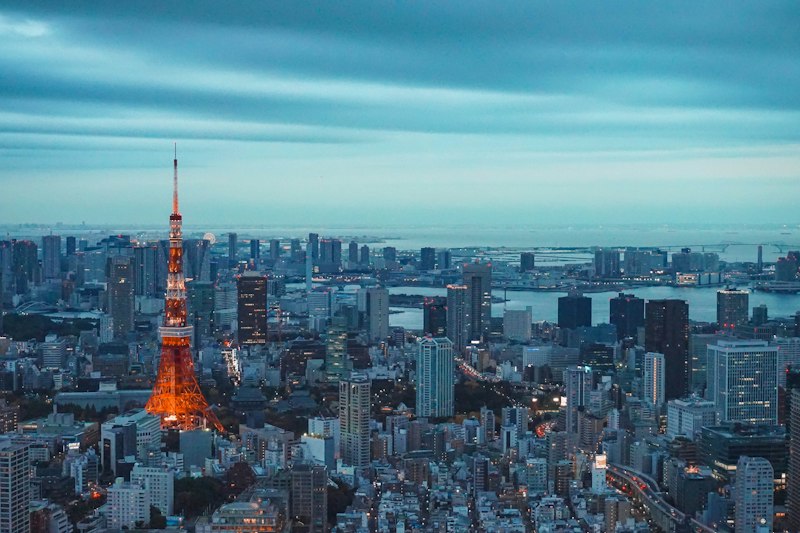
The journey to Kiyomizu-dera is arguably just as famous as the temple itself. You cannot simply step out of a vehicle into the temple; you must ascend. The path is a physical and sensory ascent through the Higashiyama district, lined with centuries-old architecture, kimono rental shops, incense sellers, and traditional confectionaries.
There are three primary pedestrian approaches leading up the hill:
- Kiyomizu-zaka (Matsubara-dori): The main, most direct, and most crowded artery. It is a steep, bustling shopping street leading directly to the Niōmon Gate.
- Sannen-zaka & Ninen-zaka: Iconic, stone-paved pedestrian slopes branching off the main path to the north. Famous for their wooden machiya houses and strict preservation.
- Chawan-zaka (Teapot Lane): Located slightly south of the main approach, this route is historically famous for Kyoto's Kiyomizu-yaki pottery. It is slightly less crowded and leads to the emergency-road entrance near the main gate.
Deep Guide: 7 Specific Spots to Visit on the Approach
To elevate your itinerary, here is an extremely deep guide to specific stores, cafes, and historical markers you should visit on your walk up (or down) the slopes. Because prices fluctuate, treat the listed Yen amounts as reliable 2026 baseline estimates.
1. Starbucks Coffee Kyoto Ninenzaka Yasaka Chaya
An absolute must-see architectural marvel. This is the world's first Starbucks featuring tatami floor seating, built inside a remarkably preserved 100-year-old traditional Japanese townhouse (machiya). There is no giant neon sign; the logo is subtly printed on a traditional noren curtain.
- Location/Access: Located right on the stone-paved Ninen-zaka slope, about a 15-minute walk from Gojozaka bus stop.
- Price: Standard Starbucks pricing (~¥500 - ¥700 for a latte or matcha beverage), but the ambiance is priceless.
- Tip: Arrive exactly when they open (usually 8:00 a.m.) if you want any chance of sitting on the upstairs tatami mats without waiting in a massive queue.
2. Shichimiya Honpo (Spices)
Operating since the mid-17th century, this historic spice shop sits right at the critical corner where Sannen-zaka meets the main Kiyomizu-zaka slope. They are famous for their Shichimi Togarashi (seven-flavor chili pepper).
- Location/Access: Corner of Sannen-zaka and Kiyomizu-zaka, a 10-minute walk from Gojozaka.
- Price: A small, beautifully packaged traditional bamboo tube of shichimi costs roughly ¥800 - ¥1,200. It makes for an incredibly lightweight, authentic souvenir.
3. Malebranche Kiyomizu-zaka (Matcha Sweets)
Kyoto is synonymous with high-quality green tea. Malebranche produces "Okoicha Langue de Chat" (Cha no Ka)—delicate, buttery cookies made from rich Uji matcha, sandwiching a layer of premium white chocolate.
- Location/Access: Located halfway up the Kiyomizu-zaka main shopping street.
- Price: Boxes start around ¥1,200 for 5 pieces.
- Related Reading: If you are a massive fan of green tea sweets and your itinerary includes the capital, don't miss our guide to the Best Matcha Desserts in Tokyo | Top Sweets Shops.
4. Donguri Kyowakoku (Studio Ghibli Store) Ninenzaka
Fans of Hayao Miyazaki's animation will be enchanted by this officially licensed Studio Ghibli shop, tucked away in the historic district. A massive Totoro greets you at the entrance, surrounded by traditional Kyoto aesthetics.
- Location/Access: On the Ninen-zaka path, barely a 3-minute walk north from the Sannen-zaka intersection.
- Price: Varies wildly; keychains run ¥800, while larger plushies or intricate music boxes range from ¥4,000 to ¥10,000+.
5. Maccha House (Matcha Tiramisu)
Famous on Japanese social media for their visually stunning "Uji Maccha Tiramisu" served in a traditional wooden masu cup. The brilliant green matcha powder gives way to incredibly soft, sweet mascarpone cheese beneath.
- Location/Access: Maccha House Kyoto Kiyomizu branch is situated along the main approaches near the Sannen-zaka turnoff.
- Price: A set featuring the tiramisu and a traditional tea beverage will cost around ¥1,200 - ¥1,500.
6. Asahi-zaka (Hidden Pottery Shopping)
While everyone clusters on the main streets, Asahi-zaka is a tiny offshoot near the top of the hill specializing in Kiyomizu-yaki (Kiyomizu pottery). Look for small artisan galleries like Koshun-gama or Toh-an.
- Location/Access: A minor side street just south of the main Kiyomizu-zaka, a 2-minute walk before you reach the Niōmon Gate.
- Price: Authentic, hand-painted tea cups (yunomi) usually start around ¥3,000 and can easily reach ¥20,000+ for masterwork pieces.
7. Kiyomizu Junsei Okabeya (Tofu Dining)
Kyoto is famous for its pure water, making it a historic hub for high-quality tofu. If you want a traditional sit-down meal to escape the crowds, Okabeya offers exceptional Yudofu (simmered tofu) sets in a beautifully preserved building.
- Location/Access: Tucked down an alleyway just steps away from the bustling Kiyomizu-zaka approach.
- Price: Lunch sets typically run ¥2,500 to ¥3,500. For an analysis of how this compares to daily travel budgets, refer to our article: How Much Does Food Cost in Japan? 2026 Konbini vs Restaurant.
5. Step-by-Step Walkthrough: Inside Kiyomizu-dera
Once you have finally ascended the steep slopes of Kiyomizu-zaka, the crowds will funnel you into the magnificent entrance of the temple itself. Here is a detailed, chronological walkthrough of what you will experience.
1. The Niōmon Gate & The West Gate (Sai-mon)
The brilliant vermilion Niōmon Gate (Deiva Gate) serves as the visual anchor of the temple approach. Guarded by two fierce Niō statues, it marks the boundary between the mundane world and the sacred grounds.
Just past it lies the West Gate (Sai-mon) and the Three-Storied Pagoda (Sanju-no-to), one of the tallest wooden pagodas in Japan. This area is entirely free to explore and offers stunning views looking back down over the city of Kyoto.
2. Zuigudo Hall & The Tainai-Meguri (Womb Wandering)
Before you reach the main ticket gate, you will encounter the Zuigudo Hall, dedicated to Daizuigu Bodhisattva. Here, you can partake in a deeply spiritual experience called Tainai-meguri.
- The Experience: You remove your shoes and descend a staircase into complete, suffocating pitch-black darkness. This represents the symbolic womb of the female Bodhisattva. You must navigate purely by sliding your hand along a massive prayer bead rope attached to the wall. Eventually, you reach a softly illuminated stone; you spin it, make a wish, and ascend back into the light, representing spiritual rebirth.
- Cost: This typically requires a small separate fee (usually ¥100) not covered by the main temple admission.
3. The Main Hall (Hondo) and The Wooden Stage
After purchasing your ¥500 admission ticket, you will proceed into the Main Hall (Hondo). This massive structure houses the principal image of the temple: a small statue of the eleven-headed, thousand-armed Kannon.
Attached to the Hondo is the legendary Kiyomizu Stage (Kiyomizu no butai). Jutting out 13 meters above the hillside, it is supported by 18 massive, centuries-old Keyaki (zelkova) wood pillars.
- Architectural Marvel: The entire structure is assembled using a traditional technique called kakezukuri. Not a single metal nail was used in its construction. The wooden beams are perfectly interlocked to withstand earthquakes and the immense weight of the thousands of visitors who stand on it daily.
- Idiom Note: In Japan, the phrase "to jump off the stage of Kiyomizu" is the equivalent of the English phrase "to take a leap of faith."
4. Jishu Shrine (The Love Shrine)
Located directly behind the Main Hall is Jishu Shrine, famous for its two "love stones" set 18 meters apart. The legend states that if you can walk from one stone to the other with your eyes completely closed, your desires for true love will be granted. (Note: Jishu Shrine has been undergoing extensive, multi-year renovations; check upon arrival if the inner sanctum is open).
5. Okunoin Hall (The Best Photo Spot)
If you've seen a professional photograph of Kiyomizu-dera featuring the wooden stage seemingly floating over a sea of red maples or pink cherry blossoms with the Kyoto skyline in the background—it was taken from the Okunoin Hall. As you exit the Main Hall and follow the designated walking path to the left, you will wrap around the hillside to Okunoin. This smaller hall sits directly across the ravine from the Main Hall. This is the absolute best vantage point for photography.
6. Otowa Waterfall (Otowa no Taki)
Descending the stairs from Okunoin brings you to the base of the massive wooden pillars supporting the stage. Here lies the Otowa Waterfall, the very spring of pure water from which the temple draws its name (Kiyomizu translates literally to "pure water").
The water is divided into three distinct streams falling into a stone basin. Visitors use long-handled cups equipped with UV-sterilization to catch the water and drink it.
- The Meanings: The three streams represent different benefits: Longevity, Success in Studies, and Love/Romance.
- The Golden Rule: Temple etiquette dictates that you should only drink from one of the streams. Drinking from two is considered greedy, and drinking from all three is believed to curse you with bad luck, nullifying the spiritual benefits entirely.
6. Temple Etiquette & Rules for 2026
As a sacred Buddhist site and a highly trafficked UNESCO landmark, Kiyomizu-dera enforces several rules to maintain order and respect. Inbound tourists must adhere to these guidelines to ensure a positive experience for everyone.
Purification at the Chōzuya
Before entering the paid inner sanctum, you will see a stone water pavilion called a chōzuya. This is for ritual purification.
- Take the wooden dipper (hishaku) with your right hand, scoop water, and pour it over your left hand.
- Switch the dipper to your left hand and pour water over your right hand.
- Switch back to your right hand, pour a little water into your cupped left hand, and rinse your mouth. (Do not touch the dipper directly to your lips, and spit the water discreetly into the rocks below, not back into the main basin).
- Finally, hold the dipper vertically to let the remaining water wash down the handle, purifying it for the next person.
Photography Etiquette
- No Tripods or Monopods: Due to the extreme congestion and the risk of damaging the delicate wooden flooring, the use of tripods and monopods is strictly prohibited on the Main Stage and throughout most of the inner grounds.
- No Drones: Flying drones anywhere near the temple grounds or the Higashiyama district is a severe violation of Japanese aviation law and local ordinances.
- Respecting Worshippers: When photographing the inner sanctum of the Main Hall where the deity is housed, look for signage. Photography directly into the innermost shrine is often prohibited.
General Conduct
- Walk on the left side of pathways where possible.
- Keep your voice low. Despite the crowds, this remains a functioning place of worship where locals come to pray.
- Dress respectfully. While there is no strict dress code like covering shoulders/knees as in some Southeast Asian temples, overly revealing clothing is frowned upon. Remember that Kyoto summers are brutally hot and humid—if you need advice on sun protection, consult our list of the Best Japanese Sunscreens 2026 | TOP5 for Western Travelers.
7. Beating the Crowds: The Best Times to Visit
Kiyomizu-dera welcomes over 5 million visitors annually. In 2026, with inbound tourism to Japan at record highs, "crowded" is an understatement. The narrow approach streets frequently become shoulder-to-shoulder bottlenecks by mid-day.
The Magic Hour: 6:00 A.M.
If there is only one piece of advice you take from this entire 5,000-word guide, let it be this: Arrive at the temple gates right at 6:00 a.m. when they open.
By prioritizing Kiyomizu-dera as your very first stop of the day, you bypass 95% of the tourist traffic. The air is crisp, the morning light hitting the vermilion Niōmon gate is spectacular, and you can actually hear the birds in the surrounding forest rather than the hum of a thousand voices. You will be able to take unobstructed photographs from the Okunoin hall, a feat that becomes impossible by 10:00 a.m.
Logistical note for early risers: The city buses do run early enough to get you to Gojozaka by 6:00 a.m., but taking a taxi from your hotel in the early morning (when there is zero traffic) is highly recommended and usually costs less than ¥2,000 from the downtown Kyoto/Kawaramachi area.
The Late Afternoon Strategy
If you cannot wake up before dawn, your next best option is to visit late in the afternoon, roughly an hour to 90 minutes before the sunset/closing window (keeping in mind that you must check the official kiyomizudera.or.jp site for that specific day's closing time).
Large, organized tour bus groups typically clear out by 3:30 p.m. or 4:00 p.m. to head to their dinner reservations or hotels. Visiting late in the afternoon provides spectacular "golden hour" lighting across the wooden stage and the city below.
Warning: The caveat to the late afternoon strategy is that many of the traditional shops lining the Kiyomizu-zaka approach begin closing their doors firmly between 5:00 p.m. and 6:00 p.m. If shopping for souvenirs or eating matcha sweets is a priority, do that before you enter the temple.
8. Creating a Full-Day Higashiyama Itinerary
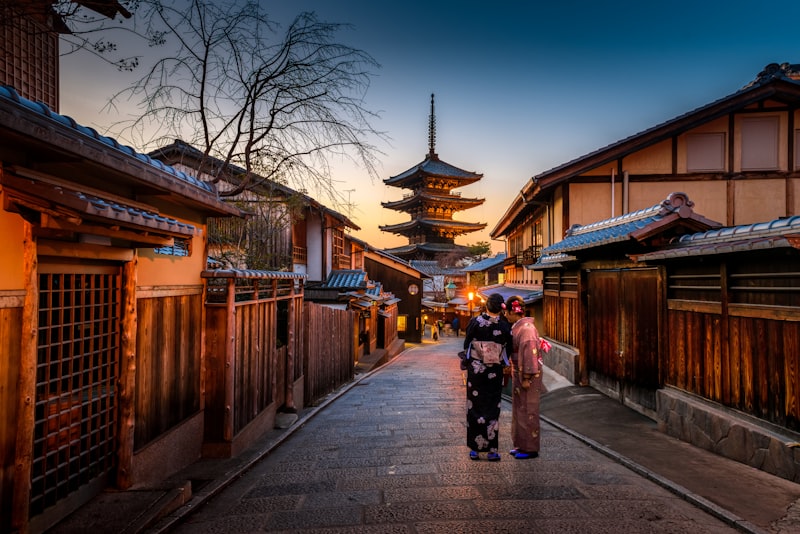
Because Kiyomizu-dera is located in the heart of Higashiyama, it serves as the perfect starting point for a full-day walking tour of eastern Kyoto. Here is a highly optimized walking route to utilize after your early-morning temple visit:
- 6:00 a.m. - 8:00 a.m.: Explore Kiyomizu-dera (Main Hall, Okunoin, Otowa Waterfall).
- 8:00 a.m. - 9:30 a.m.: Walk down Kiyomizu-zaka before the heavy crowds arrive. Turn right onto Sannen-zaka and then Ninen-zaka. Enjoy the preserved architecture and grab an early morning coffee at the tatami Starbucks.
- 9:30 a.m. - 10:30 a.m.: Continue north on foot towards Kōdai-ji Temple. This beautiful, lesser-known Zen temple features spectacular landscape gardens and a bamboo grove that is infinitely less crowded than Arashiyama.
- 10:30 a.m. - 11:30 a.m.: Walk further north to Yasaka Shrine (Gion Shrine). The bright orange gates are stunning, and the shrine sits right at the border of the modern city and the historic geisha district.
- 11:30 a.m. onwards: Exit Yasaka Shrine to the west and you will be stepping directly onto Shijo-dori, the heart of the Gion District. Here you can find high-end matcha cafes, traditional Kyoto dining, and easy access to the Keihan railway or Hankyu railway lines to head elsewhere in the city.
(Pro Tip: If you plan on doing a lot of shopping in Japan to take advantage of the weak Yen, ensure you are utilizing digital discount platforms. Read our guide on the 7 Best Free Klook Shopping Coupons for Japan in 2026 to maximize your savings on everything from transit passes to souvenirs).
9. Essential Packing & Preparation Checklist
To ensure your visit to Kiyomizu-dera goes flawlessly, make sure your day-bag is packed with the following:
- Coins: Ensure you have enough ¥100 and ¥500 coins for the admission fee (Adult ¥500 / Elem & JHS ¥200), the Tainai-meguri, purchasing omamori (lucky amulets), and dropping offerings into the temple's saisen boxes.
- Slip-on Shoes: If you intend to do the Tainai-meguri or enter certain tatami-matted halls nearby, you will need to remove your shoes frequently. Lace-up boots will become a severe annoyance. Ensure you are wearing thick, clean socks out of respect.
- A Small Towel (Tenugui): After washing your hands at the chōzuya pavilion, you will need something to dry them with. Most shrines do not provide paper towels. A traditional Japanese tenugui cloth purchased at a nearby shop makes a fantastic, practical souvenir.
- Water & Hydration: The walk up Gojozaka is incredibly steep. During the humid summer months, dehydration is a serious risk. Buy a bottle of water or green tea from a vending machine before you begin the climb.
- Pre-loaded IC Card: Do not rely on buying paper bus tickets at Kyoto Station. Have your Suica, Pasmo, or ICOCA loaded with at least ¥2,000 for a day of seamless transit across the city.
Final Thoughts
A journey to Kiyomizu-dera Temple is an immersion into the very soul of Kyoto. Yes, the crowds can be overwhelming, and the uphill walk requires physical effort. But the moment you step onto that massive wooden stage, gazing out over the treetops toward the distant mountains, the chaos of the modern world fades away.
By adhering strictly to the facts—arriving at 6:00 a.m., entering specifically via the Niōmon Gate or Chawan-zaka road, checking the official site for accurate closing hours, and bringing your ¥500 entry fee in exact cash—you elevate yourself from a confused tourist to a prepared traveler. Respect the temple grounds, savor the matcha on Ninen-zaka, and let the spiritual history of Higashiyama wash over you.
FAQ
Q: What time does Kiyomizu-dera open?
Kiyomizu-dera opens at 6:00 a.m. every single day of the year. However, closing times vary significantly depending on the season and special events, so it is best to check the official temple website for the exact closing time on your visit date.
Q: How much does it cost to enter Kiyomizu-dera in 2026?
While entering the outer grounds is free, accessing the inner paid area (including the Main Hall and the wooden stage) costs ¥500 for adults and ¥200 for elementary and junior high school students. Bringing exact cash in Japanese Yen is highly recommended.
Q: How do I get to Kiyomizu-dera from Kyoto Station?
The easiest way is to take Kyoto City Bus No. 206 or No. 100 from Kyoto Station to the 'Gojozaka' bus stop. From there, it is approximately a 10-minute uphill walk east to the temple's Niōmon Gate.
Q: When are the nighttime illuminations at Kiyomizu-dera?
Nighttime illuminations happen during specific seasonal events, such as the Spring Special Night Viewing, when hours are extended (e.g., until 9:30 p.m.). Because these dates shift annually based on foliage and the lunar calendar, you must verify the schedule on the temple's official website.
Q: What is the best time to visit Kiyomizu-dera to avoid crowds?
The absolute best time to avoid the massive crowds is right when the gates open at 6:00 a.m. If you cannot visit early in the morning, arriving late in the afternoon, about an hour to 90 minutes before closing, is your next best option.