[Disclosure] This article contains affiliate links. We may earn a commission at no extra cost to you.
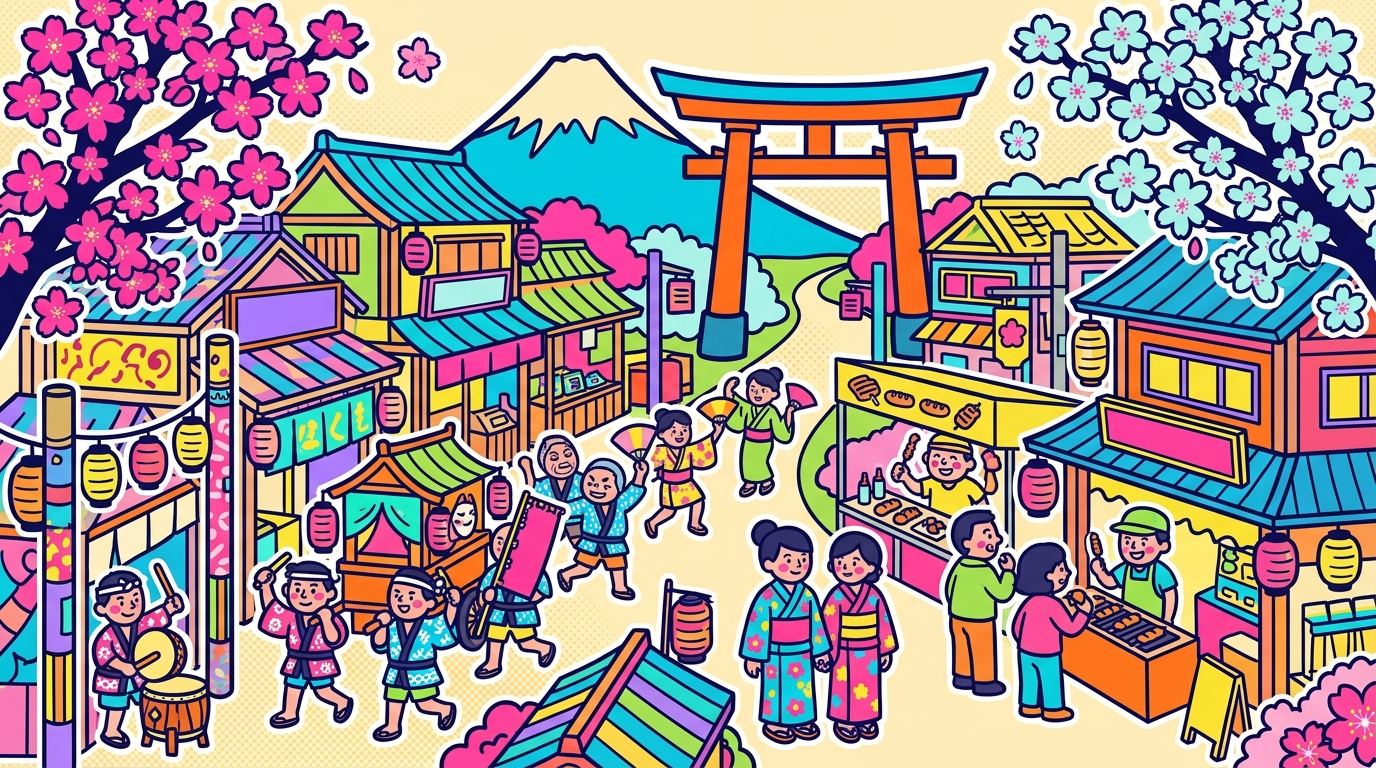
You’ve seen the iconic images: the Gion Matsuri’s towering floats, the Sapporo Snow Festival’s intricate sculptures, the synchronized dance of Awa Odori. These major events are undeniably spectacular, but for the discerning traveler who's already ticked off the main attractions, the true heart of Japan often beats loudest in its local festivals—the matsuri that rarely make it into mainstream guides. This guide is your no-nonsense, deeply specific dive into the Japan Local Festival Calendar 2026, offering genuine, off-the-beaten-path experiences that connect you directly with local communities. Forget the crowded tourist bus tours; we’re going to show you where locals gather, what they celebrate, and how you can be a part of it, providing exact dates, real 2026 prices, and insider tips you won't find anywhere else.
What You'll Get From This Guide
- Specific 2026 Dates & Locations: Pinpoint exactly when and where to experience authentic local matsuri.
- Real-World Budget Breakdowns: Understand the actual costs involved, from transport to local snacks, in ¥ and USD.
- Transportation & Accommodation Hacks: Navigate remote festival sites and find lodging like a local.
- Insider Etiquette & Participation Tips: Learn how to respectfully engage and immerse yourself in the festivities.
- Common Tourist Pitfalls Exposed: Discover what most guidebooks get wrong and how to avoid cultural missteps.
- Affiliate links to help you book your trip seamlessly and support our research.
Decoding the Matsuri Experience: Beyond the Big Three
Japan boasts over 300,000 shrines, each with its own annual calendar of events. While Gion, Kanda, and Tenjin Matsuri rightfully garner international attention, the real magic often lies in the smaller, regional festivals. These are typically organized by local shrines, temples, or community associations, celebrating everything from seasonal harvests and historical victories to warding off evil spirits or praying for good fortune.
What Makes a "Local" Matsuri?
A local matsuri is characterized by its intimate scale, deep community involvement, and often unpolished, raw energy. You won't find designated English-speaking guides or large souvenir stands catering to international tourists. Instead, you'll witness generations of families participating, local artisans selling their wares, and traditional performances passed down through centuries. The focus is on the community, not the spectacle. For example, during the Koide Funa-matsuri in Niigata, the participation of local fishermen and their families in blessing their boats is the essence, not just watching from a distance.
Common Misconceptions & Local Realities
One common tourist mistake is expecting every matsuri to be a grand, meticulously choreographed spectacle. While some are, many local festivals are less about elaborate parades and more about heartfelt rituals, quiet processions, or boisterous but less formal gatherings. Another misconception is that you can just "show up" and everything will be explained. The reality is that these events are for locals, by locals. While welcoming, there's rarely an English program. Embrace the unknown, observe, and use basic Japanese phrases ("Sumimasen" for excuse me, "Arigatou gozaimasu" for thank you) to show respect.
Local Tip: Forget trying to find the "best viewing spot" for parades. Instead, find a small local eatery or a quiet side street where you can simply be part of the atmosphere. Often, the best interactions happen when you're not jostling with a crowd for a photo opportunity.
Summer 2026: Authenticity Beyond the Urban Crowds
Niigata's Koide Funa-matsuri: A Fisherman's Blessing
For a unique summer experience away from the bustling cities, the Koide Funa-matsuri in Uonuma-shi, Niigata Prefecture, is a must. This festival, typically held in mid-July (exact dates for 2026 usually announced in May/June, but likely July 13th-14th, 2026 as it's the second weekend), centers around the blessing of fishing boats on the mighty Shinano River. Local fishermen decorate their traditional wooden boats, parade them through the town, and then engage in ceremonial rowing.
- Location: Primarily around Koide Ohashi Bridge and Shinano River in Koide-cho, Uonuma-shi, Niigata. The main shrine, Koide Shrine, is about a 15-minute walk from Koide Station on the JR Jōetsu Line.
- Access: From Tokyo, take the Joetsu Shinkansen to Urasa Station (approx. 1 hour 45 min, ¥7,000 / ~$47 USD), then transfer to the local JR Jōetsu Line to Koide Station (approx. 20 min, ¥420 / ~$2.80 USD).
- Activities: Watching the boat procession, local food stalls (yakisoba ¥500 / ~$3.30 USD, beer ¥600 / ~$4 USD), traditional music and dance performances at the shrine grounds.
- Estimated Cost (Day Trip from Tokyo):
- Shinkansen Round Trip: ¥14,000 / ~$94 USD
- Local Train Round Trip: ¥840 / ~$5.60 USD
- Food/Drinks: ¥2,000 / ~$13.50 USD
- Total: ¥16,840 / ~$113 USD (excluding souvenirs)
- Accommodation: While possible as a day trip, consider staying overnight in Uonuma-shi or nearby Echigo-Yuzawa. A basic business hotel like Hotel Okabe Uonuma near Koide Station might cost ¥8,000 / ~$54 USD for a single room. For a truly local experience, search for traditional Japanese ryokan on Rakuten Travel Japan in the Uonuma area.
Kagura in Shimane: Ancient Rituals in the Mountains
If you seek a truly spiritual and ancient experience, consider attending a Kagura performance in rural Shimane. While not a single "festival" per se, Kagura are ritualistic Shinto dances performed to honor gods and purify spaces. Many smaller shrines in Shimane Prefecture hold monthly or annual Kagura performances, especially in the autumn harvest season or at specific festival times. For 2026, keep an eye on the schedules of local shrines in towns like Yoshika-cho. For example, the Tsukuno Kagura Troupe (津久野神楽団) often performs at Tsukuno Hachiman Shrine (津久野八幡宮) in late July or early August, or during local matsuri in October.
- Location: Tsukuno Hachiman Shrine, Yoshika-cho, Kanoashi-gun, Shimane Prefecture.
- Access: From Hiroshima Station, take a local train to Iwakuni Station (approx. 45 min, ¥990 / ~$6.60 USD), then transfer to the JR Yamaguchi Line to Nichihara Station (approx. 2 hours, ¥1,980 / ~$13.30 USD). From Nichihara, a local bus or taxi would be required to Tsukuno (approx. 20-30 min, bus fare ~¥500 / ~$3.30 USD). Car rental is highly recommended for exploring this region.
- Activities: Observing the captivating, dramatic Kagura dances, which blend traditional music, ornate masks, and vibrant costumes. These can last several hours.
- Estimated Cost (Day trip from Hiroshima):
- Train Round Trip: ¥5,940 / ~$40 USD
- Bus/Taxi: ¥1,000-3,000 / ~$6.70-20 USD (depending on bus availability vs. taxi)
- Food/Drinks: ¥1,500 / ~$10 USD
- Total: ¥8,440 - ¥10,440 / ~$57 - $70 USD (excluding car rental)
Autumn 2026: Harvest Celebrations & Mountain Rituals
Yamagata's Kurokawa Nō: A 500-Year-Old Tradition
In the serene mountains of Tsuruoka-shi, Yamagata Prefecture, lies the village of Kurokawa, home to the 500-year-old Kurokawa Nō (黒川能). While performances can occur at various times, the most significant and accessible public performances are often around the February Doya Doya Festival and sometimes during local harvest festivals in late August/early September. For 2026, a smaller, local harvest-related performance might take place at the Ōgi Jinja Shrine (王祇神社) in late August, though the main Doya Doya is winter. These performances, unlike theater productions, are deeply spiritual offerings.
- Location: Ōgi Jinja Shrine, Kurokawa, Haguromachi, Tsuruoka-shi, Yamagata Prefecture.
- Access: From Tsuruoka Station (JR Uetsu Main Line), take the Shonai Kotsu Bus bound for Hagurosan and get off at 'Kurokawa' stop (approx. 30 min, ¥600 / ~$4 USD). Tsuruoka is accessible from Tokyo by Joetsu Shinkansen to Niigata, then Inaho Limited Express to Tsuruoka (total approx. 4 hours, ¥11,000 / ~$74 USD one-way).
- Activities: Witnessing ancient Nō and Kyōgen performances, some dating back to the 15th century, performed by local villagers. There are usually local food stalls and craft vendors.
- Estimated Cost (Day trip from Tsuruoka):
- Bus Round Trip: ¥1,200 / ~$8 USD
- Performance Viewing: Free (donations appreciated)
- Food/Drinks: ¥1,500 / ~$10 USD
- Total: ¥2,700 / ~$18 USD (excluding transport to Tsuruoka)
Navigating Local Matsuri: Logistics & Etiquette
Transportation & Accommodation Hacks
For many off-the-beaten-path festivals, public transport can be limited, especially in the evenings.
- Car Rental: Consider renting a car if traveling in a group or exploring a region with multiple festivals. This offers flexibility and access to truly remote spots. You can search for options at major train stations or airports.
- Local Buses & Taxis: Research bus schedules meticulously (use Google Maps with public transport option, but verify with local tourist info if available) as routes can be infrequent. Taxis are an option but can be expensive in rural areas.
- Accommodation: Book well in advance, especially for popular festival periods, even in smaller towns. Local guesthouses (minshuku) or family-run ryokan offer authentic experiences. Don't overlook booking via Klook which often has regional options alongside international chains, or Rakuten Travel Japan for a wider selection of Japanese-style inns. Sometimes the best option is to stay in a slightly larger nearby city and commute.
Eating & Drinking Like a Local
Forget the convenience store bentos. At local matsuri, the street food stalls (yatai) are an integral part of the experience.
- Festival Staples: Look for yakisoba (fried noodles), takoyaki (octopus balls), okonomiyaki (savory pancake), and karaage (fried chicken). Prices for most items range from ¥400-800 / ~$2.70-5.40 USD.
- Local Specialties: Each region will have its own unique snacks or dishes. In Niigata, look for rice-based products or fresh seafood. In Shimane, wild game or river fish might be on offer. Don't be afraid to try something new, even if you can't identify it.
- Drinks: Local sake or regional craft beer (often ¥500-700 / ~$3.30-4.70 USD) is a great way to participate. Remember to drink responsibly.
Overrated: The expectation that "all Japanese food is universally delicious." While generally high quality, street food at very rural festivals can sometimes be simpler, focusing on satisfying hunger rather than culinary finesse. Embrace it as part of the cultural experience rather than a gourmet one.