[Disclosure] This article contains affiliate links. We may earn a commission at no extra cost to you.
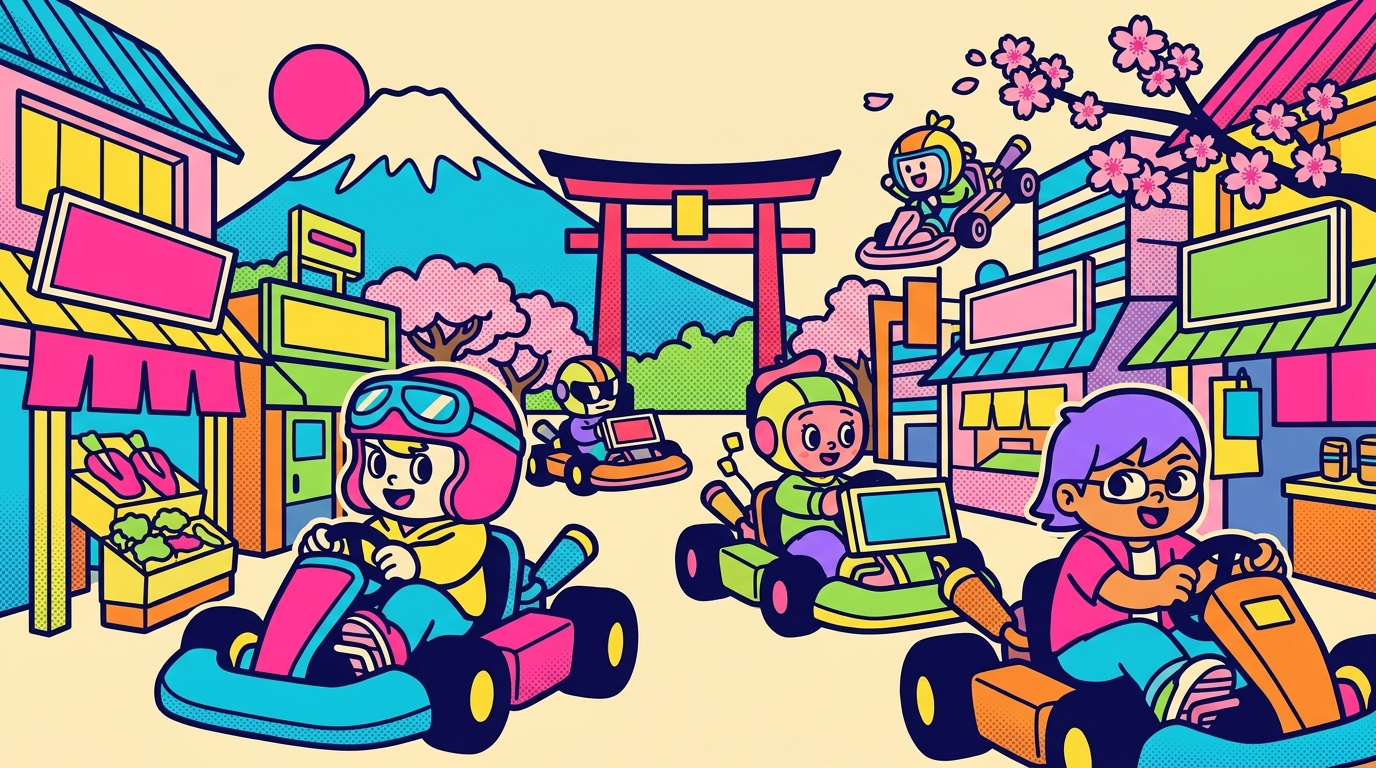
If you've seen videos of tourists driving tiny go-karts through Shibuya Crossing dressed as video game characters, you've probably searched "Mario Kart Tokyo" at some point. Here's the part most of those videos don't mention: the Mario costumes and branding are gone, and haven't been legal to offer for years. This guide explains what the experience actually is today, why it changed, and how to book it without confusion.
Why It's Not Called "MariCar" Anymore
The original company behind this experience launched in 2015 as "MariCar," explicitly modeled on Mario Kart, complete with Mario, Luigi, and other Nintendo character costumes for renters to wear on the street. Nintendo sued for trademark and unfair competition, and won — the operator was ordered to pay damages (reported around ¥50 million) and was barred from using Mario Kart branding, character names, and costumes. The company rebranded to Street Kart, dropped all Nintendo imagery, and now operates under that name (and a handful of competitor names — Shibuya Kart, Tokyo Joy Kart, Akiba Kart — that run similar tours without any Nintendo branding either).
In short: this is not an official Nintendo or Mario Kart experience, was never authorized by Nintendo, and current operators do not offer Mario costumes. What they do offer is real street-legal go-karting through Tokyo with a costume rental — just themed around generic superheroes and pop-culture characters instead.
What the Experience Actually Is in 2026
- Real go-karts on real public roads, driven alongside regular Tokyo traffic — not a closed track.
- Costume rental (generic superhero and character outfits, no Nintendo IP) is typically included or offered as an add-on.
- A licensed guide leads the group, and tours commonly pass through Shibuya Crossing, Harajuku, Omotesando, or other iconic areas depending on the route and operator.
- Tours run roughly 1–2 hours, with multiple time slots throughout the day.
The License You Need — Read This Before Booking
This is the detail that catches the most tourists off guard: you need a valid driver's license to drive, and if your license isn't Japanese, you generally need an International Driving Permit (IDP) issued under the Geneva Convention (1949) in your home country before you arrive — Japan does not issue these on arrival, and not every country's license qualifies (drivers from some countries, such as France, Germany, Switzerland, and a few others, need a certified Japanese translation of their license instead of an IDP). If you don't hold a qualifying license or IDP, you typically cannot drive and can only ride as a passenger, if the operator allows it — check the specific operator's requirements before you book, since policies vary.
Booking and What to Expect
Multiple operators now run these tours out of Shibuya and nearby neighborhoods, so availability and routes differ by company. Compare Tokyo go-karting tours on Klook to see current operators, routes, and time slots side by side.
A few practical notes before you go:
- Bring your physical driver's license and IDP (or certified translation) — no exceptions, and staff will check.
- Weather-dependent: karts are open-air, so rain can affect availability.
- Traffic laws apply the entire time — you're sharing the road with real cars, and Japanese traffic police do stop tours for violations.
- Photos and video are usually part of the package via a mounted camera, but confirm this with your chosen operator.
Frequently Asked Questions
Q: Is this an official Mario Kart experience?
A: No. It has no affiliation with Nintendo. The original operator was sued by Nintendo for using Mario Kart branding and costumes without permission, lost the case, and rebranded to Street Kart, removing all Nintendo imagery. Current operators (Street Kart and similar competitors) run generic superhero-themed street go-karting instead.
Q: Do I need a special license to drive?
A: Yes. You need a valid driver's license from your home country, plus either an International Driving Permit (IDP) under the 1949 Geneva Convention, or — for drivers from certain countries like France, Germany, and Switzerland — a certified Japanese translation of your license. Japan does not issue IDPs to visitors on arrival, so this must be arranged before your trip.
Q: Can I still wear a costume?
A: Yes, generic character and superhero costumes are commonly available for rental, but Mario, Luigi, and other Nintendo-branded costumes are not offered by any legitimate operator, since that's exactly what the Nintendo lawsuit prohibited.
Q: Is it safe?
A: You're driving a small, open-air go-kart on real public roads alongside regular traffic, led by a guide. It's generally run as a legitimate tour with safety guidelines, but it carries more real-world risk than a closed-track go-kart ride — treat it with the same caution as driving a car in an unfamiliar country.
Q: What if I don't have a qualifying license?
A: You typically cannot drive and may only be eligible to ride as a passenger, if the specific operator permits it. Confirm this with the tour operator before booking, since policies differ between companies.