🔍Checked against official sources and updated regularly by a JAPHIC-certified operator. About us →
⚡ Quick facts
Experience the thrilling Setsubun 2027 festival at Tokyo's Sensoji Temple. Our comprehensive guide covers the celebrity bean-throwing schedule, crowd survival tips, and the best Asakusa food spots.
📂 Events
🔄 Updated 2026-10-30
#Setsubun
#Sensoji Temple
#Asakusa
📅
Got your dates locked in?
Now that this event is on your calendar, here's the order to book everything else for your Japan trip.
If you are planning a winter trip to Tokyo in early 2027, you are in for a cultural treat that most standard tourist itineraries completely miss. While many visitors picture Japanese temples as serene, quiet spaces wrapped in the scent of incense and meditative silence, there is one day a year when Tokyo’s oldest temple erupts into joyous, chaotic, and incredibly crowded celebration.
That day is Setsubun.
Falling on February 3, 2027 (Wednesday), Setsubun marks the traditional Japanese astronomical boundary between winter and spring. And nowhere in Tokyo is this transition celebrated with more historic fanfare, star power, and sheer energy than at Asakusa’s famous Sensoji Temple (浅草寺).
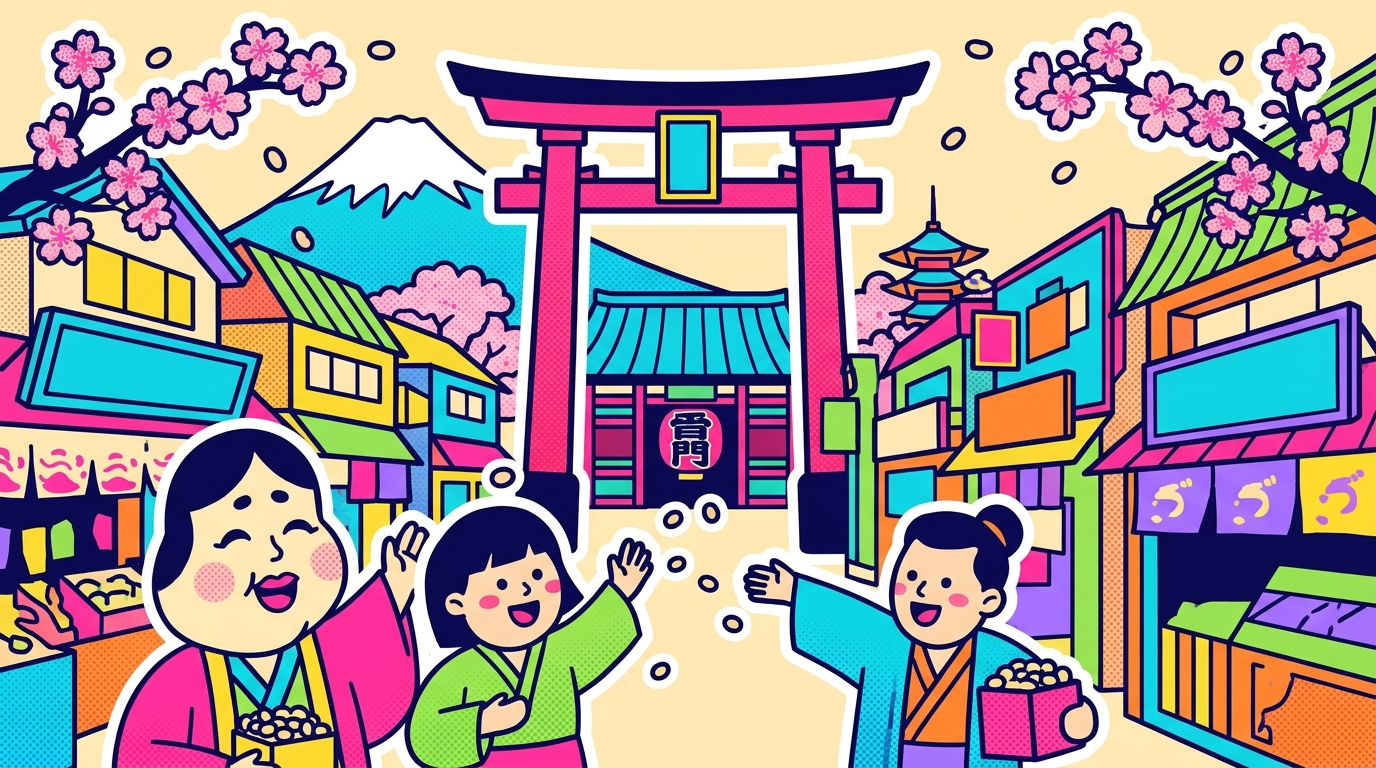
Sensoji’s spectacular Setsubun-e (節分会)—and specifically its headline event, the Bunka Geinōjin Setsubun-e (文化芸能人節分会) or "Celebrity Bean-Throwing Festival"—is a colossal event. It draws thousands of locals and tourists alike who pack the temple grounds to catch roasted soybeans thrown from towering balconies by famous actors, comedians, traditional rakugo storytellers, and local dignitaries.
This comprehensive, exhaustive guide will tell you everything you need to know about experiencing Setsubun 2027 at Sensoji Temple. From the cultural meaning of the chants to practical crowd survival tactics, precise itineraries, and a deep-dive into the best local Asakusa food spots to explore after the beans have been thrown, this is your ultimate blueprint for a flawless festival experience.
What is Setsubun? The Meaning Behind the Madness
Before diving into the specifics of Sensoji’s massive 2027 celebration, it is essential to understand what Setsubun actually is. For many inbound tourists, this is a completely unfamiliar holiday, yet it is one of the most widely celebrated traditional events in Japanese homes and shrines.
The Astronomical Calendar and the Date
The word Setsubun (節分) literally translates to "seasonal division." Historically, Japan recognized 24 micro-seasons (sekki). Setsubun refers to the day immediately preceding Risshun (立春), the first day of spring according to the old lunar calendar. Because this date is tied to the solar astronomical calendar rather than a fixed Gregorian date, it can occasionally shift. For example, in 2021, Setsubun fell on February 2 for the first time since 1897! However, the National Astronomical Observatory of Japan has confirmed that Setsubun will fall on Wednesday, February 3 in 2027.
Mamemaki: Throwing Out the Demons
The core ritual of Setsubun is mamemaki (豆まき), or bean-throwing. The transition of the seasons was historically viewed as a spiritually vulnerable time when malicious spirits and demons (oni) could cross over into the human world, bringing illness, bad luck, and disaster.
To drive these demons away, people throw roasted soybeans (fukumame, or "fortune beans"). As they throw the beans out the door or at family members wearing demon masks, they chant a famous phrase:
"Oni wa soto, fuku wa uchi!" (鬼は外、福は内)
This translates to: "Demons out, fortune in!"
After the throwing is complete, it is customary to eat the roasted soybeans. Specifically, you are supposed to eat the number of beans corresponding to your age, plus one extra bean for good health in the new year.
Other Setsubun Traditions: Ehomaki and Hiiragi Iwashi
If you visit convenience stores or supermarkets in Tokyo during late January and early February, you will see two other major hallmarks of the season:
Ehomaki (恵方巻): Thick, uncut sushi rolls filled with seven lucky ingredients. Tradition dictates that you must eat the entire roll in complete silence while facing the year's "lucky direction" (eho).
Hiiragi Iwashi (柊鰯): A pungent talisman made of a roasted sardine head pierced on a sprig of holy olive (hiiragi). It is hung outside homes to ward off demons, who supposedly hate the smell of the fish and the sharp thorns of the leaves.
Sensoji Temple: The Historical Epicenter of Setsubun in Tokyo
While almost every shrine and temple in Japan holds some form of Setsubun event, Sensoji holds a special place in the history of Tokyo.
During the Edo period (1603–1867), Sensoji was officially the very first temple in Edo (modern-day Tokyo) to host a large-scale, public Setsubun festival. Its traditions are deeply rooted in the history of the city, and attending the event feels like stepping back in time.
The Setsubun-e (節分会) and the Toshiotoko (年男)
The official ceremonies at Sensoji are collectively known as the Setsubun-e. The day features a series of religious and cultural rituals. One of the central pillars of the event involves the toshiotoko (年男), which translates to "men of the year."
According to the Chinese zodiac, 2027 is the Year of the Sheep (Hitsuji). Men born in previous Years of the Sheep (e.g., 2015, 2003, 1991, 1979, 1967, 1955, etc.) are chosen to participate as toshiotoko. Dressed in formal traditional attire (kamishimo), they take to the temple's balconies to throw beans to the crowds, symbolizing the purification of the coming year.
The Fukuju no Mai (福聚の舞): Dance of the Seven Lucky Gods
Another visually stunning element of Sensoji’s Setsubun-e is the Fukuju no Mai, a traditional dance dedicated to the Seven Lucky Gods (Shichifukujin). The dance is performed to pray for peace, bountiful harvests, and prosperity. It is a slow, elegant, and highly photogenic ritual that contrasts beautifully with the high-energy bean throwing that follows.
If you are a fan of traditional Japanese aesthetics, you will want to have your camera ready for this. The performers don exquisite, elaborate costumes representing deities like Ebisu (god of commerce), Daikokuten (god of wealth), and Benzaiten (goddess of art and beauty).
The Main Event: Bunka Geinōjin Setsubun-e (Celebrity Bean-Throwing)
While the morning religious rituals are fascinating, the true spectacle that draws the massive crowds is the Bunka Geinōjin Setsubun-e (文化芸能人節分会)—the Celebrity Bean-Throwing Festival.
Sensoji is located in Asakusa, which historically served as Tokyo's premier entertainment district. It was the home of kabuki theaters, rakugo (comedic storytelling) halls, and early cinemas. To honor this history, Sensoji invites a massive roster of cultural figures and entertainers to serve as the bean-throwers.
The Celebrity Guest Lineup for 2027
Important Note: The official celebrity guest lineup for Setsubun 2027 will not be announced until much closer to the event (typically late January 2027). Sensoji has a recurring pattern of keeping the final list under wraps to build excitement, and surprise guests frequently appear.
However, we can look at historical patterns to know exactly what to expect. The guests are usually deeply tied to Asakusa's entertainment roots. You will likely see:
Master Rakugo storytellers (many of whom perform at the nearby Asakusa Engei Hall).
Enka singers and traditional folk musicians.
Comedians, actors, and television personalities.
Local dignitaries and prominent business owners from the Asakusa district.
For reference only: During the 2026 event, approximately 70 celebrities participated, creating a massive media buzz and drawing immense crowds of fans.
The Schedule and The 16:00 Peak (Based on Historical Patterns)
While the exact minute-by-minute schedule for 2027 requires reconfirmation via Sensoji's official website in January 2027, the event traditionally runs from roughly 12:00 PM to 5:20 PM.
The celebrity bean-throwing does not happen all at once. Because the balcony of the Main Hall can only hold so many people, the celebrities are divided into rotating groups (historically four groups).
The most intense, highly anticipated part of the event begins around 16:00 (4:00 PM). The groups rotate onto the specially constructed staging area roughly every 20 minutes. The celebrities wave to the crowd, grab wooden square cups (masu) overflowing with roasted soybeans, and hurl them down into the sea of raised hands. The atmosphere is electric, filled with cheers, camera flashes, and the iconic chant of "Oni wa soto, fuku wa uchi!"
Surviving the Crowds: A Practical 2027 Guide
Let us be completely clear: Sensoji's Setsubun is not a quiet, relaxing experience. It is a high-octane, incredibly crowded festival.
During the 2026 edition, crowds exceeded 10,000 people, with the vast majority concentrated directly in front of the Main Hall during the 16:00 celebrity slots. It was described by attendees as being very difficult to move through at peak times. If you are planning to attend in 2027, you must prepare accordingly.
1. Arrive Early to Secure a Spot
If you arrive at 15:50 for a 16:00 throw, you will be stuck at the very back of the courtyard, near the Hozomon Gate, and you will not catch any beans. To get close enough to the Main Hall to catch beans or get clear photos of the celebrities, you should aim to secure your standing spot by 14:30 or 15:00 at the latest.
2. Understand the Bean-Catching Dynamic
When the beans are thrown, they come in small paper or plastic packets (so they don't get dirty on the ground), though loose beans are sometimes tossed as well.
Look up, not down: The crowd will surge forward and reach up.
Bring a bag: Many savvy locals bring small tote bags or paper bags and hold them open above their heads to catch the falling packets.
Do not bend down in a tight crowd: If a bean packet falls to the floor in the middle of a tightly packed crowd, do not immediately dive to the ground to pick it up. The crowd surge can make bending down dangerous. Wait for the crowd to shift, or just focus on catching them in the air.
3. Dress for Tokyo Winter
February in Tokyo is cold. Average daytime highs hover around 9°C to 11°C (48°F–52°F), and once the sun starts setting around 16:30, the temperature drops rapidly. You will be standing still for a long time waiting for the event. Wear thermal innerwear (like Uniqlo HEATTECH), a warm winter coat, gloves, and a scarf.
Also, winter in Tokyo is incredibly dry and surprisingly sunny. The sun will be reflecting off the temple grounds. If you have sensitive skin, read our review of the Best Japanese Sunscreens 2026 | TOP5 for Western Travelers to protect your face while waiting outside.
4. Travel Light
Do not bring large backpacks, suitcases, or bulky shopping bags into the main crowd zone. Navigating a 10,000-person crowd with a large backpack will anger locals and make your life miserable. Utilize the coin lockers at Asakusa Station (Ginza Line or Asakusa Line) before walking to the temple.
Also, keep your wallet and passport secure in a front pocket or a crossbody bag kept under your coat. While pickpocketing is exceedingly rare in Japan, accidental drops in a massive crowd are common.
The Ultimate Asakusa Setsubun Day Itinerary & Deep Area Guide
Because the main Setsubun-e celebrity event doesn't peak until 16:00, you have the entire morning and early afternoon to explore the incredible Asakusa district.
To help you plan, we have compiled an exhaustive, highly specific guide to 10 Must-Visit Locations in and around Sensoji. We have included precise access details, opening hours, and actual yen prices to help you budget.
Access: A 5-minute walk from Tokyo Metro Asakusa Station (Ginza Line, Exit 1). Walk through the Kaminarimon Gate and straight down Nakamise.
Details: Before the Setsubun crowds gather, visit the Main Hall in the morning to pay your respects. Throw a 5-yen or 50-yen coin into the massive wooden offering box, bow twice, put your hands together in prayer (no clapping at temples, only at shrines!), and bow again.
Cost: Free to visit. Omikuji (fortune slips) cost 100 JPY. Sensoji is famous for having a high percentage of "Bad Luck" (Kyo) fortunes. If you get one, tie it to the designated metal racks to leave the bad luck behind!
Spot 2: Asakusa Shrine (Sanja-sama)
Access: Located immediately to the right (east) of the Sensoji Main Hall, sharing the same grounds.
Details: Unlike Sensoji (a Buddhist temple), Asakusa Shrine is a Shinto shrine. It honors the three men who founded Sensoji. It is incredibly peaceful and offers a sharp contrast to the bustling temple next door. This is a great place to see distinct Shinto architecture and perhaps pick up a unique goshuin (shrine stamp) for your collection.
Hours: Open 24 hours (Shrine office 9:00 AM – 4:30 PM).
Spot 3: Kimura-ya Ningyoyaki (Nakamise Street)
Access: Located on Nakamise Shopping Street, roughly halfway between Kaminarimon and Hozomon gates.
Details: Ningyoyaki are small sponge cakes filled with sweet red bean paste (anko), molded into traditional shapes like a five-storied pagoda, a lantern, or a pigeon. Kimura-ya is the oldest ningyoyaki shop in Asakusa, operating since 1868. Watching the artisans rapidly flip the cast-iron molds over the fire is mesmerizing.
Access: A 3-minute walk from the Sensoji Main Hall. Exit the temple grounds to the west, towards the Nishi-Sando shopping arcade.
Details: You cannot visit Asakusa without eating a Jumbo Melon Pan from Kagetsudo. These massive, incredibly light, and fluffy sweet breads have a crispy, sugary cookie crust on the outside. They sell over 3,000 a day. Get the one filled with matcha ice cream for an incredible texture contrast.
Hours: 10:00 AM until sold out (usually around 4:00 PM).
Cost: 300 JPY for plain, 700 JPY for ice-cream filled.
Spot 5: Asakusa Menchi
Access: Located on Denbouin Street, a 1-minute walk intersecting Nakamise Street.
Details: If you need a savory break from the sweet snacks, head here for a menchi-katsu (deep-fried minced meat cutlet). Made with a blend of Kanagawa-raised Koza pork and Japanese beef, it is incredibly juicy. Warning: The juices are literally boiling hot when handed to you. Do not bite into it immediately!
Hours: 10:00 AM to 7:00 PM.
Cost: 350 JPY per cutlet.
Spot 6: Suzukien Asakusa (The World's Richest Matcha Gelato)
Access: A 5-minute walk north of the Sensoji Main Hall, located behind the temple grounds on Kototoi Street.
Details: A historic tea shop that teamed up with a gelato maker to offer matcha gelato in seven distinct levels of intensity. Level 1 is light and sweet; Level 7 is famously marketed as the "world's most intense matcha gelato" and is incredibly rich, earthy, and slightly bitter. It is a must-try. (For more sweet recommendations across the city, read our guide to the Best Matcha Desserts in Tokyo | Top Sweets Shops).
Hours: 11:00 AM to 5:00 PM.
Cost: Single scoop starts at around 410 JPY; Level 7 premium scoop is roughly 630 JPY.
Spot 7: Asakusa Imahan (Traditional Sukiyaki)
Access: A 10-minute walk from Sensoji, near the Tsukuba Express Asakusa Station on Kokusai Dori.
Details: If you want a sit-down, luxurious lunch before the chaotic 16:00 Setsubun crowds, Asakusa Imahan is legendary. Established in 1895, they serve exquisite Kuroge Wagyu beef sukiyaki cooked at your table by kimono-clad staff. It is the perfect place to warm up on a cold February day.
Spot 8: Hoppy Street (Izakaya Hopping at Suzuyoshi)
Access: A 3-minute walk west of Sensoji, running parallel to the temple grounds.
Details: After the 17:20 conclusion of the Setsubun festival, you will be cold and tired. Walk straight to Hoppy Street (Hoppy Dori). This vibrant street is lined with open-air (but plastic-tented and heated in winter) izakayas specializing in motsu-nikomi (beef or pork stew). We recommend a shop called Suzuyoshi for their spicy beef tendon stew. Wash it down with "Hoppy," a retro beer-flavored beverage mixed with shochu.
Hours: Varies by shop, mostly 12:00 PM to 11:00 PM.
Cost: Stews average 600-800 JPY; Drinks around 500 JPY. Budget 2,500 JPY per person.
Spot 9: Kamiya Bar
Access: Right at the major intersection of Kaminarimon-dori and Edo-dori, 1 minute from Tokyo Metro Asakusa Station Exit 3.
Details: Japan’s oldest Western-style bar, opened in 1880. The first floor is a bustling, chaotic beer hall. You must order the "Denki Bran" (Electric Bran), a legendary brandy-based cocktail invented here during the Meiji era that is strong enough to instantly warm you up after standing in the winter cold.
Hours: 11:30 AM to 10:00 PM (Closed Tuesdays).
Cost: Denki Bran is roughly 300 JPY a glass.
Spot 10: Don Quijote Asakusa
Access: A 5-minute walk west from Sensoji on Rox Street.
Details: A massive 24-hour discount store. This is the perfect final stop of the day to buy heavily discounted Japanese KitKats, matcha snacks, cosmetics, and quirky souvenirs. The Asakusa branch is particularly large and well-stocked for inbound tourists, offering tax-free checkout counters.
Hours: Open 24 Hours.
Cost: Depends entirely on your shopping habits!
Expanding Your Day: Beyond Asakusa
Since the main Setsubun events occur in the late afternoon, you might want to combine Asakusa with nearby neighborhoods. Asakusa borders some of Tokyo's most fascinating districts.
Head to Akihabara
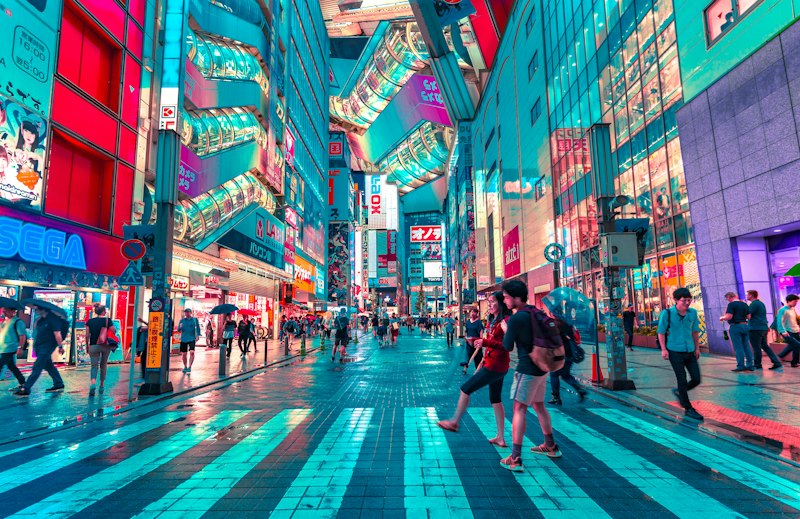
Akihabara is just a short 5-minute train ride away via the Tsukuba Express (from TX Asakusa Station to TX Akihabara Station). If you are an anime, manga, or retro tech fan, combining the traditional culture of Setsubun with the neon glow of Akihabara makes for a perfect "Old meets New" Tokyo day.
If you want to make February 3rd a full day of hands-on culture, consider booking a localized tour or class in the morning before heading to the temple.
Alternatively, dive into the world of sumo wrestling in the evening. There are incredible interactive sumo dinners right in Asakusa where you can watch retired professionals spar while eating hot pot. (Details in our Asakusa Sumo Show & Chanko Nabe Dinner Guide 2026 | No Tournament Needed).
Travel to Ueno and Ameyoko
A 5-minute ride on the Ginza Line from Asakusa takes you to Ueno. If the weather is crisp and clear, a morning walk through Ueno Park is lovely. Afterward, you can shop in the bustling Ameyoko street market. If you have an interest in high-quality Japanese selvedge denim, Ueno is the historical heart of Tokyo's denim scene. (Find the top shops in our Ultimate Tokyo Denim Shopping Guide 2026: Best Stores & Brands).
General Travel Safety: Hydration
With all the street food, walking, and crowded temple visits, staying hydrated is key. You might wonder about the water quality at restaurants or water fountains in Tokyo. Rest assured, Tokyo's water infrastructure is world-class. For detailed peace of mind, read Can You Drink Tap Water in Japan? | City by City Guide 2026.
Practical Access Guide: How to Get to Sensoji Temple
Navigating to Sensoji on a festival day requires a bit of planning, as the immediate station exits will be heavily congested. Sensoji does not have its own dedicated train station; instead, it is served by several different stations all bearing the name "Asakusa."
(Note: Do not rely on GPS maps right at the station exits, as the tall buildings can disrupt the signal. Follow the physical yellow signs pointing to "Sensoji Temple" or "Kaminarimon Gate.")
1. Via the Tokyo Metro Ginza Line (Recommended for most tourists):
Take the Ginza Line to Asakusa Station (G-19). This is the terminal stop. Use Exit 1. When you emerge above ground, you will be right next to the Kaminarimon (Thunder Gate), which is the massive red lantern marking the entrance to Nakamise street. Walk straight down Nakamise for about 5 minutes to reach the Main Hall.
2. Via the Toei Asakusa Line:
Take the Asakusa Line to Asakusa Station (A-18). Use Exit A4. Once above ground, turn right and walk along the main street for about 2 minutes until you see the Kaminarimon Gate on your right.
3. Via the Tsukuba Express (TX):
Take the Tsukuba Express to Asakusa Station (TX-03). Note that this station is located quite far west of the subway stations. Use Exit A1. From here, it is a 5 to 7-minute walk straight east along Rox street to reach the back-left (western edge) of the Sensoji grounds. This is a great route to take if you want to bypass the massive Kaminarimon crowds.
4. Via the Tobu Skytree Line:
Take the Tobu line to Asakusa Station (TS-01). The station is integrated into the Matsuya Department Store. Exit the ground floor, cross the street to the west, and you are 2 minutes from the Kaminarimon Gate.
Final Thoughts: Embrace the Chaos of Setsubun
Sensoji’s Setsubun-e is the perfect antidote to the "sterile tourist experience." It is loud, it is deeply historical, it is incredibly crowded, and it is endlessly entertaining.
By arriving on February 3, 2027, you are not just looking at old buildings; you are participating in a living, breathing cultural ritual that has been practiced on these exact grounds since the Edo period. When the clock strikes 16:00, the celebrities step onto the balcony, and 10,000 voices roar "Oni wa soto, fuku wa uchi!" together in the freezing winter air, you will feel a pulse of energy that simply cannot be captured in a guidebook or a video.
Bundle up, protect your valuables, arrive early to claim a good standing spot, and get ready to catch your fortune. Welcome to spring in Tokyo.
FAQ
Q: When is Setsubun celebrated in 2027?
Setsubun will be celebrated on Wednesday, February 3, 2027, marking the traditional Japanese astronomical boundary between winter and spring.
Q: What is the main event at Sensoji Temple for Setsubun?
The main event is the Bunka Geinojin Setsubun-e, or Celebrity Bean-Throwing Festival, where famous actors, comedians, and dignitaries throw roasted soybeans to massive crowds.
Q: What time should I arrive to see the celebrity bean-throwing at Sensoji?
The most intense celebrity bean-throwing typically peaks around 16:00 (4:00 PM). To secure a spot near the Main Hall and catch beans, you should aim to arrive by 14:30 or 15:00 at the latest.
Q: What do people chant during the Setsubun bean-throwing?
During the bean-throwing ritual (mamemaki), people chant 'Oni wa soto, fuku wa uchi!' which translates to 'Demons out, fortune in!'
Q: How do I get to Sensoji Temple for the festival?
The easiest way for most tourists is to take the Tokyo Metro Ginza Line to Asakusa Station. Use Exit 1 to emerge right next to the Kaminarimon Gate, and walk straight down Nakamise street to the Main Hall.