[Disclosure] This article contains affiliate links. We may earn a commission at no extra cost to you.
Every mainstream travel blog tells you to avoid Japan in August. They cite the stifling 35°C (95°F) humidity and the notorious "Obon" holiday week as reasons to stay away.
Obon—the traditional Japanese Buddhist festival honoring ancestral spirits—takes place from August 13 to August 16, 2026. Because Mountain Day (a national holiday) falls on Tuesday, August 11, 2026, millions of Japanese workers are taking the entire week off. This triggers a massive domestic migration known as the kisei-rush (homecoming rush).
But fleeing Japan during Obon is a rookie mistake. While rural towns swell with returning locals and Shinkansen bullet trains book out weeks in advance, Tokyo does the exact opposite. It empties out. For savvy tourists, Obon is the single best week of the year to score heavy discounts on luxury hotels in business districts, ride uncrowded commuter trains, and experience hyper-local summer festivals without the typical tourist crush.
This guide skips the vague warnings and gives you the hard data on navigating Japan's peak summer holiday in 2026.
What You'll Get From This Guide
- The exact 2026 Obon congestion calendar (which days to stay off the trains).
- A definitive list of what shuts down versus what stays open.
- The "Empty Tokyo" hotel hack to score 4-star rooms under $150 USD.
- Why the Japan Rail (JR) Pass is a massive liability during this specific week.
- Where to find authentic local Bon Odori festivals.
The Exact 2026 Obon Calendar (And The "U-Turn" Rush)
In 2026, the calendar creates a perfect storm for a 9-day mega-holiday for domestic workers. Mountain Day falls on August 11 (Tuesday). Obon runs from August 13 (Thursday) to August 16 (Sunday). Most corporate workers will take Monday the 10th and Wednesday the 12th off, bridging the weekends.
If you are traveling between major cities (Tokyo to Kyoto/Osaka, or Tokyo to Hokkaido), you must memorize these congestion peaks:
- The Outbound Rush (Tokyo to Provinces): Saturday, August 8 to Monday, August 10. The Tokyo Station Shinkansen gates will be a nightmare.
- The "U-Turn" Rush (Provinces returning to Tokyo): Saturday, August 15 to Sunday, August 16. Do not plan a Kyoto-to-Tokyo train ride on these days unless you booked a month in advance.
What Actually Closes During Obon?
Mainstream guides claim "Japan shuts down for Obon." This is entirely false. Japan is a consumer powerhouse, and corporate retail capitalizes heavily on the holiday. However, the type of businesses that close will affect your itinerary if you prefer off-the-beaten-path spots.
The Mom-and-Pop Shutdown
Family-owned businesses close so the owners can return to their home prefectures.
- Independent Restaurants: Your favorite tiny kissaten (retro cafe) in Koenji or the 8-seat yakitori joint in Nakameguro will likely be shuttered from Aug 11-16.
- Specialty Clinics: English-speaking travel clinics or local pharmacies (non-chain) close.
- Toyosu Wholesale Market: While the outer tourist facility (Senkyaku Banrai) remains open daily, the actual inner wholesale market where tuna auctions happen has scheduled closure days (usually Wednesdays and Sundays, but extended during Obon).
The Corporate Safety Net (What Stays Open)
You will never go hungry or run out of things to do. The following operate on standard or extended hours:
- Major Department Stores: Isetan, Daimaru, Parco, and Lumine are fully open.
- Chain Restaurants: Matsuya, Kura Sushi, Ichiran, and Gusto.
- Convenience Stores & Megastores: Don Quijote and all 7-Eleven/Lawson/FamilyMart locations.
- Major Museums: Mori Art Museum (Roppongi, 52nd Floor) and the Tokyo National Museum stay open, though independent galleries in Ginza will close.
The Hidden Tourist Advantage: "Empty Tokyo"
While tourists flock to Kyoto and face suffocating crowds at Kiyomizu-dera, smart travelers stay in Tokyo. Because Tokyo is largely a city of transplants, millions of residents leave the capital to visit their grandparents in rural prefectures.
Luxury Business Hotels at Discount Rates
Businessmen aren't traveling for work during Obon. Therefore, corporate hubs like Shiodome, Marunouchi, Shinagawa, and Akasaka see a massive drop in hotel occupancy.
Local Tip: Instead of booking a cramped APA Hotel in Shinjuku for ¥18,000 ($120 USD), look at 4-star business-class hotels in Shimbashi or Shinagawa.
For example, the Royal Park Hotel Iconic Tokyo Shiodome (a 3-minute walk from Shimbashi Station via underground passage) routinely drops from its standard ¥35,000 weekday rate to around ¥22,000 ($146 USD) during the Obon week. You get a massive 40sqm room on the 30th floor with Tokyo Tower views for the price of a budget room.
You can Search best hotels in Japan on Klook to target these specific business wards.
Commuter Trains Become Bearable
The notoriously hellish 8:30 AM Yamanote Line commute? During Obon, you can easily find a seat. It is the best week of the year to navigate Tokyo's massive subway network without getting crushed by salarymen.
The Biggest Obon Mistake: The Shinkansen Trap
Do not buy a Japan Rail Pass if you are traveling during Obon 2026. Following the massive 2023 price hikes (now ¥50,000 / ~$333 USD for 7 days), the pass is already tough to justify. During Obon, it becomes a liability.
Mandatory Seat Reservations (The Nozomi Rule)
During the peak Obon travel window (August 8 to August 16, 2026), JR Central strictly enforces an "All Seats Reserved" policy on the fastest bullet train, the Nozomi (Tokyo to Kyoto/Osaka). The unreserved cars (Cars 1-3) are abolished for this week.
If you have a JR Pass, you must pay a heavy supplement to ride the Nozomi, or you are forced onto the slower Hikari trains—which will be entirely booked out by domestic travelers weeks in advance. If you fail to book a seat 30 days in advance (tickets open at 10:00 AM JST exactly one month prior), you will be stuck standing in the aisle of a slower train for 3 hours.
Instead of a JR Pass, buy point-to-point tickets via the official SmartEX app well in advance. A standard Tokyo-to-Kyoto reserved ticket costs ¥14,170 (~$94 USD).
Comparison: Obon vs. Other Japanese Holidays
| Holiday Period | Tokyo Hotel Prices | Train Crowds | Restaurant Closures | Verdict for Tourists |
|---|---|---|---|---|
| Golden Week (May) | Very High | Severe | Minimal | Avoid if possible |
| Obon (Mid-August) | Low in Biz Districts | Severe on Shinkansen | High (Indie shops) | Excellent for Tokyo stays |
| New Year (Dec 29-Jan 3) | High | Severe | Extreme (Everything shuts) | Worst time for retail/food |
Surviving the 2026 Heat: Obon Essentials
Obon takes place during the absolute hottest, most humid part of the Japanese summer. Concrete heat radiation in Tokyo can push the "feels like" temperature past 40°C (104°F).
Do not rely on standard Western antiperspirants. Go to a Japanese Matsumoto Kiyoshi pharmacy immediately and buy Gatsby Ice Citrus Body Paper (¥550 / ~$3.60 USD)—these wipe away sweat and leave a menthol cooling effect that lasts for 30 minutes. Also, invest in a wearable neck cooler, which every Japanese commuter now uses. You can pre-order one via Amazon Japan for ネッククーラー to have it delivered to your hotel on day one.
Frequently Asked Questions
Q: Is the Japan Rail (JR) Pass worth it during Obon 2026?
Absolutely not. The 7-day JR Pass costs ¥50,000 (~$333 USD). During the Obon period (Aug 8-16, 2026), JR Central removes all unreserved seating on the Nozomi Shinkansen. Because domestic travelers book up all the reserved seats precisely one month in advance, tourists with JR Passes often find themselves entirely unable to secure seats on the slower Hikari trains covered by the pass. You are much better off paying out of pocket for point-to-point tickets via SmartEX to guarantee your seat, or simply staying in one region like Kanto (Tokyo/Yokohama) to avoid the bullet train nightmare entirely.
Q: Do major theme parks like Universal Studios Japan close for Obon?
No, Universal Studios Japan (USJ), Tokyo Disneyland, and Tokyo DisneySea do not close for Obon. However, they operate at absolute maximum capacity. Wait times for flagship rides like USJ's Mario Kart: Koopa's Challenge can exceed 180 minutes. If you plan to go, purchasing an Express Pass is non-negotiable. During Obon 2026, expect USJ Express Pass 7 prices to surge to their maximum tier (around ¥18,800 / ~$125 USD on top of base admission). You must Book Universal Studios Japan on Klook the exact minute they drop (two months in advance).
Q: Are ATMs and banks open during the Obon holiday?
Physical bank branches (like SMBC or MUFG) and Japan Post offices close their teller windows during weekends and national holidays like Mountain Day (Aug 11). However, as a tourist, this will barely affect you. Convenience store ATMs at 7-Eleven, Lawson, and FamilyMart operate 24/7 throughout the entire Obon week. These are the best places to withdraw yen using a foreign debit card anyway. Just be aware that some Japanese bank-branded ATMs inside shopping malls may charge a slightly higher holiday withdrawal fee (usually an extra ¥110 to ¥220 / ~$0.75 to $1.50 USD).
Q: Is Kyoto worth visiting during Obon for the Gozan Okuribi fire festival?
In our honest opinion: Kyoto during Obon is heavily overrated for the average tourist. While the Gozan Okuribi (the giant flaming kanji characters lit on the mountains on August 16) looks incredible in photos, the reality on the ground is grim. Kyoto sits in a geographical basin, trapping the August humidity. Temperatures sit at 38°C (100°F), the local buses are packed shoulder-to-shoulder with sweaty tourists, and hotel prices in Nakagyo Ward triple. Unless you have the budget for a luxury hotel with a private rooftop viewing deck, the festival crowds are miserable to navigate in the heat.
Q: Where can I see authentic Bon Odori festivals in Tokyo during Obon?
Many tourists mistakenly flock to the massive Koenji Awa Odori, but that happens after Obon (usually the last weekend of August). For actual mid-Obon festivities, head to the Kanda Myojin Noryo Matsuri (usually held around August 9-11). Located just a 5-minute walk from Akihabara Station, this festival perfectly blends traditional Bon Odori dancing with modern Tokyo pop culture (often featuring anime songs). You can buy yakisoba (¥600 / ~$4 USD) and cold beer directly from local neighborhood vendors, offering a deeply authentic vibe without the tourist-trap pricing of Kyoto.
Bottom Line
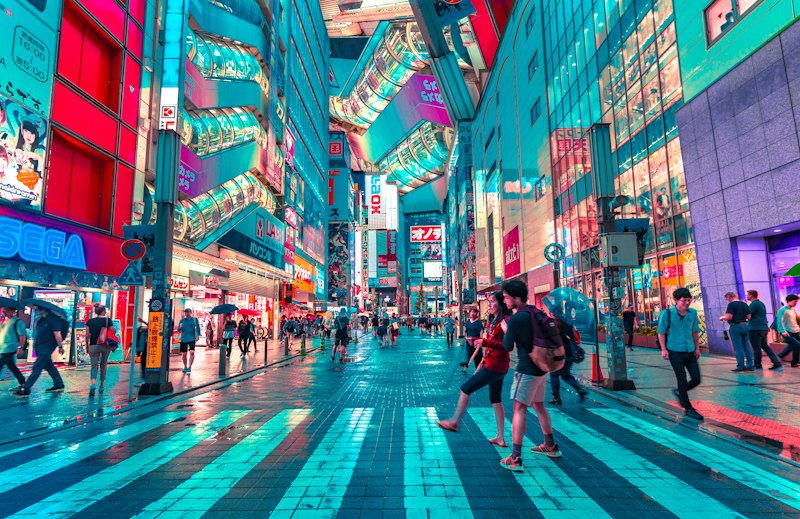
Obon is not a time to avoid Japan; it is a time to strategically alter your itinerary. By skipping the cross-country Shinkansen travel and embracing the emptiness of Tokyo's business wards, you can experience a rare, uncrowded version of the world's biggest metropolis.
This itinerary is perfect for: Budget-conscious luxury seekers, travelers who prefer exploring Tokyo's neighborhoods, and those who want to experience local shrine festivals. This is NOT for: Anyone trying to do a rapid-fire "Tokyo-Kyoto-Osaka-Hiroshima" bullet train run, or travelers who exclusively rely on small, independent suburban eateries. Stay in the capital, enjoy the cheap 4-star hotels, and let the locals fight over the bullet train seats.
📝 この記事について
監修・運営: Futuristic Imagination LLC
専門分野: 日本旅行・インバウンド
AI技術と専門家の知見を組み合わせ、信頼性の高い情報をお届けします。