ASOVENTURE · JAPAN LINENOW BOARDING · SUMMER 2026 · TOKYO — OSAKA — SAPPORO — FUKUOKA
Regional Japan

Kurashiki Bikan Quarter 2026 | Edo Canal District Insider Tips

Kurashiki Bikan Quarter 2026 | Edo Canal District Insider Tips
Quick facts

Beyond the brochures: real 2026 prices, hidden gems, and local tips for Kurashiki's Bikan Quarter. Avoid tourist traps and discover authentic Edo charm.

  • 📂 Regional Japan
  • 🔄 Updated 2026-07-23
  • #Kurashiki
  • #Okayama
  • #Edo Period
📶

Get Your Japan eSIM Before You Go!

Connect to internet immediately on arrival · No airport SIM card needed

Compare eSIM →

[Disclosure] This article contains affiliate links. We may earn a commission at no extra cost to you.
Kurashiki Bikan Quarter 2026 | Edo Canal District Insider Tips

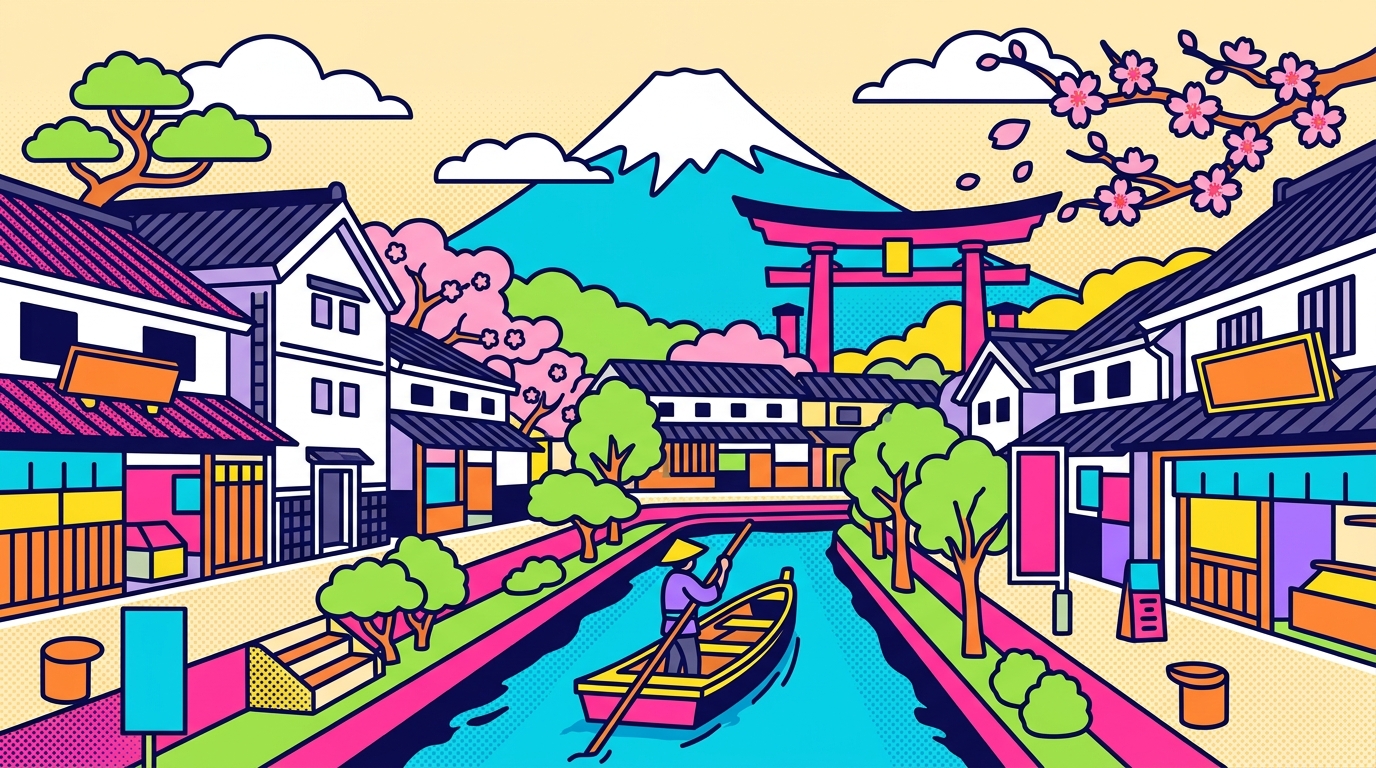
Kurashiki's Bikan Quarter, nestled in Okayama Prefecture, is Japan's quintessential Edo-era canal town, a picturesque tableau of white-walled storehouses, willow trees, and stone bridges. It’s more than just a pretty picture post-card; it’s a living museum that served as a vital rice distribution hub during the Edo period. For the seasoned English-speaking traveler who’s already seen Kyoto’s main highlights and wants a genuine, less-trodden historical experience, Kurashiki offers a condensed, incredibly well-preserved glimpse into old Japan without the overwhelming crowds of major cities. This guide will peel back the layers of the picture-perfect façade, revealing the specific spots to visit, what to genuinely expect in 2026, and how to experience Kurashiki like a local, not just another day-tripper.

What You'll Get From This Guide

  • Exact 2026 prices for key attractions, dining, and activities.
  • Local-approved dining spots that offer better value and authenticity than canal-side tourist traps.
  • How to avoid the mid-day crowds and capture the Bikan Quarter's true serenity.
  • Specific accommodation recommendations, from luxury ryokan to budget-friendly stays.
  • Authentic souvenir shopping beyond the generic trinkets.
  • Insider tips on what's overrated and what's truly worth your time and money.

Navigating Kurashiki: Arrival & Getting Around in 2026

Getting to Kurashiki Station

Your gateway to the Bikan Quarter is Kurashiki Station (倉敷駅), served by the JR Sanyo Main Line.

  • From Okayama Station: A direct JR Sanyo Main Line local or rapid train takes approximately 15-18 minutes. The fare is ¥330 / ~$2.25 USD (IC Card accepted). Trains run every 10-15 minutes.
  • From Shin-Osaka Station: Take a Tokaido-Sanyo Shinkansen (Nozomi, Mizuho, Sakura) to Okayama Station (approx. 45-60 minutes), then transfer to the JR Sanyo Main Line to Kurashiki Station. Total journey around 1 hour 15 minutes to 1 hour 30 minutes. Shinkansen tickets vary, but a non-reserved seat on a Nozomi from Shin-Osaka to Okayama is typically ¥5,610 / ~$38.70 USD.
  • From Hiroshima Station: Take a Tokaido-Sanyo Shinkansen (Nozomi, Mizuho, Sakura) to Okayama Station (approx. 35-45 minutes), then transfer to the JR Sanyo Main Line. Total journey around 1 hour. Shinkansen tickets from Hiroshima to Okayama are around ¥5,500 / ~$37.90 USD for a non-reserved seat.

From Kurashiki Station to Bikan Quarter

Upon exiting Kurashiki Station, take the South Exit. The Bikan Quarter is an easy and pleasant 10-minute walk straight down Chuo-dori (中央通り). You'll pass Kurashiki City Hall on your left. Simply follow the signs. No need for taxis or buses unless you have heavy luggage and are headed directly to a hotel deeper within the district.

Beyond the Main Canal: Must-See (and Overrated) Spots

The Ohara Museum of Art: A Surprising Gem

Japan's first museum of Western art, the Ohara Museum of Art (大原美術館), houses an astonishing collection, including works by Monet, Matisse, Rodin, and El Greco. Located at 1-1-15 Chuo, Kurashiki, it's open 9:00 AM to 5:00 PM (last entry 4:30 PM), closed Mondays (unless Monday is a national holiday, then closed Tuesday).

  • Admission (2026): ¥1,500 / ~$10.35 USD for adults.
  • Insider Tip: Don't just rush through. Take time in the Annex and Craft Wing to appreciate the connection between Japanese craft and Western art influence. It’s significantly less crowded than the main building’s impressionist galleries.

Ohashi House: A Merchant's Legacy

The Ohashi House (大橋家住宅), a designated Important Cultural Property, offers a rare glimpse into the life of a prominent Edo-era merchant family. Its well-preserved architecture, including a classic tiled roof, white-plastered walls, and charming inner garden, is superior to many other "old houses" you might stumble upon. It's located just off the main canal at 1-3-33 Achi, Kurashiki.

  • Admission (2026): ¥550 / ~$3.80 USD.
  • Open: 9:00 AM to 5:00 PM (closed Tuesdays).
  • Local Tip: Visit in the early morning (9-10 AM) for a chance to explore without crowds, allowing for quiet contemplation of the architecture.

Achi Shrine: Best Viewpoint

Perched atop a small hill, Achi Shrine (阿智神社) is not only a beautiful Shinto shrine but also offers the most expansive and free panoramic view of the entire Bikan Quarter. From the main station, it’s about a 15-minute walk. Follow the signs towards the Bikan Quarter, then ascend the stone steps near the heart of the district.

  • Access: Free. Open 24/7, but staff on-site from 9:00 AM to 5:00 PM.
  • Local Tip: Ascend to the shrine just before sunset. The golden hour light illuminates the white walls and willow trees along the canal beautifully, making for stunning photographs and a magical atmosphere as the evening lights begin to twinkle. This is far better than paying for a boat ride just for a photo op.

What's Overrated: The Kurashiki Canal Boat Ride

  • The Gondo Boat Ride (川舟流し): While undeniably picturesque in photos, the actual experience is quite short (approx. 20 minutes) and expensive for what it offers. You simply travel a short section of the main canal and back.
    • Cost (2026): ¥500 / ~$3.45 USD per person.
    • Verdict: Save your money. The best views of the canal are from the bridges and pathways themselves, especially during the quiet morning or golden hour. The boat offers a limited perspective that you can largely replicate by walking. It's often crowded, especially mid-day, leading to a less serene experience.

Activity Value Comparison (2026)

Activity Location Price (2026) Duration Value for Money (1-5, 5=best) Notes
Achi Shrine Viewpoint 1-1-17 Honmachi, Kurashiki Free 30-60 min 5 Best panoramic views of Bikan Quarter, especially at sunset.
Ohashi House Admission 1-3-33 Achi, Kurashiki ¥550 / ~$3.80 USD 45-60 min 4 Authentic Edo merchant residence. Less crowded early morning.
Kurashiki Canal Boat Near Kurashiki Tourist Info Center ¥500 / ~$3.45 USD 20 min 2 Short, often crowded. Better views from land for free.
Ohara Museum of Art 1-1-15 Chuo, Kurashiki ¥1,500 / ~$10.35 USD 90-120 min 4 Impressive Western art collection, Japan's first of its kind.

Food & Drink: Beyond the Tourist Traps
The main canal area is lined with cafes and restaurants, but many prioritize location over quality or authenticity. Venture slightly off the main thoroughfare for better experiences.

Authentic Dining: Kamameshi Yoshiya

For a truly local experience, head to Kamameshi Yoshiya (釜めし よしや), located at 1-3-17 Chuo, Kurashiki. It's famous for its kamameshi, a traditional rice dish cooked in an iron pot with various toppings. Their specialty is the "Gomoku Kamameshi," featuring chicken, seafood, and vegetables.

  • Price (2026): Gomoku Kamameshi set is ¥1,800 / ~$12.40 USD. Lunch sets often include miso soup and pickles.
  • Why it's good: The flavors are subtle, comforting, and authentic. It's a local favorite, often with a short wait, but well worth it. Expect a cozy, traditional interior.

Retro Cafe Experience: El Greco

For a step back in time, Cafe El Greco (喫茶 エルグレコ), located directly opposite the Ohara Museum of Art (1-1-11 Chuo, Kurashiki), offers a charmingly retro atmosphere. Established in 1959, it’s a non-smoking cafe perfect for a coffee break.

  • Price (2026): Blended Coffee is ¥600 / ~$4.15 USD.
  • Why it's good: It feels like an old-school Japanese kissaten, a dying breed. The interior is dark wood, velvet, and classical music – a stark contrast to modern chain cafes. Great for quiet reflection after the museum.

Local Tip: Ramen Alley

Forget the fancy canal-side cafes for lunch. Just a block or two west of the main Bikan Quarter, around the area of Kurashiki City Hall, you'll find several small ramen shops and local eateries catering to workers. One such example is Ramen Hanamaru (ラーメン花丸) (2-8-2 Achi, Kurashiki), which serves a solid soy-sauce based ramen.

  • Price (2026): A standard bowl of ramen costs around ¥850-¥950 / ~$5.85-$6.55 USD.
  • Why it's good: These spots are no-frills, quick, and considerably more affordable, offering a taste of everyday Japanese lunch.

Lunch Options Comparison (2026)

Restaurant Location Vibe Price Range (Main Dish) Verdict
Canal-side Cafe (e.g., Kissa Mugi) 1-2-12 Honmachi, Kurashiki Touristy, picturesque ¥1,200-¥1,800 / ~$8-12 USD Overpriced for quality, but good for people-watching.
Kamameshi Yoshiya 1-3-17 Chuo, Kurashiki Traditional, local favorite ¥1,800-¥2,500 / ~$12-17 USD Authentic kamameshi, excellent value, often a wait.
Ramen Hanamaru 2-8-2 Achi, Kurashiki Casual, local, quick ¥850-¥1,100 / ~$5.85-7.60 USD Great for a quick, cheap, and authentic local lunch.
Cafe El Greco 1-1-11 Chuo, Kurashiki Retro Kissaten ¥600-¥900 / ~$4-6 USD (for coffee/light snack) Best for coffee and atmosphere, not a full meal.

Shopping: Authentic Souvenirs (Not Just Kojima Jeans)

While Kurashiki is famous for its denim, the Bikan Quarter itself offers a range of unique crafts.

Hand-Dyed Tenugui at Tane

For genuinely beautiful and useful souvenirs, seek out Tane (タネ), a textile shop specializing in hand-dyed tenugui (traditional Japanese cotton towels) and other fabric goods. Located at 1-3-11 Honmachi, it’s a small, unassuming shop with exquisite patterns and quality.

  • Price (2026): Tenugui starts from ¥1,200 / ~$8.25 USD.
  • Why it's good: These are not mass-produced, and the designs are often unique to the Kurashiki region. They make lightweight, practical gifts.

Kurashiki Denim Street (Kojima Jeans Street)

If you're serious about denim, Kojima Jeans Street (児島ジーンズストリート) is a must-visit, but it's not in the Bikan Quarter itself. It's located in the Kojima district of Kurashiki.

  • Getting there: From Kurashiki Station, take the JR Seto-Ohashi Line to Kojima Station (児島駅) (approx. 25 minutes, ¥420 / ~$2.90 USD). From Kojima Station, the Jeans Street is about a 10-minute walk.
  • What to expect: Home to over 40 denim brands, including Momotaro Jeans (桃太郎ジーンズ), Japan Blue Jeans, and Betty Smith. You can find everything from raw denim to custom-made jeans, accessories, and even denim-themed food.
  • Price (2026): A pair of high-quality Japanese denim jeans can range from ¥15,000 to ¥40,000+ / ~$103-275+ USD.
Accommodation: Where to Stay (and Skip)

Staying overnight in Kurashiki allows you to experience the Bikan Quarter in the serene early morning and illuminated evening, a stark contrast to the busy daytime.

Luxury Traditional: Ryokan Kurashiki

For an unforgettable experience, Ryokan Kurashiki (旅館くらしき) (4-1 Honmachi, Kurashiki) is a top choice. This traditional ryokan is located directly on the canal, offering exquisite service, authentic multi-course kaiseki dinners, and private Japanese-style rooms.

  • Price (2026): Expect to pay ¥40,000-¥80,000+ / ~$275-550+ USD per night for two, including dinner and breakfast.

Mid-Range Comfort: Kurashiki Kokusai Hotel

The Kurashiki Kokusai Hotel (倉敷国際ホテル) (1-1-44 Chuo, Kurashiki) offers comfortable Western-style rooms and is conveniently located just a 5-minute walk from the station and directly adjacent to the Bikan Quarter. It's a classic choice with good amenities.

  • Price (2026): ¥15,000-¥25,000 / ~$103-172 USD per night for a double room.

Budget-Friendly & Stylish: Hostel & Cafe Bar Kuku

If you're looking for a more social and affordable option, Hostel & Cafe Bar Kuku (ゲストハウス&カフェバー空空) (1-10-22 Honmachi, Kurashiki) is a well-regarded choice. It offers both dorm beds and private rooms in a renovated traditional building, just a stone's throw from the canal.

  • Price (2026): Dorm beds from ¥4,000 / ~$27.50 USD, private rooms from ¥9,000 / ~$62 USD.

We recommend using Booking.com to search for the best hotels in Kurashiki. They often have the most competitive rates and a wide selection of properties.

Frequently Asked Questions

Q: How much does a typical day in Kurashiki Bikan Quarter cost in 2026?

A: A typical day in Kurashiki Bikan Quarter for a solo traveler in 2026, assuming mid-range choices, would likely fall between ¥7,000 and ¥12,000 (~$48-$83 USD), excluding accommodation. This estimate breaks down as follows:

  • Transportation: If coming from Okayama Station, ¥660 (~$4.55 USD) for a round trip.
  • Admission Fees: Ohara Museum (¥1,500) + Ohashi House (¥550) = ¥2,050 (~$14.15 USD). Achi Shrine is free.
  • Lunch: A local kamameshi set at Kamameshi Yoshiya or ramen at a local shop: ¥900-¥1,800 (~$6.20-$12.40 USD).
  • Dinner: A slightly nicer dinner, perhaps another local specialty or a casual izakaya meal: ¥2,000-¥3,500 (~$13.80-$24.15 USD).
  • Snacks/Drinks: Coffee at El Greco (¥600) + a local snack like kibi dango (¥400) = ¥1,000 (~$6.90 USD).
  • Souvenirs: A reasonable souvenir like a tenugui or small craft item: ¥1,500-¥3,000 (~$10.35-$20.70 USD). Total: Approximately ¥6,660 - ¥12,010. Remember, this excludes high-end dining, extensive shopping, or any overnight stays. Budget travelers could spend less, while those looking for luxury experiences will naturally spend more.

Q: What's the best time of day/year to visit Kurashiki to avoid crowds?

A: To truly experience the serene beauty of the Bikan Quarter and avoid the bulk of the crowds, aim for early mornings (before 9:30 AM) or late afternoons/evenings (after 4:30 PM), especially if you're staying overnight. The main influx of day-trippers from Okayama or Hiroshima typically arrives between 10 AM and 3 PM. As for the best time of year:

  • Spring (late March - early April): Cherry blossoms (sakura) add another layer of beauty, but this is also peak season, so expect crowds.
  • Autumn (late November - early December): The changing autumn leaves (koyo) create stunning backdrops, again a popular time.
  • Winter (January - February): This is the quietest season. The crisp air, fewer tourists, and possibility of snow dusting the white walls create a uniquely tranquil and photogenic atmosphere. Many shops and cafes remain open.
  • Summer (July - August): Hot and humid. While the canal area is charming in the evening with illuminated lights, the daytime can be uncomfortable. Avoid major Japanese holidays like Golden Week (late April/early May) and Obon (mid-August) entirely, as domestic tourism surges and everything will be packed and more expensive.

Q: Is Kurashiki worth an overnight stay, or is it a day trip?

A: While Kurashiki Bikan Quarter can technically be "done" as a day trip from Okayama or even Hiroshima, we strongly recommend an overnight stay for the discerning traveler. Here's why: The true magic of Kurashiki reveals itself in the quiet hours. In the early morning, you'll have the picturesque canal almost to yourself, with soft light perfect for photography and a sense of timeless tranquility. In the evening, the area transforms with subtle illuminations, creating a romantic and atmospheric setting as the day-trippers depart. Staying overnight also allows you to enjoy a traditional kaiseki dinner at a ryokan or explore local eateries without rushing to catch a train. It also provides flexibility to visit nearby attractions like Kojima Jeans Street or spend more time at the Ohara Museum without feeling pressed for time. A day trip often means experiencing the Bikan Quarter at its most crowded, missing its true charm.

Q: Are there any specific local foods or souvenirs I should prioritize in 2026?

A: Absolutely! Beyond the generic keychains, Kurashiki offers some distinctive culinary and craft items.

  • Local Foods:
    • Kamameshi: As mentioned, the rice dish cooked in an iron pot with various toppings is a must-try. Kamameshi Yoshiya is the classic spot.
    • Bara-sushi: This isn't your typical sushi. It's a regional Okayama specialty, a colorful chirashi sushi with seasonal seafood and vegetables elegantly arranged on top. Look for it in higher-end restaurants or even some department store food halls in Okayama City.
    • Kibi Dango: While more of an Okayama specialty, these small, mochi-like dumplings are readily available in Kurashiki. Often lightly sweetened and flavored, they make a nice, easy-to-carry snack or gift. Look for specialty shops near the canal.
  • Souvenirs:
    • Kurashiki Canvas: This durable, high-quality canvas has been produced in Kurashiki for over a century. You can find bags, pouches, and other items in shops like Tane or Kurashiki Canvas Store (a specific shop near the Ivy Square) in the Bikan Quarter. Prices for a small pouch start from ¥2,500 ($17 USD), bags from ¥8,000 ($55 USD).
    • Bizen-yaki Pottery: While Bizen is a distinct area in Okayama, Kurashiki's shops often carry this unglazed, rustic pottery known for its natural patterns and earthy tones. It's beautiful and highly regarded. Small cups can start from ¥3,000 (~$20 USD).
    • Hand-Dyed Tenugui & Textiles: As previously mentioned, shops like Tane offer exquisite, locally-designed tenugui. These are practical, easy to pack, and distinctly Japanese.
    • Kojima Denim Goods: If a full pair of jeans is too much, many shops on Kojima Jeans Street (and some in Bikan) offer denim accessories like wallets, bags, or small pouches, providing a piece of Kurashiki's denim heritage at a lower price point.

Q: How accessible is Kurashiki for travelers with mobility issues in 2026?

A: Kurashiki Bikan Quarter presents a mixed bag for travelers with mobility issues. The main canal pathways are generally flat and paved, making them relatively easy to navigate for wheelchairs or strollers. However, there are significant limitations to be aware of:

  • Bridges: Many of the charming stone bridges over the canal have steps, which can be challenging. There are alternative routes to cross, but they might require detours.
  • Shops & Restaurants: Many traditional buildings have small steps at their entrances, narrow aisles, and often only have stairs to upper floors (if applicable). Finding fully accessible dining might require research.
  • Attractions:
    • Ohara Museum of Art: The main building has ramps and an elevator, making most galleries accessible.
    • Ohashi House: Being an old traditional house, it has uneven flooring, steps, and raised tatami areas, making it largely inaccessible for wheelchairs.
    • Achi Shrine: Requires climbing numerous stone steps to reach, making it inaccessible for those unable to use stairs.
  • Public Restrooms: While newer facilities (like those at Kurashiki Station or the Tourist Information Center) will have accessible toilets, smaller, older ones within the Bikan Quarter might not. It's recommended for travelers with mobility concerns to plan their route carefully, prioritize accessible attractions, and consider contacting specific establishments beforehand. A power-assisted wheelchair or a travel companion for assistance would be highly beneficial.

Bottom Line

Kurashiki Bikan Quarter in 2026 is an essential stop for any Japan traveler seeking to immerse themselves in authentic Edo-era charm, far beyond the well-trodden paths of Kyoto. Go deeper than the canal-side facade, discover hidden merchant houses, surprisingly world-class art, and true local flavors to fully appreciate its understated beauty. This guide is for the traveler who values historical depth and local experiences over superficial sightseeing. If you're looking for bustling nightlife, ultra-modern attractions, or theme park thrills, Kurashiki is emphatically not for you; but for a serene, picturesque journey into Japan's mercantile past, it's unparalleled.


📝 この記事について

監修・運営: Futuristic Imagination LLC
専門分野: 日本旅行・インバウンド
AI技術と専門家の知見を組み合わせ、信頼性の高い情報をお届けします。


関連記事


🗾 Find your Japan hotel

🏨

Book Your Japan Hotel Now!

Cherry blossom & autumn seasons sell out fast. Best price guaranteed.

Search Hotels →

🛍️ Exclusive Japan Shopping Coupons

Show these digital coupons on your phone at checkout to save up to 17%!

🐧

🐧 Don Quijote Tax-Free Coupon

10% Tax-Free + Extra 5% OFF (For purchases over 10,000 JPY)

Get Donki Coupon →
📷

📷 Bic Camera Privilege Coupon

10% Tax-Free + Extra 7% OFF on electronics, cameras, and watches

Get Bic Camera Coupon (Free) →

📚 Recommended Guides

Regional Japan

Obihiro Hokkaido Food Town | Best Dairy Farms & Butadon Under ¥1,000

Regional Japan

Kanazawa 2026 Deep Guide | What Lonely Planet Doesn''t Tell You

Regional Japan

Naoshima Art Island Guide 2026 | Cheapest Way to Visit All Museums

Disclosure: This article contains affiliate links. We may earn a commission at no extra cost to you.