[Disclosure] This article contains affiliate links. We may earn a commission at no extra cost to you.
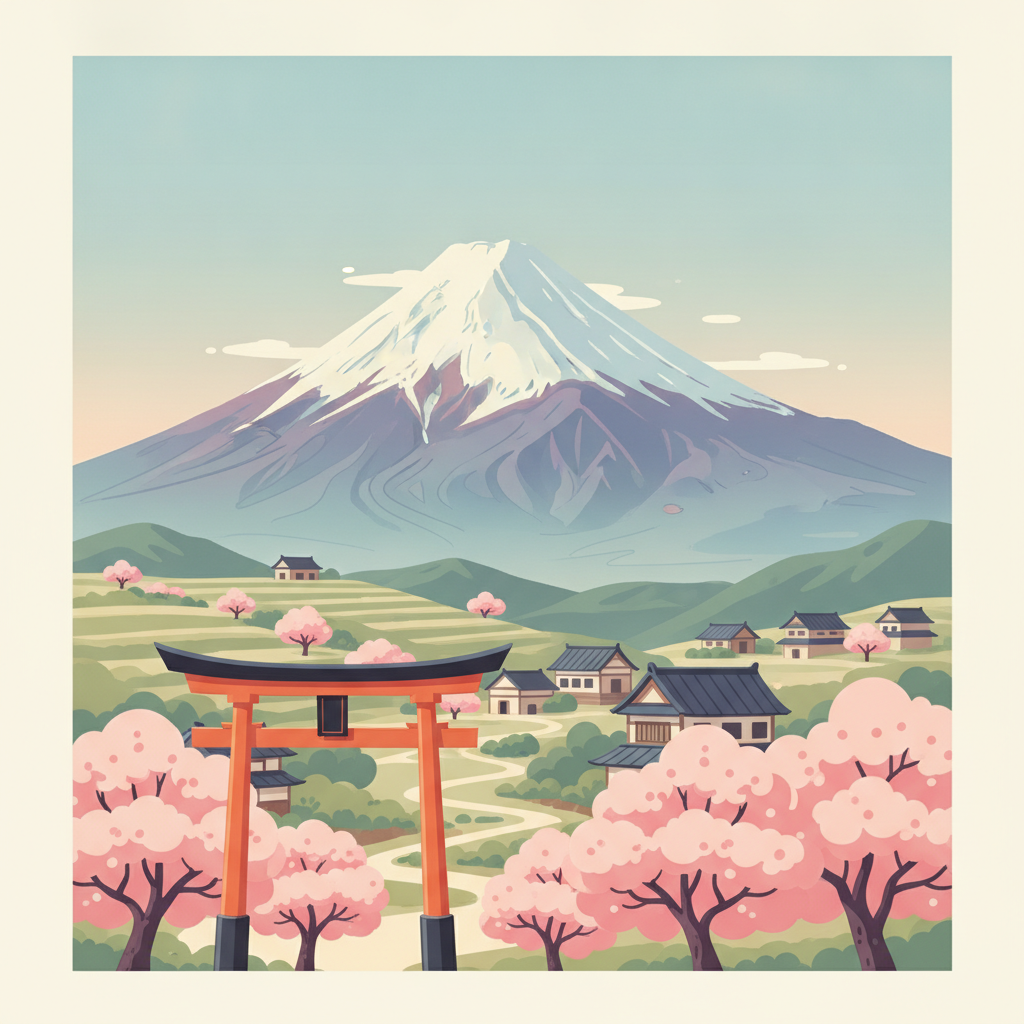
Climbing Mount Fuji in the summer of 2026 is fundamentally different from the chaotic, unregulated free-for-all of previous decades. What is climbing Mount Fuji today? It is a highly managed, strictly enforced high-altitude alpine hike requiring advance QR-code permits, mandatory fees, and stringent gear inspections.
Why should you care? Because if you read an outdated travel blog and simply show up at the 5th Station hoping to hike through the night, you will literally be turned away by physical barricades and park rangers at 2:00 PM. The era of spontaneous, budget "bullet climbing" is dead.
In this guide, you will learn the unvarnished reality of the 2026 climbing season. We break down the exact costs—including the mandatory ¥4,000 (~$27 USD) hiking fee now applied across all four trails—and how the Yamanashi Prefecture's strict 4,000-climber daily cap has finally started thinning the infamous summit conga lines. We’ll also give you the brutal truth on whether the climb is actually worth the physical exhaustion, or if you are better off admiring the volcano from a traditional inn below.
What You'll Get From This Guide
- The 2026 Rule Changes: How the ¥4,000 entry fee and daily limits impact your hike.
- Real Crowd Analysis: Which trails still suffer from human traffic jams and which are empty.
- Exact Cost Breakdowns: Why climbing a "free" mountain now costs upwards of $150 USD.
- The Brutal Truth: Why 80% of tourists should probably skip the summit entirely.
- Local Tips: How to bypass the tourist traps at the Fuji Subaru Line 5th Station.
The 2026 Reality: New Rules, New Vibe
If you are planning to climb Mount Fuji between July 1 and September 10, 2026, you are walking into the most heavily regulated season in the mountain's history. The changes initiated in 2024 and expanded in 2025 are now strictly enforced standard operating procedure.
Mandatory ¥4,000 Fee & Permits
There are no more "optional conservation donations." To step foot past the 5th station on any of the four trails (Yoshida, Subashiri, Gotemba, or Fujinomiya), you must pay a mandatory ¥4,000 (~$27 USD) fee via an online reservation system. Upon payment, you receive a QR code. No QR code, no entry.
The Yoshida Gate & 4,000-Climber Cap
The Yoshida Trail (the primary route from Tokyo) now enforces a hard cap of 4,000 climbers per day. More importantly, authorities have installed a physical gate at the trailhead. Between 2:00 PM and 3:00 AM, this gate is locked. The only people allowed through are those holding a verified, pre-booked mountain hut reservation for that specific night.
Is It Actually Less Crowded Now?
Yes and no. The 4,000-person cap has successfully eliminated the terrifying summit bottlenecks where climbers would stand shivering for two hours at 3,500 meters just to take a few steps.
The End of the "Bullet Climb" (Dangan Tozan)
The biggest change to the crowds is the complete eradication of "bullet climbers"—tourists who would start hiking at 9:00 PM, climb straight through the night without sleep, and pack the summit at 4:30 AM for the sunrise. Because the gates now lock at 2:00 PM, you cannot do this. The crowds are now evenly distributed among the mountain huts (such as Taishikan or Fujisan Hotel at the 8th station), making the overall pacing much safer.
Local Tip: Tourists assume they can book a mountain hut in June for an August climb. In reality, huts like Taishikan open their reservations in April and are 100% sold out within 48 hours. If you don't secure a hut by early May, you cannot hike the Yoshida trail past 2:00 PM.
The Four Trails: 2026 Congestion Comparison
Not all sides of the volcano are created equal. The Yamanashi side (Yoshida) is a highway. The Shizuoka side (Gotemba, Subashiri, Fujinomiya) offers varying degrees of isolation.
| Trail Name | 5th Station Elevation | Avg. Ascent Time | 2026 Crowd Level | Vibe / Terrain |
|---|---|---|---|---|
| Yoshida | 2,305m | 6 hours | Extreme (Capped at 4,000) | Highly commercialized, frequent huts, relentless switchbacks. |
| Fujinomiya | 2,400m | 5 hours | High | Shortest route, steepest incline, very rocky. |
| Subashiri | 2,000m | 7 hours | Moderate | Starts in a beautiful forest, merges with Yoshida at 8th station. |
| Gotemba | 1,440m | 8–9 hours | Very Low | Longest, lowest start, deep volcanic ash, virtually empty. |
Yoshida Trail (The Tourist Highway)
Accessed via the Shinjuku Expressway Bus Terminal (Busta Shinjuku) directly to the Fuji Subaru Line 5th Station, this trail accounts for 60% of all climbers. It is crowded, loud, and lined with commercial huts selling ¥500 (~$3.50 USD) bottles of water.
Gotemba Trail (The Brutal, Empty Alternative)
If you hate crowds and are in phenomenal athletic shape, take a train to Gotemba Station, ride the 40-minute local bus to the Gotemba New 5th Station, and climb this route. You will see almost no one. However, it requires ascending a brutal 2,336 vertical meters through loose volcanic gravel.
Real 2026 Costs: What You'll Actually Spend
Many tourists wrongly assume hiking a mountain is free. Climbing Mount Fuji is a highly commercialized endeavor. Here is the realistic cost of summiting in 2026.
| Expense Item | Cost (JPY) | Cost (USD) | Notes |
|---|---|---|---|
| Round-Trip Bus (from Shinjuku) | ¥3,900 | ~$27 | Advance booking essential in August. |
| Mandatory Entry Fee | ¥4,000 | ~$27 | Required across all 4 trails. |
| Mountain Hut (1 Night + 2 Meals) | ¥13,000 | ~$90 | Sleeping shoulder-to-shoulder on a futon. |
| Toilet Coins (10 visits) | ¥3,000 | ~$20 | Every toilet use on the mountain costs ¥300 cash. |
| On-Mountain Food/Water | ¥4,000 | ~$27 | Noodles and water get expensive at 3,000m. |
| Total Base Cost | ¥27,900 | ~$191 | Excludes gear rentals if you don't have them. |
The Mandatory Gear Inspection
Rangers now conduct strict gear checks at the gates. If you show up in Converse sneakers and a hoodie, you are denied entry. You must have proper hiking boots, rain gear, cold weather clothing, and a headlight. If you need to rent this gear in Kawaguchiko or Shinjuku, add another ¥15,000 (~$100 USD) to your budget.
The Brutal Truth: Is Climbing Fuji Overrated?
Here is the honest verdict that Japanese locals know but tourist boards will never tell you: Mount Fuji is a terrible hike.
The "See It vs. Climb It" Dilemma
Aesthetically, the mountain is a massive, treeless pile of loose, red volcanic scree. Once you are above the tree line on the Yoshida trail, you are essentially staring at dirt, rocks, and the backside of the hiker in front of you for six hours. The weather is wildly unpredictable, and there is a 50% chance you will reach the summit only to be completely engulfed in freezing, blinding fog.
For the vast majority of tourists, Mount Fuji is best appreciated from afar. You will get a vastly superior cultural and visual experience by searching for the best ryokans with a Fuji view on Klook around Lake Kawaguchiko, soaking in an open-air hot spring, and looking at the mountain, rather than suffering on it.
Frequently Asked Questions
Q: How much does it cost to climb Mount Fuji in 2026?
Climbing Mount Fuji is far from a budget activity in 2026. At an absolute minimum, you should budget around ¥27,900 (~$191 USD) per person. This includes the mandatory ¥4,000 entry permit, a round-trip highway bus from Tokyo (¥3,900), and a mandatory mountain hut reservation (averaging ¥13,000 for a bunk and two modest meals). Furthermore, you must bring ¥100 coins for the toilets; each use costs ¥200 to ¥300, which adds up fast. If you lack the mandatory alpine equipment—such as hiking boots, waterproof rain gear, and headlamps—renting a full set will add another ¥15,000 to ¥20,000 to your total, bringing your true cost closer to $300 USD.
Q: Can I just show up at the 5th Station and climb spontaneously?
Absolutely not. The days of spontaneous Mount Fuji climbs are permanently over. To control overtourism, authorities implemented strict physical gates at the trailheads in 2024 and 2025, which remain tightly enforced in 2026. If you attempt the popular Yoshida Trail, there is a hard cap of 4,000 climbers per day. You must secure a QR-code permit online beforehand. Furthermore, if you arrive at the gate after 2:00 PM without a verified reservation for a mountain hut, rangers will physically block your entry and turn you away. Spontaneity will simply result in a wasted bus trip.
Q: Which Mount Fuji trail is the least crowded?
If you are desperate to avoid the massive crowds of the Yoshida Trail, the Gotemba Trail on the Shizuoka side is your best option. While Yoshida caps at 4,000 daily hikers, Gotemba often sees just a few hundred. However, it is empty for a reason. Starting at an elevation of only 1,440 meters (compared to Yoshida’s 2,305 meters), the Gotemba route requires a grueling 8 to 9-hour ascent through deep, exhausting volcanic ash. It is a brutal test of endurance best reserved for experienced hikers. The Subashiri Trail is a great middle-ground, offering a beautiful forested lower section with moderate crowds, before eventually merging with the busier Yoshida path near the summit.
Q: What happens if I miss the 2 PM gate closure on the Yoshida trail?
If you arrive at the Fuji Subaru Line 5th Station gate at 2:01 PM without a digital confirmation of a mountain hut reservation, you will not climb Mount Fuji that day. Park rangers staff the physical barricades and make zero exceptions. This rule was designed specifically to stop "bullet climbing"—the highly dangerous practice of attempting a non-stop, overnight summit without resting. If you are locked out, your only options are to browse the overpriced souvenir shops at the 5th Station, take a photo from the parking lot, and board the next bus back to Tokyo or Kawaguchiko.
Q: Is altitude sickness a real problem on Mount Fuji?
Yes, it is the number one reason climbers fail to reach the summit. Mount Fuji stands at 3,776 meters (12,388 feet), where oxygen levels are roughly two-thirds of what they are at sea level. Because buses drop tourists off at the 5th Station (2,305 meters) and they immediately begin hiking, their bodies have zero time to acclimatize. Symptoms include severe headaches, nausea, dizziness, and extreme fatigue. The best local advice is to spend at least one to two hours resting, eating, and hydrating at the 5th Station before you take a single step up the trail. If severe symptoms set in at the 8th station, descending is your only cure.
Bottom Line
Mount Fuji in summer 2026 is safer and better managed than it has been in a decade, but it is not less physically grueling, and it certainly isn't cheap. The ¥4,000 mandatory fees, QR codes, and 2:00 PM gate closures have successfully killed the chaotic "bullet climb" culture, meaning those who plan months ahead will have a highly structured, if still quite crowded, experience. However, if you are a casual tourist expecting a serene nature walk, or if you despise red tape and strict itineraries, this climb is absolutely not for you. You will be far happier enjoying a cold beer and a clear view of the mountain from the shores of Lake Kawaguchiko.
📝 この記事について
監修・運営: Futuristic Imagination LLC
専門分野: 日本旅行・インバウンド
AI技術と専門家の知見を組み合わせ、信頼性の高い情報をお届けします。