[Disclosure] This article contains affiliate links. We may earn a commission at no extra cost to you.
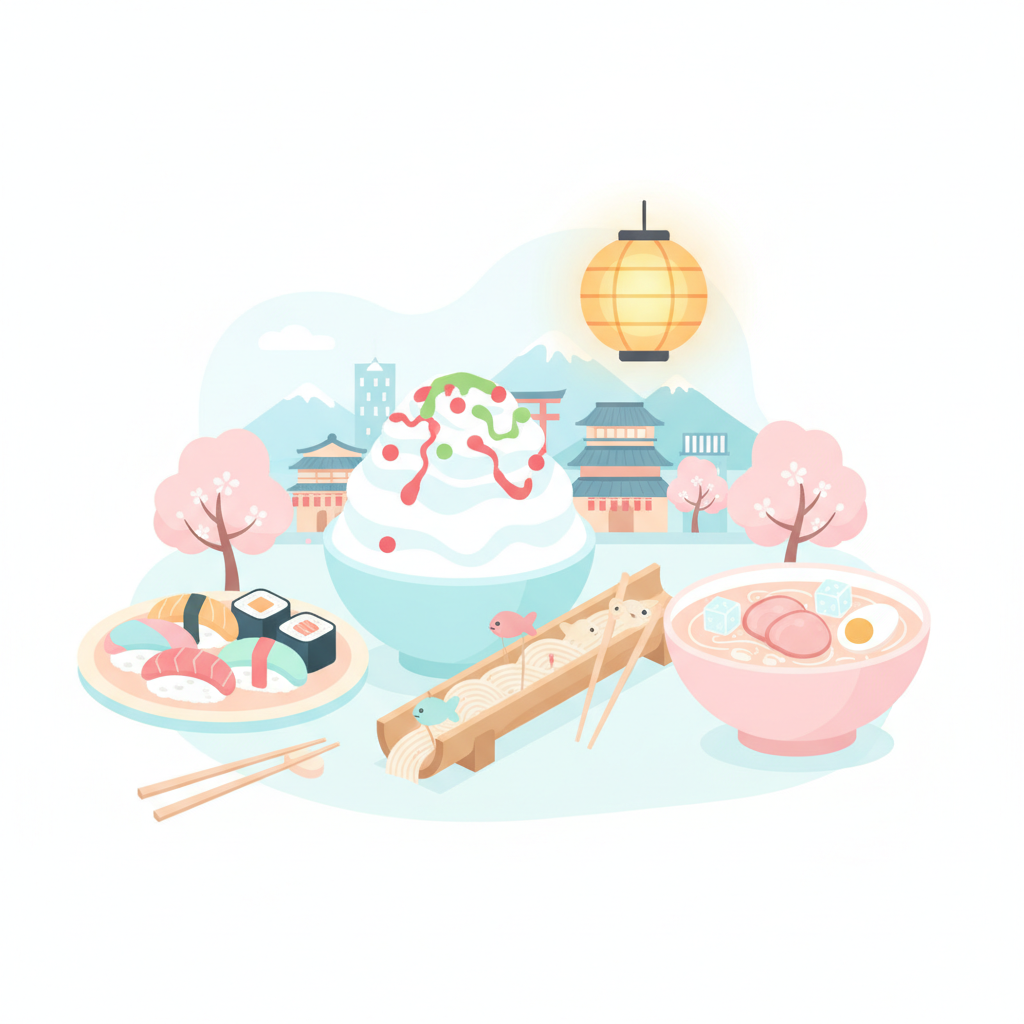
If you are visiting Japan between June and September, surviving the suffocating 35°C (95°F) humidity requires more than just convenience store water—you need to eat like a local. This guide covers the holy trinity of Japanese summer dining: Kakigori (artisanal shaved ice), Nagashi Somen (flowing bamboo noodles), and Cold Ramen varieties. But we aren't just listing "famous shops." You will learn exactly where to go in Tokyo, Kyoto, and regional hubs, what you will pay in 2026, and how to navigate the archaic physical ledger systems that keep unprepared tourists locked out of the best spots.
If you read standard guidebooks, they paint a picture of a serene, relaxing summer afternoon eating noodles by a river. The reality? You are fighting thousands of Tokyo and Kyoto locals for highly coveted reservation slots. We are going to show you how to win.
What You'll Get From This Guide
- Real 2026 Prices: Exact yen and USD conversions for premium summer dishes.
- The Daicho System Explained: How to actually secure a seat at Tokyo's top Kakigori shops.
- Tourist Traps Busted: Why Kyoto's most famous Nagashi Somen spot is wildly overrated and where to go instead.
- Regional Specialties: The difference between Yamagata Cold Ramen and standard Hiyashi Chuka, and where to find them.
- Practical Logistics: Walking times, exact station exits, and floor numbers so you don't melt on the pavement.
The Brutal Reality of Japanese Summer Dining (And What Tourists Get Wrong)
The biggest mistake first-time summer visitors make is assuming they can simply "drop in" at a famous Kakigori or Nagashi Somen restaurant at 1:00 PM on a Saturday. In 2026, domestic tourism is at record highs, and the Japanese obsession with seasonal eating means queues for premium summer foods are aggressive.
The Local Tip Your Brochure Skipped: Guidebooks often push you toward Kyoto's Kibune area for a "tranquil" Nagashi Somen experience. The truth? It is a high-stress, three-hour wait, shoulder-to-shoulder with sweating tourists. The real local move is leaving the major cities entirely for these experiences, or understanding the unwritten rules of the daicho (physical sign-up ledger).
Kakigori (Shaved Ice): The Artisanal Ice Boom
Forget the crunchy, artificially flavored neon ice you buy at festivals for ¥300 (~$2.00 USD). Premium kakigori uses natural ice sourced from winter mountains in Nikko or Chichibu, shaved so finely it resembles fresh snowfall, and topped with fresh fruit purees and espumas.
Tokyo: Kooriya Peace (Kichijoji)
Located just a 3-minute walk from Kichijoji Station (South Exit, inside the Jizo Building 1F), Kooriya Peace is a legendary establishment. Their signature Yamada Sesame and American Cherry Kakigori costs ¥1,800 (~$12.00 USD).
- The Catch: You cannot just walk in. They use a daicho (ledger) system. Locals line up at 8:30 AM to write their names in a time slot for later in the day. If you arrive at noon, the book is already closed for the day.
Kyoto: Page One (Gion)
Tucked away a 10-minute walk from Kyoto Kawaramachi Station, up the hill toward Yasaka Shrine, Page One is run by a legacy ice-making family. They serve their kakigori inside a literal bowl made of solid ice. Their Fresh Strawberry Kakigori is ¥1,300 (~$8.60 USD).
- Pro Tip: Because it operates as a cafe/bar, lines here peak at 3:00 PM but drop significantly if you visit around 6:00 PM for an early evening cooldown.
Kakigori Logistics Matrix
| City | Shop Name | Signature Flavor | 2026 Price | Wait / Reservation System |
|---|---|---|---|---|
| Tokyo | Kooriya Peace | Sesame & Cherry | ¥1,800 ($12) | Morning physical ledger (Daicho) |
| Tokyo | Azuki to Kouri | Potato & Caramel | ¥2,200 ($14.60) | Online reservation exactly 7 days prior |
| Kyoto | Page One | Fresh Strawberry | ¥1,300 ($8.60) | Walk-in (Expect 45-min wait at 2 PM) |
| Nara | Housekibako | Yogurt Espuma | ¥1,600 ($10.60) | Online reservation only (Sells out in mins) |
Nagashi Somen: The Flowing Noodle Reality Check
Nagashi Somen involves catching thin wheat noodles as they slide down a bamboo flume in cold mountain spring water. It is heavily romanticized in anime and travel vlogs.
Kyoto: Hirobun (Kibune) — The Overrated Tourist Trap
Hirobun is the most famous spot globally. You take the Eizan line to Kibuneguchi Station, hop a bus, and walk 10 minutes up the mountain.
- The Reality: The cost is ¥2,500 (~$16.60 USD) per person. In July and August, the wait time is regularly 3 to 4 hours. You pay upfront, get a paper fan with a number, and sit on a crowded tatami mat waiting for your 15-minute turn. Once it's your turn, the noodles fly down so fast that if you stop to take a video for Instagram, you will miss your lunch.
Saitama: Choseikan (Nagatoro) — The Local Alternative
Instead of fighting Kyoto crowds, head to Saitama. Take the Chichibu Railway to Nagatoro Station (a 3-minute walk to the venue). At Choseikan, set against the stunning Arakawa River cliffs, an all-you-can-eat Nagashi Somen course costs just ¥1,800 (~$12.00 USD). They take reservations, the setting is genuinely tranquil, and you get a private bamboo lane rather than sharing a massive one with strangers.
(Planning your itinerary around these early-morning queue times? Search best hotels in Japan on Booking.com to find accommodations within walking distance of Kichijoji or Gion to give yourself an advantage over the commuters.)
Savory Saviors: Cold Ramen, Hiyashi Chuka & Reimen
When the humidity strips your appetite, cold noodles are the ultimate Japanese comfort food.
Yamagata: Sakaeya Honten (The Birthplace of Cold Ramen)
Yamagata Prefecture hits record-breaking summer temperatures, which is why Sakaeya Honten invented Hiyashi Ramen in 1952. Located a 15-minute walk from Yamagata Station (East Exit), their classic Cold Beef Ramen costs ¥950 (~$6.30 USD). Unlike standard ramen, the soy-based broth is chilled with actual ice cubes, but thanks to a special technique, the beef fat never congeals.
Tokyo: Senrigan (Komaba-Todaimae)
For a completely unhinged Tokyo take on summer food, visit Senrigan (10-minute walk from Komaba-Todaimae Station West Exit). Their summer-only Hiyashi Chuka (¥1,150 / ~$7.60 USD) is a mountain of thick, cold, chewy noodles topped with shredded daikon, garlic, pork fat, and their famous spicy garlic mayonnaise. It is the antithesis of a light summer meal, and Tokyo university students line up for an hour just to eat it.
Cold Noodle Breakdown
| Dish | Broth Style | Noodle Texture | Where to Eat It | Avg Cost |
|---|---|---|---|---|
| Hiyashi Chuka | No broth. Sesame/Soy/Vinegar dressing | Thin, firm, wavy egg noodles | Ramen & Chinese shops nationwide | ¥900 ($6) |
| Cold Ramen | Full dashi/soy soup, served over ice | Medium egg noodles | Tohoku (Yamagata), Tokyo specialty shops | ¥1,000 ($6.60) |
| Morioka Reimen | Spicy, cold beef/kimchi broth | Extra chewy potato starch noodles | Iwate, Yakiniku shops nationwide | ¥1,200 ($8) |
Essential Summer Survival Gear
If you are going to brave the lines for any of these foods, you cannot simply stand in the Tokyo sun for an hour. Heatstroke is a massive issue for tourists. You absolutely need a high-quality UV-blocking parasol. Search 日傘 on Amazon Japan and have it delivered to your hotel via local lockers—do not rely on Western umbrellas, as they lack the heavy UV-reflective blackout coating that Japanese parasols possess.
Alternatively, escape the midday heat by shifting your itinerary. Queue for Kakigori early in the morning, and spend the 2:00 PM peak-heat hours indoors or high above the concrete radiation. You can Book Shibuya Sky / Tokyo Disneyland / Universal Studios Japan on Klook to secure an evening slot with air conditioning and spectacular sunset views.
Frequently Asked Questions
Q: How much does premium kakigori cost in 2026?
A: If you are buying kakigori from a street vendor at a summer festival (matsuri), you will pay around ¥300 to ¥500 (roughly $2.00 to $3.30 USD) for standard crushed ice with artificially flavored, neon-colored syrup. However, if you are visiting a premium, artisanal kakigori specialty shop in Tokyo or Kyoto, you must budget between ¥1,500 and ¥2,500 ($10.00 to $16.60 USD). This massive price jump is due to the ingredients. Premium shops use natural mountain spring ice that requires weeks of slow freezing to achieve a structure that shaves into a cloud-like texture without giving you brain freeze. Furthermore, they use house-made purees from expensive seasonal Japanese fruits (like Crown Melon, Shine Muscat, or Amaou strawberries) instead of synthetic syrups, often topping the ice with intricate yogurt or mascarpone espumas.
Q: Is Hirobun's Nagashi Somen safe and practical for solo travelers?
A: Yes, it is perfectly safe and highly organized for solo travelers, but it is not entirely practical if you want to capture the moment. Despite the massive crowds, Hirobun assigns dedicated bamboo lanes or specific colored noodles to individual parties. If you are a solo diner, you will not be catching noodles out of the same stream as a stranger—you get your own lane. However, the sheer speed of the flowing noodles requires absolute focus. You must hold your dipping cup in one hand and your chopsticks in the other. If you are traveling alone, it is physically impossible to hold a camera to film yourself catching the noodles without missing half your meal. The noodles wait for no one, and once the pink noodles drop, your session is officially over.
Q: What is the exact difference between Cold Ramen and Hiyashi Chuka?
A: Many tourists confuse these two, but they are structurally different dishes. Hiyashi Chuka translates to "chilled Chinese style" and functions more like a noodle salad. There is zero drinkable broth. The chilled ramen noodles are placed on a shallow plate, topped with neat, colorful piles of cucumber, ham, egg crepe, and tomato, and then splashed with a highly acidic soy-vinegar or creamy sesame dressing. Cold Ramen (Hiyashi Ramen), originating in Yamagata, is literally a bowl of ramen soup served ice cold. It contains a deep, savory dashi and soy-based broth with actual ice cubes floating in it. The culinary magic of Cold Ramen lies in the chef's ability to extract the fats from the broth so the soup remains flavorful and clear without turning into a congealed, greasy mess when exposed to near-freezing temperatures.
Q: How do physical reservation ledgers (daicho) work for Tokyo Kakigori shops?
A: The daicho is a physical sign-up book placed outside popular, small-scale Japanese restaurants to prevent massive queues from blocking neighboring businesses. For famous kakigori shops like Kooriya Peace in Kichijoji, the staff places the daicho outside their door around 8:00 AM or 8:30 AM. You must physically show up, write your name and party size under a specific available time slot (e.g., 2:15 PM), and then leave. You return 5 to 10 minutes before your chosen slot. The biggest mistake tourists make is "ghosting"—if you write your name down and fail to show up precisely on time, your slot is instantly forfeited to a walk-in, and you will be permanently blacklisted by the shop. Never sign a daicho unless you are 100% committed to returning.
Q: Can I find these summer foods year-round, or are they strictly seasonal?
A: The availability of these foods depends entirely on the dish and the specific type of restaurant. Hiyashi Chuka is rigidly seasonal; standard ramen shops and Chinese diners will literally hang a banner outside saying "Hiyashi Chuka Hajimemashita" (We have started Hiyashi Chuka) in late May or June, and they completely wipe it from the menu by late September. Cold Ramen in Yamagata can sometimes be found year-round due to local pride, but it is rare elsewhere outside summer. Nagashi Somen is an exclusively summer outdoor activity (usually June to September). Conversely, premium Kakigori has broken the seasonal barrier. Dedicated kakigori specialty shops operate 365 days a year, shifting their fruit toppings to match the season—serving sweet potato, pumpkin, and chestnut shaved ice in the dead of winter.
Bottom Line
Navigating Japan’s summer food scene in 2026 requires abandoning the fantasy of stumbling upon an empty, world-class kakigori or flowing noodle shop. You are competing with 125 million locals who take seasonal eating very seriously. If you refuse to wake up early to sign physical ledgers or hate the idea of rigid reservation slots, stick to neighborhood convenience stores for your cold noodle fix. But if you follow this guide, leverage regional alternatives like Saitama's Nagatoro over Kyoto's Kibune, and understand the difference between true cold ramen and Hiyashi Chuka, you will access a level of culinary craftsmanship that fully justifies the intense Japanese heat.
📝 この記事について
監修・運営: Futuristic Imagination LLC
専門分野: 日本旅行・インバウンド
AI技術と専門家の知見を組み合わせ、信頼性の高い情報をお届けします。