[PR] This article contains affiliate links.
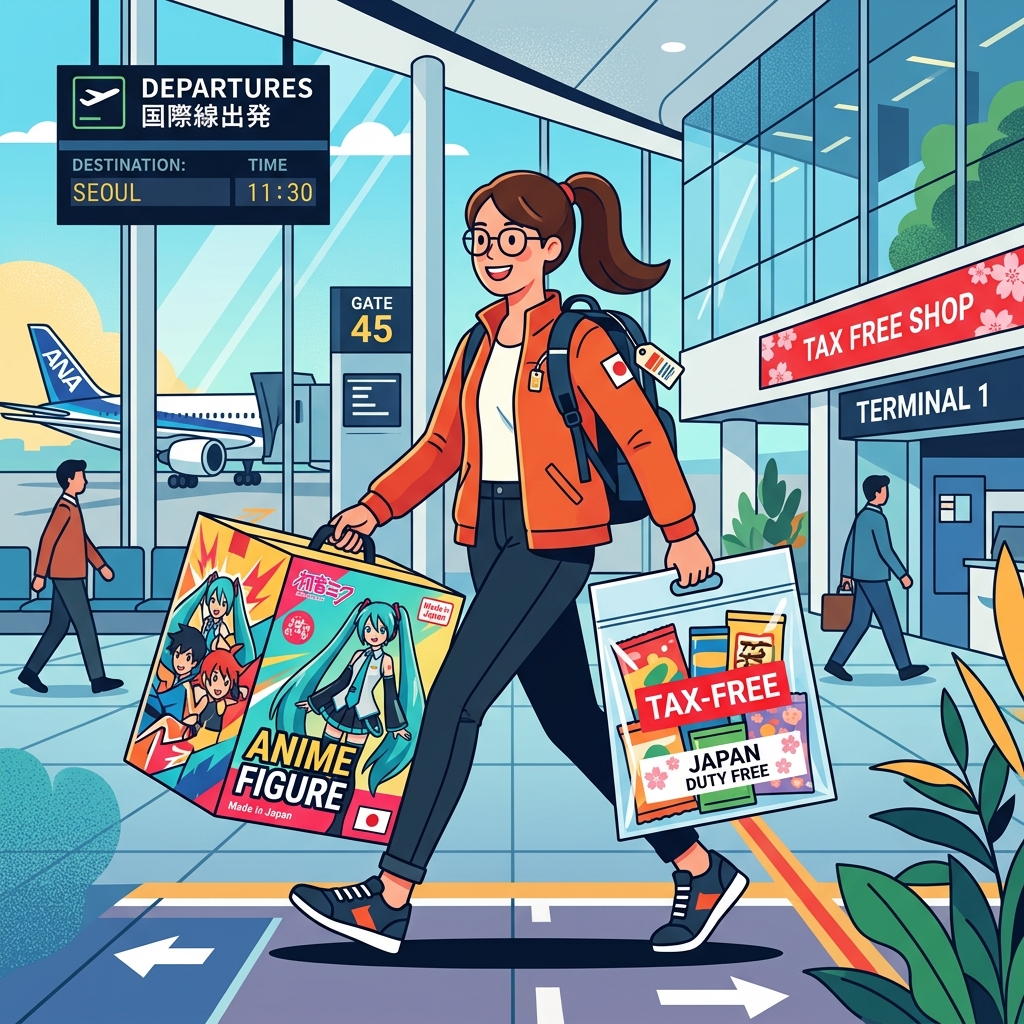
You’ve done it. After days of dedicated hunting through the electric streets of Akihabara, scouring the prize shelves at convenience stores, and diving deep into the chaotic aisles of Don Quijote, you’ve secured your holy grails. A massive, limited-edition Ichiban Kuji figure, rare Gunpla kits, and a tax-free bag bulging with Japanese snacks and cosmetics. The thrill of victory is euphoric... until a cold wave of panic washes over you: How on Earth am I going to get all of this home on a plane?
This is the collector's final boss battle, a challenge of logistics, luggage weight limits, and Japanese customs rules. Fear not, fellow traveler. You’ve found the ultimate, exhaustive guide to navigating this very problem. As a seasoned travel writer specializing in Japan for inbound tourists, I’ve packed more fragile figures and awkwardly shaped souvenir bags than I can count. This is your step-by-step master plan for getting your precious haul from the shelf in Japan to your display case back home, safe and sound.
We will cover everything from strategic pre-packing in your hotel room and where to buy the best supplies, to the controversial question of opening tax-free bags, and a deep dive into the lifesaver services available at Japan's major airports.
Why Packing Your Japan Haul is a Unique Challenge
Before we dive into solutions, let's appreciate the specific hurdles you're facing. This isn't just a matter of folding a few extra t-shirts; it's a complex puzzle involving delicate, valuable, and awkwardly shaped items.
The Ichiban Kuji Conundrum: Bulky Boxes & Delicate Figures
Ichiban Kuji, the "number one lottery," is an addictive part of Japan's otaku culture. Winning that coveted A-Prize or holding out for the "Last One" award is a peak travel experience. The prize, however, is often a large-scale figure in a box that seems designed to defy all known luggage dimensions.
- Box Size: A-Prize figures from popular series like Dragon Ball or One Piece can come in boxes measuring 40cm x 30cm x 25cm or even larger. They are beautiful but incredibly bulky.
- Fragility: Inside that box is a PVC masterpiece with delicate parts—protruding hair, thin swords, intricate stand—that can easily snap if the box is crushed.
- Collector Value: For serious collectors, the box itself is part of the item's value. A dented or crushed box can significantly reduce its worth and appeal. If you're hunting for a specific prize, like those in the Baki Ichiban Kuji 2026: Your Ultimate Guide to Prizes & Locations in Japan, you'll want to protect both the figure and its packaging.
The Don Quijote Tax-Free Bag Dilemma
The vibrant, chaotic wonderland of Don Quijote (affectionately known as "Donki") is a must-visit for tourists. Their tax-free shopping is a huge draw, but it comes with a catch: the sealed, clear plastic bag.
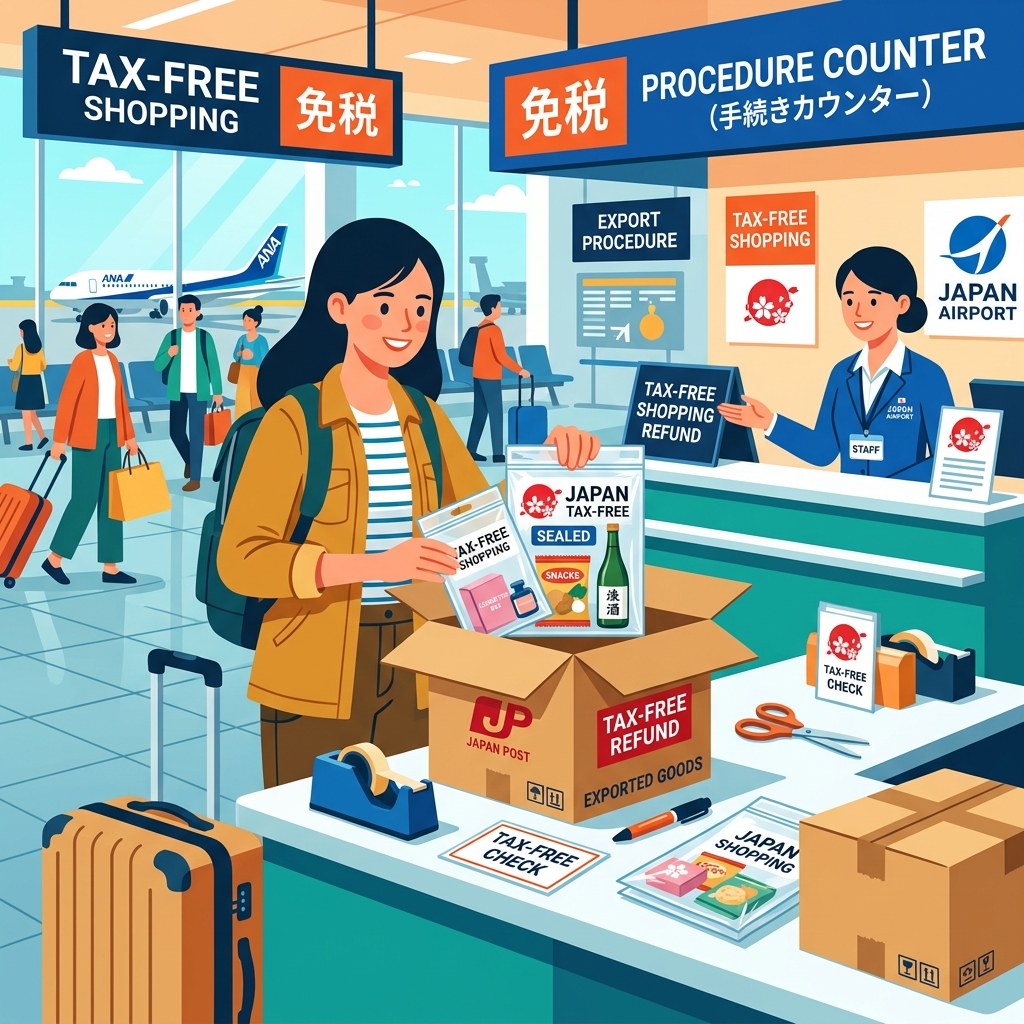
- The "Sealed Bag" Rule: When you purchase consumable items like snacks, drinks, or cosmetics tax-free, the store is required to place them in a special, sealed, tamper-proof bag. The official rule is that you cannot open this bag until you have departed Japan.
- Awkward & Flimsy: These bags are often huge, awkwardly shaped, and filled with a random assortment of items. A heavy bottle of sake might be packed right next to a delicate box of Pocky. The thin plastic offers almost no protection.
- The Packing Nightmare: You can't just shove this lumpy, fragile bag into your suitcase. It's an inefficient use of space and a recipe for crushed souvenirs. This forces a difficult decision: obey the rule and risk damage, or break the seal and risk a customs issue? We'll tackle this head-on later. For a complete overview of how to shop there, check out our Don Quijote Shopping Guide | Late Night Tax-Free Discounts.
Japanese Packaging: A Blessing and a Curse
Japan's dedication to presentation (包装, hōsō) is legendary. Everything from a simple cookie to a high-end electronic is beautifully and meticulously packaged. While this makes for amazing souvenirs, it also means you're carrying a lot of air and cardboard, which are the enemies of limited luggage space.
The Ultimate Packing Strategy: Before You Get to the Airport
Success begins in your hotel room, a few days before your flight. Don't leave this until the last minute. This is your pre-flight mission briefing.
Step 1: Assess Your Loot - To Keep the Box or Not to Keep the Box?
This is the first and most important decision for figure collectors. Your answer will determine your entire packing strategy.
For the In-Box Collector: Keeping It Mint
If you are a collector who displays figures in their boxes or for whom the pristine condition of the packaging is paramount, you must accept one truth: you will likely need a separate, dedicated box for your figures. You cannot safely transport large, mint-condition figure boxes inside a packed suitcase. The pressure from clothes and other items will inevitably cause dents, creases, or crushing.
Your strategy is to acquire a sturdy cardboard box that will become an extra piece of checked luggage. We'll cover where to get this box and how to pack it shortly.
For the Space-Saver: The Art of "Unboxing"
If your primary goal is to get the figure home safely and you're less concerned about the box's condition (or you display your figures out-of-box anyway), then strategic unboxing is your best friend. This can reduce the volume of a figure by 50-70%.
How to Do It Safely:
- Photograph Everything: Before you open anything, take photos of the box from all angles. Then, as you open it, take photos of how the figure and its parts are arranged in the plastic blister pack. This will be invaluable for reassembly.
- Carefully Open the Box: Use a small knife or your fingers to carefully slice the tape seals. Avoid tearing the cardboard.
- Remove the Blister Pack: The figure is usually sandwiched between two pieces of clear plastic. Open it carefully.
- Wrap Every Single Piece: This is crucial. Wrap the main body of the figure in 2-3 layers of bubble wrap. Then, wrap every individual accessory (swords, alternate hands, effects pieces, the stand) separately in bubble wrap and tape them.
- Bag the Small Parts: Place all the small, wrapped accessories into a Ziploc bag so nothing gets lost.
- Flatten the Original Box: Carefully unfold the figure's original cardboard box and flatten it. You can now pack this flat against the side of your suitcase.
- Pack the Wrapped Figure: The bubble-wrapped figure can now be packed securely in the center of your suitcase, cushioned by your clothes.
This method allows you to fit multiple large figures into a single suitcase while still keeping the original (albeit flattened) packaging.
Step 2: Sourcing Your Packing Arsenal in Japan
Now you need supplies. Japan is incredibly well-equipped for all your packing needs. Here are the best places to gear up.
The Holy Trinity of Packing Supplies: Boxes, Bubble Wrap & Tape
1. Japan Post Office (郵便局 - Yūbinkyoku) Post offices are a reliable, nationwide source for high-quality, sturdy cardboard boxes called Yū-Pack (ゆうパック) boxes. They are designed for shipping, so they can withstand the rigors of airline baggage handling.
- What to buy: Yū-Pack boxes (ダンボール箱 - danbōru-bako), bubble wrap (プチプチ - puchi puchi), and packing tape (ガムテープ - gamu tēpu).
- Box Sizes & Prices (Approximate):
- Small (小): ~¥110
- Medium (中): ~¥150
- Large (大): ~¥220
- Extra Large (特大): ~¥380
- Recommended Location (Tokyo): Tokyo Central Post Office (JP Tower KITTE)
- Why here? It's massive, centrally located right next to Tokyo Station, and open long hours. The staff are used to foreigners.
- Access: A 1-minute walk from the Marunouchi South Exit of JR Tokyo Station. It's on the 1st floor of the KITTE shopping complex.
- Hours: 9:00 - 21:00 (Weekdays), 9:00 - 19:00 (Weekends/Holidays).
- Map:
2. Home Centers (ホームセンター) These are the Japanese equivalent of Home Depot or B&Q and are, without a doubt, the best one-stop shops for packing supplies. They offer the widest variety and highest quality.
- What to buy: Everything. Heavy-duty cardboard boxes in dozens of sizes, large rolls of bubble wrap, reinforced packing tape, corner protectors, cutters, and more.
- Recommended Location (Tokyo): Hands Shinjuku (Formerly Tokyu Hands)
- Why here? An iconic store for tourists, easily accessible from the world's busiest station. It has an entire floor dedicated to DIY, craft, and packing materials.
- Access: A 2-minute walk from the New South Exit of JR Shinjuku Station, located inside the Takashimaya Times Square building. The packing supplies are typically on one of the upper floors (check the store directory, usually 6F or 7F).
- Hours: 10:00 - 21:00.
- Map:
3. 100-Yen Shops (Daiso, Seria, Can Do) For budget-conscious packers, the 100-yen shop is your best friend for accessories. They are less ideal for large, sturdy boxes but are unbeatable for everything else.
- What to buy: Bubble wrap envelopes, small rolls of bubble wrap, packing tape, scissors, Ziploc bags, and compression bags.
- Recommended Location (Tokyo): Daiso Marronnier Gate Ginza
- Why here? This is one of the largest and most impressive Daiso stores in central Tokyo, spanning an entire floor. It has a massive selection.
- Access: A 4-minute walk from JR Yurakucho Station, or a 3-minute walk from Ginza-Itchome Station on the Yurakucho Line. Located on the 6th floor of Marronnier Gate Ginza 2.
- Hours: 11:00 - 21:00.
- Map:
For more on what to buy at these amazing stores, see our Japan 100 Yen Shop Deep Dive | Daiso vs Seria vs Can Do What to Buy.
The Ultimate Space-Saving Weapon: Compression Bags
Before packing your figures, you need to make room. Vacuum compression bags (圧縮袋 - asshuku-bukuro) are non-negotiable. By sucking the air out of your clothes and other soft items, you can shrink their volume by up to 80%. This creates a ton of extra space for your non-compressible loot. You can buy these at Don Quijote, Hands, Muji, and even 100-yen shops. The travel versions that you roll to force the air out are perfect for hotel room packing.
Step 3: The Art of the Pack - A Masterclass in Luggage Tetris
With your supplies gathered, it's time to pack.
Packing Figures in Your Checked Luggage (Unboxed Method)
- Create a Soft Base: Line the bottom of your suitcase with a layer of soft clothing (jeans, sweaters).
- The Fortress: Place your bubble-wrapped figures in the center of the suitcase. Then, build a fortress of tightly-packed clothing around them. Roll your clothes tightly to create dense, shock-absorbing "bricks."
- Use Flattened Boxes: Slide the flattened original figure boxes along the inner walls of the suitcase. This adds a layer of rigid protection against side impacts.
- Fill All Gaps: Use socks, underwear, and other small clothing items to fill every single gap. The goal is zero movement. If you shake the suitcase, nothing should shift inside.
- Top Layer: Finish with another layer of soft clothing on top before closing.
Preparing a Dedicated "Figure Box" for Check-in (In-Box Method)
- Choose the Right Box: Select a sturdy, double-walled cardboard box from Hands or the Post Office. It should be just large enough to fit your figure boxes with a little room for padding.
- Reinforce the Box: Use packing tape to seal the bottom seams. Run extra strips of tape along all edges and corners for added strength.
- Bubble Wrap the Prize: Even though the figures are in their original boxes, wrap each box in a layer or two of bubble wrap for shock absorption and to protect the box corners.
- Pack Tightly: Arrange the wrapped figure boxes inside the cardboard box. Place the heaviest ones at the bottom. Use crumpled newspaper, extra bubble wrap, or even cheap t-shirts from Donki to fill all empty space. Again, the goal is zero internal movement.
- Seal and Label: Tape the box shut securely. On at least two sides, write in large block letters with a permanent marker:
- FRAGILE
- 壊れ物 (Kowaremono)
- Your name, home address, and phone number.
The Don Quijote Tax-Free Bag: To Open or Not to Open?
This is the most common question travelers face, and it's surrounded by a lot of fear and misinformation. Let's break it down logically.
Decoding the Rules: What the Law Actually Says
The official stance from the Japan National Tourism Organization and Japanese Customs is clear: consumable goods (food, drinks, cosmetics, medicine) purchased tax-free must be taken out of Japan within 30 days. They are placed in a sealed bag to ensure they are not consumed within the country. A customs officer may ask to inspect your purchases at the airport and check them against your passport records (where the tax-free purchases are digitally recorded). If the bag is open or items are missing, you could be asked to pay the 10% consumption tax on the spot.
The Reality on the Ground: A Calculated Risk
Here is the practical reality based on the experiences of countless travelers (myself included): routine physical checks of tax-free bags for departing tourists at major airports like Narita, Haneda, and Kansai are exceedingly rare. The system largely operates on an honor system. Customs officials are primarily focused on security, prohibited items, and high-value declarations, not on whether you've repacked your KitKats.
However, this is not a guarantee. Rules can be enforced more strictly at any time. The decision to open the bag is a calculated risk, but one that is generally considered very low.
Strategic Repacking: A How-To Guide for the Brave
Disclaimer: This advice is based on common traveler experiences and represents a personal risk assessment. It is not an official endorsement to break the rules. Proceed at your own risk.
Why You Almost Need to Open the Bag
- Safety: The default packing is unsafe. Fragile items are mixed with heavy ones.
- Logistics: The bag is bulky and inefficient. It often contains liquids over 100ml which must go in checked luggage.
- Practicality: Trying to fit the entire sealed bag is often impossible.
The "Safe & Smart" Way to Repack
If you choose to open the bag, do it methodically to minimize your risk.
- Do It the Night Before: In the privacy of your hotel room, carefully cut the bag open.
- KEEP EVERYTHING: Do not throw away the opened bag or any of the receipts stapled to it. This is your proof of purchase.
- Repack Logically:
- Separate liquids (lotions, drinks) and pack them in your checked luggage.
- Protect fragile items like boxed snacks by packing them carefully amongst your clothes.
- Consolidate durable items.
- The "Proof Pouch": Place the opened, empty tax-free bag and all the original receipts together in a clear file or large Ziploc bag. Put this "proof pouch" in an easily accessible part of your carry-on luggage.
- The Rationale: In the extremely unlikely event you are stopped and questioned, you can immediately produce the bag and all receipts. You can explain that you had to open it to safely pack the items and to separate liquids for flight regulations, but that you are exporting all the purchased goods. This demonstrates intent to comply with the spirit of the law (exporting the goods) even if you broke the letter of the law (the seal).
When You Absolutely Should NOT Open the Bag
- If your tax-free purchases include very high-value items like luxury watches, designer bags, or expensive jewelry. These big-ticket items are more likely to be scrutinized.
- If you are a very risk-averse person and the small possibility of being questioned would cause you too much stress. It's better to have peace of mind. In this case, your best bet is to pack the entire sealed bag into a larger cardboard box you check as luggage.
The Final Boss: Navigating the Japanese Airport
You’ve made it to your departure day. Your luggage is packed, your boxes are taped. The final step is getting through the airport. Luckily, Japanese airports are incredibly well-equipped to help you.
Japan's Airport Super-Services: Your Last-Minute Saviors
Forgot something? Is your box not sturdy enough? Don't worry. The airport has you covered.
Airport Cardboard Box & Packing Supplies Shops
If you run out of time to buy supplies in the city, you can get them right at the airport.
- Narita International Airport (NRT):
- Post Office: The most reliable choice for boxes.
- Terminal 1: Central Building, 4th Floor. Hours: 8:30 - 20:00.
- Terminal 2: Main Building, 3rd Floor. Hours: 8:30 - 20:00.
- Convenience Stores/Other: Lawson, 7-Eleven, and travel stores like "Air BicCamera" will also sell tape, bubble wrap, and sometimes smaller boxes.
- Post Office: The most reliable choice for boxes.
- Haneda Airport (HND - Tokyo International):
- Post Office:
- Terminal 1: 1st Floor. Hours: 9:00 - 17:00.
- Terminal 3 (International): 1st Floor. Hours: 9:00 - 17:00.
- Convenience Stores: Stores like Lawson and Air Lawson are on multiple floors and in multiple terminals and are a good source for tape and other supplies.
- Post Office:
- Kansai International Airport (KIX):
- Post Office: Terminal 1 Building, 2nd Floor. Hours: 9:00 - 17:00.
- Convenience Stores: Multiple Lawson and FamilyMart locations are available 24/7.
The Ultimate Protection: Airport Luggage Wrapping Services
For maximum peace of mind, especially for a checked cardboard box, use the luggage wrapping service. A machine will wrap your item in many layers of tough, transparent plastic film.
Benefits:
- Protects boxes from bursting open.
- Adds a significant layer of water resistance.
- Reinforces the structure of the box or suitcase.
- Acts as a deterrent to theft.
Where to Find Wrapping Services:
-
Narita International Airport (NRT):
- Company: R&F, Your Wrap!, etc. Look for the prominent wrapping stations in the departure halls.
- Location:
- Terminal 1: South Wing & North Wing, 4th Floor Departure Hall.
- Terminal 2: Main Building, 3rd Floor Departure Hall.
- Hours (Approx.): 7:00 - 21:00 (Check official airport website for current hours).
- Price (Approx.): ¥1,500 for a standard suitcase, ¥2,000-¥2,500 for a large box.
- Map (General Area in Terminal 1):
-
Haneda Airport (HND):
- Company: Look for baggage service counters.
- Location: Terminal 3, 3rd Floor Departure Hall, near check-in counters A and L.
- Hours (Approx.): Generally operates from early morning to late evening, often 24/7.
- Price (Approx.): Similar to Narita, ~¥1,500 - ¥2,500.
- Map (General Area in Terminal 3):
-
Kansai International Airport (KIX):
- Company: Your Wrap!
- Location: Terminal 1, 4th Floor Departure Hall (North and South ends).
- Hours (Approx.): 7:00 - 22:00.
- Price (Approx.): ~¥1,500 - ¥2,500.
- Map (General Area in Terminal 1):
Checking In Your Precious Cargo
You're at the final hurdle: the airline check-in counter.
Navigating Airline Weight and Size Limits
Before you even leave for Japan, check your airline's baggage allowance. This is the most important step to avoid painful surprise fees.
- Economy Class Standard: Most international airlines allow 1 or 2 checked bags, each with a maximum weight of 23 kg (50 lbs).
- Excess Fees: Exceeding the weight limit or number of bags can be incredibly expensive, often costing $100-$200 USD or more per overweight/extra bag.
- Pro-Tip: Bring a portable luggage scale with you. They are small, light, and can save you a fortune in overweight fees. Weigh your packed boxes and suitcases in your hotel room to ensure you're compliant.
Carry-On vs. Checked: What Goes Where?
- Carry-On:
- Small, extremely valuable, or one-of-a-kind items. This could be a rare Gashapon in Japan 2026: The Ultimate Collector figure or a small, delicate statue.
- Anything with a lithium-ion battery (power banks, some electronics) MUST be in your carry-on.
- Your "proof pouch" with the opened Donki bag and receipts.
- Checked Luggage:
- All large Ichiban Kuji figures, whether in a suitcase or a dedicated box.
- All liquids over 100ml.
- The sealed Don Quijote bag (if you chose not to open it).
- Anything you wouldn't be devastated to lose (though with proper packing, the risk is low).
At the Check-in Counter: Declaring Fragile Items
When you hand over your suitcase or dedicated figure box, politely inform the airline agent: "Sumimasen, kono nimotsu wa kowaremono desu." (Excuse me, this luggage is fragile.) Or simply, "This box/suitcase is fragile, please."
They will affix large, brightly colored "FRAGILE" stickers to your bag. While this doesn't guarantee a baggage handler will treat it like a Fabergé egg, it significantly increases the chances of it being handled with more care and placed on top of other luggage in the cargo hold.