[PR] This article contains affiliate links.
For inbound tourists visiting Japan in 2026, the shopping landscape offers unprecedented opportunities, and at the absolute top of the wish list for fashion enthusiasts is securing a BAO BAO ISSEY MIYAKE bag. With its iconic, futuristic, and infinitely flexible geometric design, the BAO BAO is more than just a handbag; it is a piece of wearable modern art.
Buying a BAO BAO bag in its home country of Japan is a rite of passage. Not only do you get access to Japan-exclusive seasonal colors and the highly coveted matte "Kuro" series, but you also unlock what savvy shoppers call the "Triple Discount": the lower Japanese retail price, the 10% tourist tax-free exemption, and the legendary 5% department store guest discount.
However, buying a BAO BAO in Japan is not as simple as walking into a store and pointing at a shelf. In 2026, global demand has reached a fever pitch. Stock sells out within hours of delivery. Purchase limits are strictly enforced. To succeed, you need military-grade planning.
This exhaustive, 5,000+ word masterclass is the only guide you will ever need to buy a BAO BAO ISSEY MIYAKE bag in Japan. We will break down exact 2026 pricing, store-by-store inventory strategies, department store discount card secrets, and detailed location guides with maps and access instructions.
Why Buy BAO BAO ISSEY MIYAKE in Japan? The 2026 Price Advantage
Let’s talk numbers. The primary motivation for purchasing a BAO BAO bag in Tokyo, Osaka, or Kyoto rather than New York, London, or Singapore comes down to simple economics.
The Base Retail Price Difference
Because BAO BAO is an indigenous Japanese brand under the Miyake Design Studio umbrella, bags sold in Japan do not suffer from international shipping surcharges, heavy import duties, or foreign distributor markups. The base retail price in yen is significantly lower than the equivalent retail price in US Dollars, Euros, or British Pounds.
The Power of the Yen in 2026
While currency markets fluctuate, Japan remains a deeply attractive shopping destination for holders of strong foreign currencies. When converting the lower base Japanese price into foreign currency, the savings are instantly apparent, often resulting in a 30% to 40% discount compared to Western boutiques. Before heading out, you'll want to finalize your payment strategy—read our guide on Cash vs Card in Japan 2026: How Much Cash Do You Need? to ensure your credit card doesn't hit you with foreign transaction fees that eat into your savings.
The 10% Tax-Free Tourist Exemption
Japan charges a 10% consumption tax on goods. As a temporary visitor on a tourist visa (a "Temporary Visitor" stamp or sticker in your passport), you are legally exempt from paying this tax on purchases over 5,000 JPY. Every single BAO BAO bag easily crosses this threshold.
- Standalone Boutiques: At street-level flagship stores (like the Minamiaoyama boutique), the 10% tax is simply deducted at the cash register. You pay the net price.
- Department Stores: At stores like Isetan, Matsuya, and Takashimaya, you pay the full price (including tax) at the BAO BAO counter, then take your receipt and goods to the store’s central Tax Refund Counter. The store will refund your 10% tax but will usually deduct a 1.55% administrative fee. Therefore, your net tax savings at a department store is 8.45%.
The 5% Department Store "Guest Card"
This is the secret weapon of shopping in Japan. Major Japanese department stores offer a "Guest Card" or "Shopper's Card" exclusively to foreign tourists. By presenting your passport at the customer service desk (often located near the tax refund counter), you will receive a card that grants an immediate 5% discount on almost all goods in the store—including BAO BAO ISSEY MIYAKE.
Doing the Math: A Real-World Example
Let’s look at the classic BAO BAO Lucent Tote (6x6 panels). (Note: Prices fluctuate slightly with annual brand adjustments, but these are accurate representations for 2026).
- Standard Japanese Retail Price: 44,000 JPY (including 10% tax)
- Base Price (Pre-Tax): 40,000 JPY
- Applying the 5% Tourist Card: 40,000 JPY minus 5% = 38,000 JPY.
- Final Cost: 38,000 JPY.
If the exchange rate is around 150 JPY to 1 USD, you are paying roughly $253 USD for a bag that retails for $400+ USD in American boutiques (plus local US state sales tax). You are saving nearly 40%.
Decoding the BAO BAO Collection: Which Bag Should You Buy?
Before you step into a boutique, you need to know exactly what you are looking for. BAO BAO stores in Japan do not have vast warehouses of backstock. What is on the floor is often all they have, and the staff will ask you which model you want. Here is a definitive breakdown of the most popular lines to target in 2026.
1. The Lucent Series (The Classic Starter Bag)
The Lucent is the quintessential BAO BAO bag. It features a grid of 6x6 large triangular panels. It is designed to lay completely flat when empty, making it the ultimate travel bag (it fits effortlessly into the bottom of a suitcase). When filled, it takes on its signature geometric, three-dimensional shape.
- Design: 6x6 large panels. Mesh backing.
- Typical Dimensions: 34 cm x 34 cm.
- Best For: Everyday use, carrying a tablet, makeup bag, and daily essentials.
- Estimated 2026 Japan Price (Tax-Free): ~40,000 JPY.
2. The Prism Series (The Elevated Icon)
To the untrained eye, the Prism looks like the Lucent, but look closer: it is made of a 10x10 grid of much smaller triangles. This gives the bag a more fluid, fabric-like drape and allows it to catch the light in a more intricate way. The Prism is slightly larger and often commands a higher price tag.
- Design: 10x10 small panels.
- Typical Dimensions: 39.5 cm x 39.5 cm.
- Best For: Those who want a slightly more sophisticated, highly reflective look. Fits a 13-inch laptop snugly.
- Estimated 2026 Japan Price (Tax-Free): ~50,000 JPY.
3. The Carat Series (The Jewel)
Introduced to massive fanfare, the Carat is shaped somewhat like a faceted gemstone. It is a smaller handbag with a wider base, allowing it to stand up on its own (unlike the Lucent or Prism, which lack a solid base).
- Best For: Evening wear, dinners out, carrying just a phone, wallet, and keys.
- Estimated 2026 Japan Price (Tax-Free): ~32,000 JPY.
4. The Wring Series (The Drawstring Bucket)
The Wring bag utilizes the flexible panels to create a drawstring bucket bag shape. It is incredibly popular among younger shoppers in Harajuku and Shibuya and can be worn crossbody or over the shoulder.
- Best For: Hands-free city exploration.
- Estimated 2026 Japan Price (Tax-Free): ~45,000 JPY.
5. The Cuboid (The Crossbody Box)
A sleek, rectangular crossbody bag that resembles a small brick of geometric perfection. It is heavily favored by minimalists.
- Best For: Travel, keeping your passport and phone secure against your chest.
- Estimated 2026 Japan Price (Tax-Free): ~35,000 JPY.
6. The KURO Series (The Matte Masculine/Unisex Line)
While BAO BAO is traditionally known for glossy, high-shine resins, the KURO series utilizes a matte, canvas-like finish over the triangles, predominantly in black, grey, and navy. Aimed initially at men, it has become a unisex staple. The KURO line features backpacks (like the Daypack), messenger bags, and the highly sought-after Saddle Bag.
- Best For: Workwear, tech-heavy commutes, understated style.
- Estimated 2026 Japan Price (Daypack, Tax-Free): ~60,000 JPY.
The Golden Rule: How to Score a BAO BAO Bag Before They Sell Out
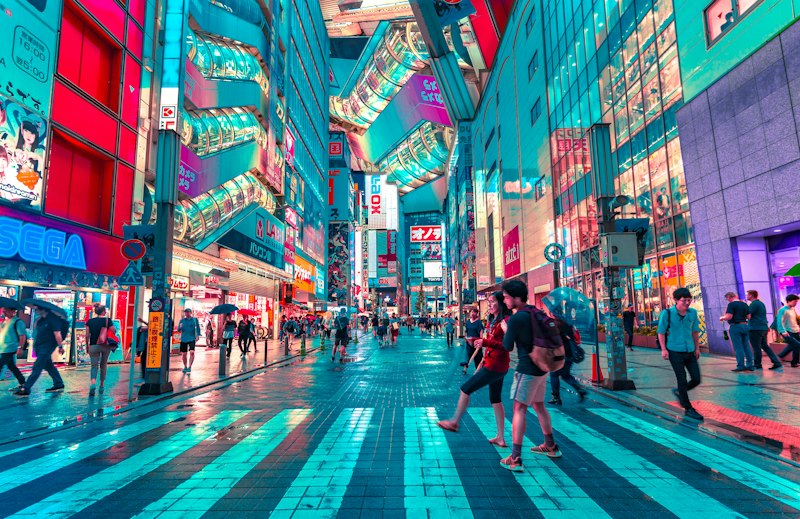
You might assume that because Japan is the home of BAO BAO, the stores will be overflowing with stock. This is a dangerous misconception. In reality, buying a BAO BAO in 2026 requires aggressive strategy. Scalpers, personal shoppers, and legions of inbound tourists empty the shelves daily.
1. Understand Restock Days
Historically, BAO BAO Japan releases new seasonal colors and restocks core colors (White, Black, Beige, Silver) on the 1st day of every month. If the 1st falls on a weekend, the crowds will be apocalyptic. Mid-month restocks happen, but they are random and unannounced. Your best bet is to shop early in your trip so you have multiple days to try different stores.
2. The Morning Queue is Mandatory
If you wander into a BAO BAO department store counter at 3:00 PM, you will likely see a display of exactly three bags, none of which are the color or style you want. You must queue before the store opens. If a department store opens at 10:00 AM, aim to arrive by 9:15 AM to line up at the designated entrance. (Check the store's website; they often mandate a specific door for BAO BAO customers). Remember, queuing outside in Japan's summer heat can be brutal—make sure you've read up on the Best Japanese Sunscreens 2026 | TOP5 for Western Travelers to protect yourself while you wait.
3. Purchase Limits
To combat resellers, Issey Miyake enforces strict purchase limits. In 2026, the standard rule across all Japanese stores is a maximum of two bags per passport per day, and often you are restricted to one bag per specific style/model. You must present your physical passport at the time of purchase; they log your passport number into a central system to prevent you from store-hopping and buying ten bags.
4. The "Secret" Stock Check
When you enter the store, do not just look at the walls. The staff keep the most popular colors (like the glossy Silver Prism) in the back drawers to prevent crowding. Politely approach a staff member, show them a photo of the exact bag you want on your phone, and ask, "Kore wa arimasu ka?" (Do you have this?). They will check their iPad inventory.
Top 10 Places to Buy BAO BAO ISSEY MIYAKE in Tokyo, Osaka & Kyoto
If you want to secure a bag, you need to know exactly where to go, how to get there, and what the vibe is. Below is an exhaustive, map-integrated guide to the best locations, carefully selected for tourist accessibility. To navigate to these stores efficiently, make sure you have the right transit card—check out our guide: What is the Best IC Card for Tourists in Japan 2026? | Suica vs Pasmo vs ICOCA.
1. BAO BAO ISSEY MIYAKE Minamiaoyama (The Tokyo Flagship)
If you want the ultimate, unhurried boutique experience without the frantic energy of a department store, the standalone Minamiaoyama boutique is your destination. Located in Tokyo's premier luxury district, this store often receives priority stock of limited-edition pieces. Because it is a standalone store, the 10% tax is deducted directly at the register—no need to wait in a separate tax-refund line. However, they do not offer the 5% department store guest discount.
- Strategy: Come here for the KURO series and seasonal exclusives.
- Address: 3-18-11 Minamiaoyama, Minato City, Tokyo 107-0062
- Hours: 11:00 AM – 8:00 PM
- Access: A pleasant 4-minute walk from Omotesando Station (Exit A4) on the Ginza, Chiyoda, or Hanzomon subway lines.
2. Matsuya Ginza (The Best for Discounts)
Matsuya Ginza is arguably the best place in Tokyo to buy a BAO BAO bag if you prioritize maximum savings. Matsuya offers a "Tourist Privilege Card" that grants a 5% discount on top of the tax-free refund. The BAO BAO counter here is notoriously busy, but the staff are highly efficient.
- Strategy: Go to the 3rd floor to get your 5% Tourist Privilege Card before you go to the BAO BAO boutique on the ground floor. After buying, take your receipt to the 3rd-floor tax counter.
- Address: 3-6-1 Ginza, Chuo City, Tokyo 104-8130
- Hours: 10:00 AM – 8:00 PM (Closes at 7:30 PM on Sundays)
- Access: Directly connected to Ginza Station via underground Exit A12. Extremely convenient.
3. Isetan Shinjuku (The Fashion Mecca)
Isetan Shinjuku is the highest-grossing department store in Japan and a mecca for fashion lovers. Their BAO BAO counter is large, but it is heavily trafficked. Isetan issues a "Guest Card" (5% off) for foreign tourists, but you must apply for it at the Tax-Free counter on the 6th floor.
- Strategy: Be prepared for a ticketing system. On busy days, staff will hand out numbered tickets to dictate when you can enter the BAO BAO section. If you are staying nearby, read our Best Hotels Near Akihabara 2026 | Value Location Convenience for easy transit via the Chuo Line directly to Shinjuku.
- Address: 3-14-1 Shinjuku, Shinjuku City, Tokyo 160-0022
- Hours: 10:00 AM – 8:00 PM
- Access: A 1-minute walk from Shinjuku-sanchome Station (directly connected via underground passage B3, B4, or B5 exits), or a 5-minute walk from the JR Shinjuku Station East Exit.
4. Shibuya PARCO
If your aesthetic leans more street-style, the BAO BAO boutique in Shibuya PARCO is a must-visit. Shibuya PARCO does not have the traditional 5% department store guest card (they focus more on pop-up events and mobile pay discounts), but the tax-free process is seamless. Plus, you can pair your shopping with a trip upstairs to the Nintendo Store—perfect if you are also following our Animal Crossing Gachapon Guide for Nintendo Tokyo & Osaka.
- Strategy: The Shibuya PARCO store often carries a stronger selection of the KURO men's/unisex line and edgier seasonal drops.
- Address: 15-1 Udagawacho, Shibuya City, Tokyo 150-8377
- Hours: 11:00 AM – 9:00 PM
- Access: A 5-minute walk up the hill (Koen-dori) from the Shibuya Station Hachiko Exit.
5. Tokyo Skytree Town Soramachi (The Hidden Gem)
Most tourists flock to Ginza and Shinjuku for their high-end shopping. Because of this, the BAO BAO counter inside the Tokyo Skytree Town Soramachi shopping complex often retains stock of popular colors slightly longer than its central Tokyo counterparts.
- Strategy: Arrive exactly at opening time. Because it is connected to a major tourist attraction, it gets flooded by midday.
- Address: 1-1-2 Oshiage, Sumida City, Tokyo 131-0045 (East Yard, 2nd Floor)
- Hours: 10:00 AM – 9:00 PM
- Access: Directly connected to Oshiage Station (Hanzomon and Asakusa subway lines) or Tokyo Skytree Station (Tobu Skytree Line).
6. Hankyu Umeda Main Store (Osaka's Shopping Crown Jewel)
If your itinerary takes you to the Kansai region, Hankyu Umeda is the premier destination for luxury shopping. Hankyu offers a 5% Guest Coupon to foreign tourists. The BAO BAO section here is beautifully designed, but the competition with local Osaka fashionistas is fierce.
- Strategy: The tax refund counter is on the 1st basement level (B1F) or the 1st floor of the Hankyu Men's building. Grab your 5% card at the information desk first. If you need a break after a chaotic morning of bag shopping, relax with our guide to the Best Matcha Desserts in Tokyo | Top Sweets Shops (though you'll find similar incredible matcha cafes in the Hankyu basement!).
- Address: 8-7 Kakudacho, Kita Ward, Osaka, 530-8350
- Hours: 10:00 AM – 8:00 PM
- Access: A 2-minute walk from JR Osaka Station or Hankyu Osaka-umeda Station. Connected by a massive network of underground walkways.
7. Kyoto Takashimaya S.C. (The Traditional Capital's Modern Hub)
Shopping for avant-garde fashion in Japan's ancient capital is a wonderful juxtaposition. The Takashimaya in Kyoto issues a "Takashimaya Shopper's Card" (valid for 5% off). The atmosphere here is generally slightly calmer than Shinjuku or Umeda, making for a more relaxed browsing experience.
- Strategy: Be sure to visit the newly expanded T8 building connected to Takashimaya for post-shopping modern art and dining.
- Address: 52 Shincho, Shimogyo Ward, Kyoto, 600-8520
- Hours: 10:00 AM – 8:00 PM
- Access: Directly connected underground to Kyoto-kawaramachi Station (Hankyu Kyoto Line). Also a 5-minute walk from Gion-Shijo Station (Keihan Line).
8. Kintetsu Department Store Main Store Abeno Harukas (Osaka)
Located inside Japan's tallest skyscraper building, the Kintetsu Main Store is a massive retail powerhouse. They offer a "Foreign Customer's VIP Card" giving the golden 5% off.
- Strategy: Because this is further south in Osaka than the Umeda or Shinsaibashi stores, tourist competition for BAO BAO stock can sometimes be slightly lower here early in the morning.
- Address: 1-1-43 Abenosuji, Abeno Ward, Osaka, 545-8545
- Hours: 10:00 AM – 8:30 PM
- Access: Directly connected to Osaka Abenobashi Station (Kintetsu) and Tennoji Station (JR and Osaka Metro).
9. Fa-So-La Duty Free (Narita Airport - Terminal 1 & 2)
Can you buy BAO BAO at the airport? Yes, but it is a massive gamble. The Fa-So-La duty-free boutiques in Narita stock BAO BAO, and you pay strictly the duty-free price with zero administrative fees.
- Strategy: Do NOT rely on the airport as your primary shopping plan. Stock is highly erratic. If a tour bus of shoppers passes through ahead of your flight, the shelves will be entirely empty. Treat airport BAO BAO shopping as a lucky bonus if you failed in the city.
- Location: Post-security in Terminals 1 and 2.
- Access: Only accessible to departing international passengers.
10. KOMEHYO Shinjuku (The Second-Hand Route)
If retail is entirely sold out of the color you want, Japan's legendary luxury secondhand market is your salvation. KOMEHYO is the most trusted and heavily authenticated luxury resale chain in Japan. You will frequently find pristine, unused, or gently used BAO BAO bags here.
- Strategy: Pre-loved bags in Japan are meticulously graded. Look for an "S" grade (unused/mint) or "A" grade (excellent). KOMEHYO also offers tax-free shopping for tourists on second-hand goods! Second-hand shopping in Japan is a culture of its own—whether you are looking for vintage designer bags or exploring Akihabara Retro Game Collecting 2026 | Famicom, Super Famicom & N64 Used Prices & Shops, the quality control is unmatched globally.
- Address: 3-5-6 Shinjuku, Shinjuku City, Tokyo 160-0022
- Hours: 11:00 AM – 8:00 PM
- Access: A 3-minute walk from Shinjuku-sanchome Station (Exit E3) or an 8-minute walk from JR Shinjuku East Exit.