[PR] This article contains affiliate links.
The One Piece Card Game (OPCG) has completely revolutionized the global trading card market, and by 2026, the craze has reached astronomical new heights. For inbound tourists visiting Japan, stepping into Akihabara—Tokyo’s electric anime and gaming mecca—feels like walking into a pirate’s treasure trove. However, navigating the labyrinth of Akihabara's trading card shops can be overwhelmingly intimidating. With hundreds of narrow staircases leading to dimly lit stores, language barriers, fluctuating market prices, and the ever-present danger of "tourist tax" traps, you need a flawless strategy to find the best singles, sealed boxes, and rare promotional cards.
This massive, meticulously researched 2026 guide is your ultimate treasure map. We will dive deep into the best One Piece Card shops in Akihabara, explain exactly how to buy cards using Japanese store systems, break down current market prices in yen, and even guide you to nearby alternative hubs when Akihabara’s prices get too steep. Whether you are hunting for a flawless "Manga Rare" Shanks, building your competitive local meta deck, or simply looking for cheap Japanese bulk as souvenirs, this guide has you covered.
Understanding the 2026 One Piece Card Market in Japan
Before you even step foot off the train at JR Akihabara Station, it is absolutely critical to understand the ecosystem of the Japanese Trading Card Game (TCG) market in 2026. The rules here are entirely different from card shops in North America, Europe, or Southeast Asia.
Singles vs. Sealed Boxes
In Japan, the vast majority of card shops operate on a singles-first business model. Wall-to-wall glass showcases display individual cards, graded and priced meticulously based on current market trends.
Sealed Boxes: Finding sealed booster boxes (like Romance Dawn, Awakening of the New Era, or the newer 2026 sets like OP-11 or OP-12) at standard retail price (MSRP) in Akihabara is incredibly difficult. Official retail price for a standard booster box is generally around 5,280 JPY, with the newest sets (like OP-17, released August 2026) retailing closer to 5,760 JPY. However, secondary market card shops in Akihabara will often sell these highly coveted sealed boxes at a premium—sometimes ranging from 8,000 JPY to 15,000 JPY depending on the set's print run and meta relevance.
Furthermore, you must be aware of the "Shrink Wrap Policy." In Japan, to combat scalping, many major retailers (and even secondary shops) will slice or completely remove the plastic shrink wrap off a booster box at the point of sale. If you are buying boxes to keep sealed in your collection back home, you must explicitly check if the box is "Shrink-tsuki" (with shrink wrap).
Card Grading and Condition Nuances
Japanese TCG collectors are famously strict about card conditions. What might be considered "Near Mint" (NM) in the West could be graded as "Lightly Played" or "B-Rank" in Japan due to microscopic flaws. When shopping in Akihabara, you will encounter a specific grading nomenclature:
- Rank A (S or NM): Flawless condition. No visible scratches, no white edges. Premium pricing.
- Rank B: Minor imperfections. You will often see the word Shirokake (白かけ), meaning "white edge chips," or Kizu (傷), meaning scratches. Rank B cards usually come with a 10% to 20% discount.
- Rank C / Play Use (プレイ用): Noticeable damage, bends, or severe whitening. Massive discounts, perfect for competitive players who just want to sleeve the card and play.
When a card is in the display case, a small colored sticker on the top loader usually indicates its condition. Always ask to inspect the front and back before purchasing.
The "Akiba Tourist Trap" Phenomenon
As inbound tourism has skyrocketed, so has the demand for anime merchandise. Akihabara is the epicenter, and some shops on the main street (Chuo-dori) have inflated their prices, specifically targeting tourists who don't know any better. A Manga Rare card that costs 80,000 JPY in a local suburban shop might be priced at 120,000 JPY in a flashy ground-floor Akihabara store.
This guide will highlight reputable stores in Akihabara, but we will also point you toward nearby hubs like Ikebukuro and Machida, which are highly practical for tourists but offer much fairer pricing. (If you are also balancing your itinerary with other gaming hobbies, we highly recommend reading our Akihabara Retro Game Collecting 2026 | Famicom, Super Famicom & N64 Used Prices & Shops guide to maximize your shopping day.)
How to Buy Cards in a Japanese TCG Shop: A Step-by-Step Guide
The process of buying singles in Akihabara is unique and requires specific etiquette. Follow these steps to shop like a local:
Method 1: The Showcase Slip System
Most traditional stores (like Card Labo or Dragon Star) use paper slips for showcase purchases.
- Locate the card you want in the glass showcase. Note the Showcase Number (usually a large number at the top of the glass) and the Card Name/Price.
- Find a small desk nearby with pens and tiny paper slips (often called Kounyuu Kibo Sho - Purchase Request Form).
- Write down the showcase number, the card's specific identification number (e.g., OP05-001), and the price.
- Press the call button (a small bell or electronic button on the glass) or flag down a staff member by saying "Sumimasen" (Excuse me).
- Hand them the slip. The staff will open the case, pull the cards, and place them on a velvet tray.
- Inspection Time: The staff will flip the cards over so you can inspect the backs. Take your time. Point to any spots you are unsure of. If you approve, nod and say "Okay desu."
- The staff will lead you to the cash register to complete the transaction.
Method 2: The Tablet Ordering System
Modern, high-volume stores (like Card Rush) have completely eliminated the paper slip system.
- Walk into the store and find a bank of touchscreen tablets mounted on the wall.
- Change the language to English (most major stores have this feature in 2026).
- Search for the card using the official set code (e.g., EB01-013) rather than the character's name to avoid translation errors.
- Add the cards to your digital cart.
- Hit "Checkout." The machine will print a receipt with a waiting number.
- Wait for your number to be called or displayed on a digital monitor above the register.
- Go to the counter, inspect the pulled cards, and pay.
Tax-Free Shopping for Tourists
Many larger card shops offer Tax-Free shopping (an immediate 10% discount) if your total purchase exceeds 5,500 JPY (including tax).
- Crucial Rule: You must have your physical passport with you. Copies or photos are strictly rejected.
- Customs Stamp: When you enter Japan, you must receive a physical entry sticker/stamp in your passport. If you use the automated immigration gates without getting a stamp from an officer, you cannot buy tax-free goods.
- Make sure you have an understanding of your travel budget. For advice on handling money in the city, check out our guide on Cash vs Card in Japan 2026: How Much Cash Do You Need?.
Top 10 Best One Piece Card Shops in Akihabara (2026 Rankings)
Here is the definitive, exhaustively researched list of the best places to buy One Piece cards in Akihabara in 2026, combining inventory size, price fairness, and tourist accessibility.
1. Card Labo Akihabara (Radio Kaikan 9F & 1F)
The Iconic Hub for TCG Collectors
Radio Kaikan is the towering yellow building immediately visible as you exit JR Akihabara Station. It is the absolute starting point for any anime fan. Card Labo operates massive retail spaces across multiple floors here, but their main TCG floor on the 9th level is staggering. They have beautifully organized, brilliantly lit showcases dedicated heavily to the One Piece Card Game.
- Why Go Here: Impeccable organization and high-quality inventory. Their grading is extremely trustworthy. If Card Labo marks a card as Rank A, it is pristine. They also have a massive selection of official One Piece sleeves, deck boxes, and playmats.
- What to Expect (2026 Prices): Because it is in Radio Kaikan (high foot traffic), prices lean toward the higher side of market value. A standard Alternate Art (AA) Leader card might be priced around 8,000 JPY to 15,000 JPY depending on the meta.
- Access: A 1-minute walk from the JR Akihabara Station Electric Town Exit. Take the escalator or the notoriously slow elevators straight up to the 9th floor.
- Opening Hours: 10:00 AM – 8:00 PM daily.
2. Card Rush Akihabara (Stores 0, 1, and 2)
The Ultimate Efficiency for Buying Singles
If you have a decklist on your phone and just need to buy specific singles quickly, Card Rush is undeniably the best shop in Tokyo. They operate several narrow, tightly packed stores in Akihabara. They use the Tablet Ordering System exclusively. You will not find wall-to-wall showcases here; instead, you find banks of tablets.
- Why Go Here: Prices. Card Rush consistently offers some of the most competitive single prices in Akihabara. Because they don't waste space on massive display cases, their inventory turnover is incredibly fast. If you are looking for cheap Super Rares (SRs) or playable commons/uncommons to finish a deck, this is the place.
- What to Expect (2026 Prices): Standard SR cards often sit in the 300 JPY to 1,200 JPY range. You can easily build an entire competitive deck here for under 15,000 JPY.
- Access (Store 2): A 3-minute walk from the Electric Town Exit, located just off the main Chuo-dori street, near the TAITO game center. Look for the distinct red signage.
- Opening Hours: 1:00 PM – 9:00 PM (Weekdays), 11:00 AM – 9:00 PM (Weekends).
3. Dragon Star (Dorasta) Akihabara Main Store
The Competitive Player's Paradise
Dragon Star is a heavyweight in the Japanese TCG scene. Their Akihabara Main Store is massive, brightly lit, and highly favored by actual competitive players rather than just collectors. Their One Piece section takes up an enormous amount of floor space, featuring both high-end collector cases and deep storage for cheap playsets.
- Why Go Here: The sheer volume of inventory. They also regularly run official Bandai store tournaments, meaning the staff is incredibly knowledgeable about the current One Piece meta. If a new set just dropped, Dragon Star will have hundreds of singles available on release day.
- What to Expect (2026 Prices): Extremely fair market prices. They also frequently have "Kizu" (Damaged) sections where you can buy slightly nicked premium cards for 30% off. A heavily played Manga Rare could occasionally be found here for a massive discount.
- Access: A 4-minute walk from the JR station, located along Chuo-dori. You have to take a narrow elevator up to the 6th floor.
- Opening Hours: 11:00 AM – 8:00 PM (Weekdays), 10:00 AM – 8:00 PM (Weekends).
4. Fullcomp Akihabara
The Trusted Source for High-End Slabs and Sealed Product
Fullcomp is another staple of the Akihabara card scene. They have a massive presence in Tokyo, and their Akihabara branch is famous for its meticulous displays of PSA and BGS graded cards, alongside raw high-end singles.
- Why Go Here: If you are specifically hunting for a pristine, perfectly centered, gem-mint Manga Rare Shanks, Luffy, or Zoro, Fullcomp is where you want to look. They handle high-end merchandise with incredible care. They also frequently stock premium collection boxes and anniversary sets.
- What to Expect (2026 Prices): You pay a slight premium for the guarantee of quality. Slabs (PSA 10) of popular One Piece cards will range from 30,000 JPY for newer alternate arts to well over 250,000 JPY for first-year Manga Rares.
- Access: Located in the Akihabara Radio Kaikan building (wait, they also have a separate standalone store down the street on Chuo-dori, 4th floor). Let's guide you to the standalone Chuo-dori location for a less chaotic experience.
- Opening Hours: 11:00 AM – 9:00 PM.
(Pro-tip: If you're building up an appetite from all this card hunting, you should plan your meals carefully. Akiba has amazing hidden food spots. Read our guide on the Best Restaurants in Akihabara 2026 | Must-Try After Anime Shopping for recommendations.)
5. Surugaya Akihabara Trading Card Kan
The Treasure Hunter’s Dream (and Chaos)
Surugaya is famous across Japan for second-hand goods, and their dedicated Trading Card store in Akihabara is an experience. Unlike the pristine, hospital-clean aisles of Card Labo, Surugaya is packed, slightly messy, and bursting at the seams with inventory.
- Why Go Here: Bulk boxes and hidden gems. Surugaya is where you go to dig. They have massive cardboard boxes on tables filled with thousands of unsorted or loosely sorted commons, uncommons, and rares priced at 30 JPY to 50 JPY each. It is perfect for building casual decks or finding bulk Japanese cards for souvenirs.
- What to Expect (2026 Prices): Their showcase prices can sometimes lag behind rapid market spikes, meaning if a card suddenly becomes popular in the competitive meta, you might find it at Surugaya for yesterday's cheaper price before they update their tags.
- Access: A 5-minute walk from the station, located deeper into the back streets of the Electric Town, near the maid cafe districts.
- Opening Hours: 9:00 AM – 10:00 PM (One of the rare shops open late!).
6. Trading Card Shop Magimagi (Magi)
The Trendy Boutique for Hype Cards
Magi originally started as a flea-market app (similar to Mercari but dedicated entirely to TCGs) and recently transitioned into opening sleek, modern brick-and-mortar stores. Their Akihabara locations are minimalist, boasting black walls, neon lights, and a boutique atmosphere.
- Why Go Here: They focus almost exclusively on "hype" cards—Alternate Arts, Secret Rares, Manga Rares, and high-stakes Oripa (Original Packs). If you want to gaze at the most expensive, highly sought-after One Piece cards in existence, Magi is a museum of cardboard wealth.
- What to Expect (2026 Prices): Premium pricing, but they offer tax-free shopping for tourists and handle transactions smoothly. They are also highly active on social media, updating their restocks daily.
- Access: A 4-minute walk from the station, tucked on a side street parallel to Chuo-dori. Look for the glowing purple and black sign.
- Opening Hours: 12:00 PM – 8:00 PM.
7. Bookoff Akihabara
The Safe, Standardized Choice
Bookoff is Japan's largest chain of second-hand bookstores, but by 2026, their Trading Card departments have become massive. The Akihabara Bookoff is a multi-story giant.
- Why Go Here: Trust and accessibility. Bookoff is incredibly welcoming to foreigners, offers seamless tax-free checkout, and clearly labels card damage. While their rare card selection might not rival Dragon Star, they are the absolute best place to find cheap, older sealed starter decks and lightly played mid-tier cards.
- What to Expect (2026 Prices): Very rigid corporate pricing. They won't have the cheapest deals, but they will never scam you. Sealed Starter Decks usually sit around 1,500 JPY to 3,000 JPY depending on the release year.
- Access: A 2-minute walk from the station. The enormous yellow and blue sign is impossible to miss. The TCG section is usually on the 4th or 5th floor.
- Opening Hours: 10:00 AM – 9:00 PM.
8. Yellow Submarine Akihabara (RPG Shop / Magic)
The Accessory Headquarters
Yellow Submarine is an old-school hobby shop that caters heavily to tabletop gamers, board gamers, and TCG players.
- Why Go Here: You don't just come to Yellow Submarine for the cards; you come for the supplies. If you want official Japanese One Piece playmats, limited edition card sleeves featuring Nami, Robin, or Yamato, and premium Japanese acrylic damage counters/DON!! card holders, this is the best shop in Akihabara.
- What to Expect (2026 Prices): Official character sleeves usually run about 900 JPY to 1,500 JPY per pack. Playmats can range from 3,000 JPY up to 10,000 JPY for out-of-print event exclusives.
- Access: Radio Kaikan 6th Floor.
- Opening Hours: 10:00 AM – 8:00 PM.
(Planning to explore more of Tokyo using the train network? You will need an IC Card to navigate between these locations. Make sure you read our breakdown: What is the Best IC Card for Tourists in Japan 2026? | Suica vs Pasmo vs ICOCA to ensure smooth travel.)
Escaping the "Akiba Trap": The Best Alternative TCG Hubs Near Tokyo
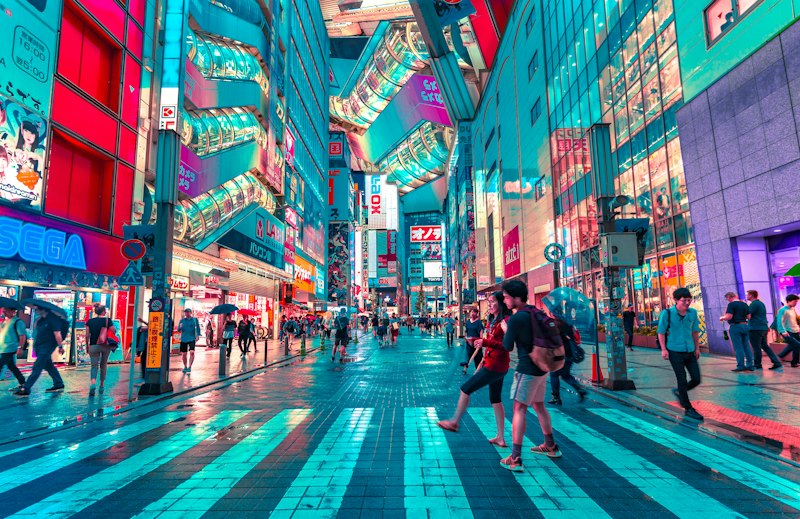
While Akihabara is the undisputed king of anime culture, it is undeniably a tourist trap when it comes to pricing. In 2026, smart collectors know that the best deals are found just outside the city center. The golden rule of Japanese card hunting is: The further you get from Akihabara, the cheaper the cards become.
If you are serious about saving money or hunting for MSRP sealed booster boxes, we strongly advise dedicating an afternoon to one of these alternative hubs.
Ikebukuro: The Official Bandai Flagship Experience
If you want to buy cards directly from the source, you must visit the Official ONE PIECE CARD GAME Official Shop located inside the Bandai Namco Cross Store in Sunshine City, Ikebukuro.
- Why it beats Akiba: This is an official Bandai retail location. They sell booster boxes and starter decks at pure retail MSRP (e.g., 5,280 JPY per box). They do not mark up prices based on the secondary market. They also stock official limited-edition merchandise, binders, and storage boxes that scalpers immediately flip in Akihabara for triple the price.
- The Catch: Demand is insanely high. For new set releases, you often need to win a lottery via the Bandai TCG Plus app just to enter the store. However, on regular weekdays, tourists can walk in and purchase whatever current stock is available (usually limited to 1 box or 10 loose packs per person).
- Access: A 15-minute train ride on the Yamanote Line from Akihabara to Ikebukuro Station, then an 8-minute walk to the Sunshine City complex (3rd Floor).
Machida: The Suburban Goldmine
Machida is a large commercial hub located on the western edge of Tokyo, about 35 minutes by rapid train from Shinjuku. It has quietly become a massive battleground for card shops, catering entirely to locals rather than tourists.
- Why it beats Akiba: Rent is cheaper in Machida, meaning store overhead is lower, which translates to noticeably cheaper card prices. Stores like PAO Machida, Bookoff Super Bazaar Machida, and Hobby Station Machida offer singles that are routinely 15% to 30% cheaper than identical cards in Akihabara. Bookoff Super Bazaar in particular is gigantic, offering thousands of budget cards.
- Access: Take the JR Chuo Line from central Tokyo to Shinjuku, then switch to the Odakyu Line Express directly to Machida Station. The Bookoff Super Bazaar is a 3-minute walk from the central plaza.
(Note: If you are expanding your collections beyond One Piece into Pokémon, many of these suburban strategies apply. See our specialized guide: Pokémon Cards Near Me: 10 Cheapest Akihabara Shops (2026).)