[PR] This article contains affiliate links.
If you have traveled all the way to Japan to hunt down rare holographic Charizards, elusive One Piece Manga Rares, or limited-edition K-Pop and anime idol photocards, you already know half the battle is acquiring the cards. The other half—arguably the more important half for long-term collectors—is protecting them.
Welcome to the ultimate 2026 tourist guide to trading card sleeves, binders, toploaders, and display supplies in Akihabara.
While we have already extensively covered where to actually buy the cards themselves—such as in our guide to Pokémon Cards Near Me: 10 Cheapest Akihabara Shops (2026)—this massive, exhaustive deep dive is dedicated entirely to the infrastructure of collecting. You bought the cards; now here is where you buy the armor to protect them.
Japan is the undisputed global capital of trading card game (TCG) supplies. The sheer variety of inner sleeves, outer sleeves, character-art sleeves, UV-protective magnetic holders, and premium side-loading binders is staggering. Furthermore, the massive boom in oshikatsu (the culture of passionately supporting your favorite idol or character) has revolutionized the photocard display market. Today, TCG tournament grinders and idol photocard collectors wander the exact same Akihabara aisles, hunting for perfectly sized sleeves, cute keychain toploaders, and plush display frames.
This guide will break down the complex science of Japanese card protection, explain the precise millimeter sizing of sleeves, decode the double- and triple-sleeving meta, and provide an exhaustive list of the best physical shops in Akihabara to buy your supplies, complete with exact access instructions and operating hours.
The Intersection of TCG and Oshikatsu Culture in Japan
Before we dive into the stores, it is essential to understand why Japan’s card supply market is so vastly superior to what you will find in North America or Europe.
In Western markets, card supplies are generally utilitarian. You buy a pack of standard matte sleeves, maybe a plastic deck box, and a rigid toploader. In Japan, card protection is an art form, driven by two distinct but overlapping subcultures that share a mutual need for high-quality, perfectly sized plastic.
The TCG Tournament Scene
Japan is the birthplace of Pokémon, Yu-Gi-Oh!, and the One Piece Card Game. The competitive scenes here are massive. Japanese players are known for taking extreme care of their decks, pioneering the practice of "double-sleeving" (using a tight-fitting inner sleeve inside a standard playing sleeve) and even "triple-sleeving" (adding a clear, rigid outer sleeve to protect the artwork of the middle sleeve). Because of this demand, Japanese manufacturers like KMC, Yanoman, Epoch, and Broccoli have engineered sleeves with millimeter precision.
The Oshikatsu Photocard Phenomenon
Simultaneously, the oshikatsu boom has completely changed the landscape of Japanese stationery and hobby shops. Fans of K-Pop (like BTS, Stray Kids, or NewJeans), J-Pop (Snow Man, Naniwa Danshi), and 2.5D anime idols (Ensemble Stars, Love Live!) collect standard-sized "photocards" (commonly known as toreka or trading cards in Japan).
These fans do not just want to put their cards in a deck box; they want to display them on their bags, photograph them at cafes, and build aesthetically pleasing, color-coordinated binders. This has led to an explosion of "deco-sleeves" (sleeves with holographic sparkles, lace borders, or cute animal ears), hard acrylic keychain holders, and plush toploader frames.
Because official Japanese photocards are printed at the exact same dimensions as standard trading cards, both the TCG community and the Oshikatsu community buy their supplies at the same Akihabara stores.
A Masterclass in Japanese Card Supplies: What to Buy
Before you step foot into a bustling Akihabara card shop, you need to know exactly what you are looking for. The walls of sleeves can be completely overwhelming to a first-time tourist. Here is an exhaustive breakdown of the supplies you should be hunting for.
1. The Science of Japanese Sleeves
Sleeves in Japan are not one-size-fits-all. They are precisely measured down to the millimeter. Buying the wrong size means your card will either rattle around and suffer edge wear, or it will bend as you force it in.
Mini Size / Japanese Size (Typically 62mm x 89mm) This size is designed specifically for smaller Japanese card games.
- Best for: Yu-Gi-Oh! OCG, Cardfight!! Vanguard, Battle Spirits.
- Inner Sleeve Size: 60mm x 87mm (often labeled "Mini Perfect Fit").
- Standard Sleeve Size: 62mm x 89mm.
- Outer Sleeve (Over-sleeve) Size: 65mm x 91mm.
Standard Size (Typically 66mm x 91mm or 92mm) This is the global standard size for most major Western and newer Japanese card games.
- Best for: Pokémon TCG, Magic: The Gathering, One Piece Card Game, Disney Lorcana, Weiss Schwarz, and the vast majority of K-Pop/J-Pop idol photocards.
- Inner Sleeve Size: 64mm x 89mm (The legendary "KMC Perfect Size" is the gold standard here).
- Standard Sleeve Size: 66mm x 91mm (or 67mm x 92mm for Japanese character sleeves).
- Outer Sleeve (Over-sleeve) Size: 68mm x 93mm or 69mm x 94mm.
The "Character Sleeve" (Kyara-Sureebu) If you go to Akihabara, you will see thousands of "Character Sleeves" produced by companies like Bushiroad and Ensky. These feature official anime artwork on the back—everything from Hatsune Miku to Jujutsu Kaisen to VTubers from Hololive.
- Crucial Tip: Character sleeves are notoriously prone to peeling or splitting if shuffled aggressively. Therefore, if you buy beautiful character sleeves in Japan, you must also buy "Character Sleeve Guards" (outer sleeves/oversleeves). These are clear, slightly larger sleeves that go over the art sleeve to protect it from the oils on your hands and the friction of the playmat.
2. Binders, Portfolios, and Pages
When buying binders in Akihabara, look for "Side-Loading" (横入れ / yoko-ire) pages. Top-loading pages are generally frowned upon by serious collectors because dust can easily enter the top, and cards can slide out if the binder is tipped upside down. Side-loading pages keep the cards secure.
- 9-Pocket Portfolios: The classic. Look for Japanese brands like Epoch or Ultimate Guard. Many Japanese portfolios come with a built-in zipper (zipper binder) to keep out Akihabara's humid summer air.
- 4-Pocket Portfolios: Extremely popular with the Oshikatsu crowd for carrying in smaller purses or backpacks. They fit four cards per page (2x2) and are perfect for completing smaller character sets.
- A4 Refill Pages: If you prefer a D-ring binder system, you can buy packs of 9-pocket refill pages. Be sure to check the hole-punch style (2-hole, 3-hole, 4-hole, or 30-hole). Japan heavily favors the 30-hole system for A4 binders to distribute weight evenly, so your 3-hole American binder might not fit Japanese refill pages!
3. Rigid Protection: Toploaders and Magnetic Cases
For your most valuable pulls—the cards worth hundreds of thousands of yen—a thin plastic sleeve is not enough.
- Toploaders (トップローダー): Rigid plastic sleeves. Japanese toploaders often come with protective film that you peel off to ensure they are crystal clear.
- Magnetic Card Holders (マグネットローダー / Mag-loaders): These are thick acrylic blocks that snap together with a magnet. The primary brand to look for is Ultimate Guard or Ultra PRO, but Japanese brands like Kawashima also make incredible, high-transparency magnetic cases with built-in UV protection (UVカット) to prevent your holographic foils from sun-fading.
- Screw-Downs: Older style thick acrylic cases that require a tiny screwdriver. These are mostly used for permanent display.
4. Oshikatsu Display Goods
If you are visiting to buy supplies for your idol photocards, you will want to look out for these specific items:
- Deco-Sleeves (デコスリーブ): Clear sleeves with holographic patterns printed on them (stars, shattered glass, hearts, butterflies) or opaque colored borders (lace, gothic frames) that frame the photocard inside.
- Hard Case Keychains (トレカキーホルダー): Rigid acrylic cases sized perfectly for a photocard, attached to a carabiner or keychain ring so you can hang it from your tote bag.
- Sanrio Enjoy Idol Series (エンジョイアイドルシリーズ): A massively popular line of official Sanrio merchandise (featuring Hello Kitty, Cinnamoroll, Kuromi, etc.) designed specifically to hold and display trading cards. You can find Sanrio photocard holder plushies, where you slip the card into the plushie’s belly.
5. Deck Boxes and Playmats
- Deck Boxes (デッキケース): Ranging from simple 200-yen plastic boxes featuring anime art to luxurious, 5,000-yen magnetic leatherette vaults lined with microfiber.
- Playmats (プレイマット): Neoprene rubber mats used for playing TCGs. Akihabara has thousands of official and doujin (fan-made) playmats featuring gorgeous artwork.
- Accessory Tip: Don't forget to buy a "Playmat Tube" (プレイマットケース) to safely transport your new mat back home in your luggage without creasing it.
Top Trading Card Supply Shops in Akihabara: 2026 Tourist Guide
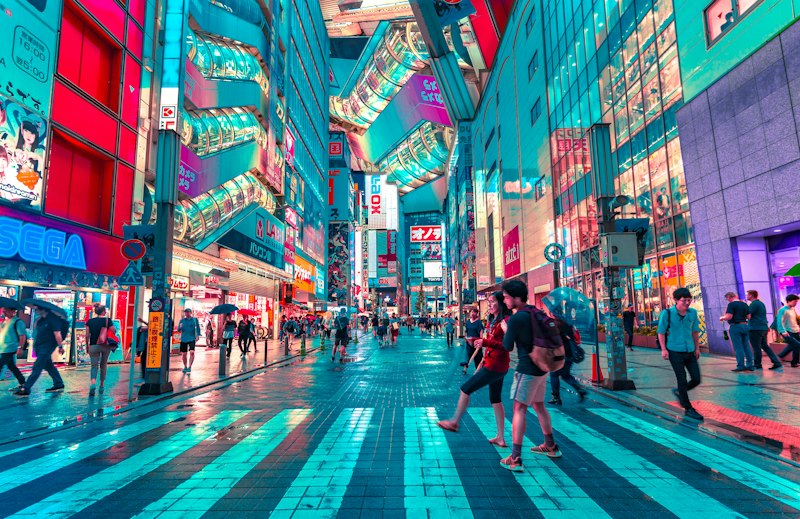
Now that you know exactly what to look for, it is time to hit the streets. Akihabara is dense, and many of the best shops are hidden on the upper floors of narrow, unassuming buildings.
Below is an exhaustively researched, independently verified guide to the absolute best shops for TCG and photocard supplies in Akihabara as of 2026. Note that business hours in Akihabara can occasionally shift based on holidays, but the data below represents the established baseline for these locations.
1. Suruga-ya Akihabara Trading Card & Board Game Hall (駿河屋 秋葉原トレカ・ボードゲーム館)
If you only have time to visit one mega-store for your hobby needs, Suruga-ya should be high on your list. While they have multiple specialized buildings across Akihabara (including locations entirely dedicated to retro games, which we cover in our Akihabara Retro Game Collecting 2026 Guide), this specific branch is a paradise for tabletop gamers and card collectors.
This branch excels not just in single cards, but in the sheer volume of supporting infrastructure. They carry massive walls of card sleeves, premium deck boxes, playmats, and board game accessories. As an added bonus, the store features gashapon (capsule-toy) machines on-site, allowing you to try your luck at miniature anime merchandise while you shop for sleeves.
Note: Historically, an older 2017 secondary source mentioned a free duel/play space on the 2nd floor accessed via an outdoor staircase. Given the massive shifts in retail layout post-pandemic, tourists should treat the existence of a free play space as unconfirmed until checking locally, as floor spaces are frequently repurposed for retail inventory.
- Location: 2nd floor of the building in Sotokanda 3-chome. (Look for the distinctive blue Suruga-ya signage).
- Address: 3 Chome-15-4 Sotokanda, Chiyoda City, Tokyo 101-0021.
- Hours: Monday–Thursday 11:00–21:00; Friday, Saturday, Sunday, and public holidays 9:00–21:00.
- Access: A 7-minute walk from JR Akihabara Station; a 3-minute walk from Tokyo Metro Suehirocho Station.
- Phone: 03-3258-7096
- Amenities: Sells trading cards, TCG supplies (sleeves, binders, toploaders), board games, and houses gashapon machines. Free Wi-Fi is available in-store, which is incredibly helpful for tourists needing to translate Japanese product labels using their smartphones.
2. CardRush Akihabara (カードラッシュ 秋葉原)
CardRush operates multiple locations across Akihabara (often labeled as Store 0, Store 1, Store 1.5, and Store 2). While they are heavily renowned for having some of the most competitive prices for single cards in the entire city, their supply sections are highly practical and aggressively priced.
We highly recommend CardRush for purchasing bulk quantities of essential inner and outer sleeves. If you are building multiple Commander decks for Magic: The Gathering, or need to sleeve a complete master set of Pokémon cards, you will need hundreds, if not thousands, of sleeves. CardRush frequently stocks the highly coveted KMC Perfect Size sleeves and Yanoman Over-guards in bulk. Their layout is tight and focused, designed for players who know exactly what they need.
- Location: CardRush Akihabara Store 1 is located right on the edge of the main Chuo Dori strip, easily accessible.
- Address: 1 Chome-8-11 Sotokanda, Chiyoda City, Tokyo 101-0021 (This maps to their prominent Store 2, which is excellent for supplies).
- Hours: Typically 13:00–21:00 on weekdays; 11:00–21:00 on weekends (Hours vary slightly by specific CardRush branch, so arrive in the afternoon for safety).
- Access: Approximately a 3-to-5 minute walk from JR Akihabara Station (Electric Town Exit).
3. Toreca Sunrise Tokyo Akihabara (トレカサンライズ東京秋葉原店)
Toreca Sunrise is an excellent mid-sized card shop located in the heart of Sotokanda 3-chome. While they boast impressive showcases filled with high-end Pokémon and Yu-Gi-Oh! cards, their supply rack is a hidden gem for tourists.
Unlike the massive, overwhelming mega-stores, Toreca Sunrise offers a carefully curated selection of the most necessary supplies. If you just pulled an incredible card from a booster pack and need immediate, high-quality protection to ensure it survives the flight home, Toreca Sunrise stocks premium rigid toploaders, magnetic acrylic cases, and high-clarity sleeves. The staff is accustomed to dealing with high-end collectors and can easily point you to the correct UV-protective cases for your grails.
- Location: 2nd Floor of the Lock 2 Building in Sotokanda.
- Address: 3 Chome-11-2 Sotokanda, Chiyoda City, Tokyo 101-0021 (Lock 2 Bldg 2F).
- Hours: Generally 12:00–20:00 (Weekdays), 11:00–20:00 (Weekends).
- Access: About a 5-minute walk from the JR Akihabara Station Electric Town Exit, heading north toward Suehirocho.
4. Yellow Submarine Magicard/RPG Shop (Akihabara Radio Kaikan)
If there is a central monument to otaku culture in Akihabara, it is the Radio Kaikan building located immediately outside the JR Akihabara Electric Town exit. It is a towering yellow skyscraper filled with dozens of hobby shops. Among them is Yellow Submarine, an absolute titan in the tabletop and TCG space.
Yellow Submarine’s supply section is nothing short of legendary. They have entire aisles dedicated strictly to sleeves, categorized by millimeter sizing. This is the best place in Japan to physically touch and feel the difference between "matte," "super matte," "embossed," and "glossy" sleeve backs, as they often have small sample displays. Furthermore, they carry an immense selection of premium deck boxes, multi-row cardboard storage boxes for bulk cards, and high-end dice/counter accessories. If you need standard TCG supplies, you cannot skip Yellow Submarine.
- Location: 6th Floor of the Akihabara Radio Kaikan building.
- Address: 1 Chome-15-16 Sotokanda, Chiyoda City, Tokyo 101-0021.
- Hours: 10:00–20:00 daily.
- Access: A 1-minute walk from JR Akihabara Station (Electric Town Exit). You can see the Radio Kaikan building the moment you exit the station gates.
5. Card Labo (C-labo) Akihabara Radio Kaikan
Also located inside the iconic Radio Kaikan building (occupying parts of the 1st, 2nd, and 9th floors depending on the specific specialty branch), Card Labo is another essential stop.
While Yellow Submarine excels in utilitarian, competitive play supplies (plain colored sleeves, rigid boxes), Card Labo is the king of Character Sleeves and Playmats. If you want sleeves featuring your favorite anime waifu or husbando, Card Labo has massive racks of official Bushiroad, Broccoli, and Ensky sleeves. They also sell thousands of official rubber playmats. Because character sleeves frequently go out of print and become highly sought-after collector's items themselves, Card Labo often has glass showcases selling rare, out-of-print character sleeves at premium prices.
- Location: Multiple floors inside Akihabara Radio Kaikan (primarily 9th floor for the main card shop).
- Address: 1 Chome-15-16 Sotokanda, Chiyoda City, Tokyo 101-0021.
- Hours: 10:00–20:00 daily.
- Access: 1-minute walk from JR Akihabara Station (Electric Town Exit).
6. MINT Akihabara
If you are a high-end collector dealing in serialized cards, highly graded PSA/BGS slabs, or sports cards, MINT is your sanctuary. MINT is Japan’s premier chain for sports cards (baseball, soccer, NBA) and high-end TCGs.
Because their clientele deals with incredibly expensive pieces of cardboard, MINT carries the absolute highest tier of protective supplies. This is the place to buy thick, UV-resistant Ultra PRO magnetic cases, specialized one-touch holders, exact-fit sleeves for PSA graded slabs (to prevent the plastic slab itself from getting scratched), and luxury zip-up portfolios bound in vegan leather. If you have spent 100,000 yen on a single card, you should buy its display case at MINT.
- Location: 2nd floor of the Akiba TOLIM building (often accessed easily via the station area).
- Address: 1-6-5 Kanda Sakumacho, Chiyoda-ku, Tokyo 101-0025 (TX Akihabara Hankyu Building 2F).
- Hours: 11:00–21:00 daily.
- Access: Literally attached to the JR Akihabara Station complex / Tsukuba Express Akihabara Station. Less than a 1-minute walk from the central ticket gates.
7. AKIHABARA Gamers Main Store (AKIHABARAゲーマーズ本店)
Pivoting slightly from the hardcore competitive TCG stores, we arrive at Gamers. While Gamers is primarily an anime and voice actor goods store, they boast an incredibly robust section for Oshikatsu (idol support) and character goods.
If you are looking for K-Pop or anime photocard display supplies, Gamers is vastly superior to a standard TCG shop. Here, you will find entire displays dedicated to "Deco-sleeves" (holographic and border-printed sleeves that make your photocard look extra cute), hard acrylic keychain frames, and beautifully bound display binders designed to look like elegant photo albums rather than competitive gaming portfolios. They are the prime destination for the intersection of idol collecting and trading card protection.
- Location: Gamers Main Store Building, directly outside the station.
- Address: 1 Chome-14-7 Sotokanda, Chiyoda City, Tokyo 101-0021.
- Hours: 11:00–21:00 daily (1st and 2nd floors generally open 10:00–21:00).
- Access: 0-minute walk from JR Akihabara Station (Electric Town Exit). It is one of the first major buildings you see when stepping outside the station.
8. Animate Akihabara (アニメイト秋葉原)
Similar to Gamers, the massive Animate Akihabara complex (which recently expanded into two adjacent buildings) is an absolute goldmine for photocard collectors.
Animate dedicates an immense amount of floor space to the "Sanrio Enjoy Idol Series." This specific product line is legendary in the photocard community. Sanrio produces high-quality cardholder keychains shaped like Hello Kitty, Pompompurin, and Kuromi, perfectly sized to hold a standard Japanese trading card or K-Pop photocard. They also sell specialized 4-pocket binders, ticket holders, and plush display frames. If you want your card supplies to lean heavily into the kawaii aesthetic rather than the hyper-masculine tabletop gaming aesthetic, Animate is your primary target.
- Location: The two-building complex along Chuo Dori.
- Address: 4 Chome-3-2 Sotokanda, Chiyoda City, Tokyo 101-0021.
- Hours: 11:00–21:00 (Weekdays); 10:00–20:00 (Weekends/Holidays).
- Access: A 4-minute walk up Chuo Dori from JR Akihabara Station (Electric Town Exit).