[PR] This article contains affiliate links.
So, you’ve journeyed all the way to Japan, perhaps with your sights set on securing that shimmering holographic Charizard, a coveted One Piece Manga Rare, or those charming, limited-edition K-Pop and anime idol photocards? You've already mastered the thrill of the chase, acquiring these treasures. But for any serious collector, protecting them for years to come is, dare we say, even more crucial. Consider this your definitive 2026 guide to finding the very best trading card sleeves, binders, toploaders, and display essentials right here in Akihabara.
While we’ve previously shared our insights on where to hunt down the cards themselves—do check out our guide to Pokémon Cards Near Me: 10 Cheapest Akihabara Shops (2026)—this particular deep dive is exclusively devoted to the vital infrastructure of collecting. Think of it this way: you’ve secured your precious cards, and now it's time to equip them with the finest armor for their safekeeping.
It's a point of pride for us that Japan stands as the undisputed global capital for trading card game (TCG) supplies. The sheer array of options—from precision-fit inner sleeves to stylish character-art sleeves, advanced UV-protective magnetic holders, and elegant side-loading binders—is truly astounding. What’s more, the phenomenal surge in oshikatsu (our unique culture of passionately supporting one's favorite idol or character) has completely reshaped the photocard display market. Nowadays, you'll find seasoned TCG players and devoted idol photocard collectors browsing the very same Akihabara aisles, all on the hunt for those perfectly sized sleeves, adorable keychain toploaders, and plush display frames that Japan is renowned for.
Here, we’ll meticulously unravel the intricate world of Japanese card protection, guiding you through the precise millimeter sizing of sleeves, demystifying the art of double- and triple-sleeving, and presenting an exhaustive list of Akihabara’s finest physical shops for all your collecting needs, complete with detailed access instructions and operating hours.
The Intersection of TCG and Oshikatsu Culture in Japan
Before we embark on our shopping tour, it’s crucial to understand why Japan’s card supply market truly stands head and shoulders above what you might find in North America or Europe.
The TCG Tournament Scene
As the proud birthplace of iconic games like Pokémon, Yu-Gi-Oh!, and the One Piece Card Game, Japan naturally boasts a truly massive competitive scene. Our players are renowned for their meticulous care of their decks, a dedication that pioneered the now-global practice of "double-sleeving" (nestling a snug inner sleeve inside a standard playing sleeve) and even the advanced "triple-sleeving" (adding a clear, rigid outer sleeve to safeguard the beautiful artwork of the middle sleeve). This unwavering demand for perfection has driven Japanese manufacturers such as KMC, Yanoman, Epoch, and Broccoli to engineer sleeves with unparalleled, millimeter-level precision.
The Oshikatsu Photocard Phenomenon
Concurrently, the vibrant oshikatsu boom has dramatically transformed the landscape of our stationery and hobby shops across Japan. Fans—whether they're devotees of K-Pop sensations like BTS, Stray Kids, or NewJeans, J-Pop groups such as Snow Man and Naniwa Danshi, or cherished 2.5D anime idols from franchises like Ensemble Stars and Love Live!—all eagerly collect standard-sized "photocards" (affectionately known here as toreka, or trading cards).
These dedicated fans don't merely wish to store their precious cards in a simple deck box; they aspire to proudly display them on their bags, capture memorable photos with them at charming cafes, and curate aesthetically delightful, color-coordinated binders. This passion has sparked an incredible explosion of "deco-sleeves" (featuring whimsical holographic sparkles, delicate lace borders, or adorable animal ears), robust hard acrylic keychain holders, and comforting plush toploader frames.
Given that official Japanese photocards are produced with the identical, precise dimensions as standard trading cards, it creates a wonderful synergy: both the discerning TCG community and the passionate Oshikatsu community can find all their essential supplies within the very same specialized Akihabara stores.
A Masterclass in Japanese Card Supplies: What to Buy
Before you even set foot inside one of Akihabara's bustling card shops, it’s wise to have a clear idea of what you seek. The sheer sight of walls lined with countless sleeves can, understandably, be quite overwhelming for a first-time visitor. So, allow us to provide a thorough breakdown of the essential supplies you'll want to hunt for.
1. The Science of Japanese Sleeves
Here in Japan, sleeves are certainly not a 'one-size-fits-all' affair. Instead, they are meticulously engineered, measured down to the precise millimeter. Opting for the incorrect size means your treasured card could either jostle loosely and endure unsightly edge wear, or, worse, risk bending as you attempt to force it into an ill-fitting sleeve.
Mini Size / Japanese Size (Typically 62mm x 89mm) This particular size is meticulously designed for smaller, distinctively Japanese card games.
- Best for: Yu-Gi-Oh! OCG, Cardfight!! Vanguard, Battle Spirits.
- Inner Sleeve Size: 60mm x 87mm (often labeled "Mini Perfect Fit").
- Standard Sleeve Size: 62mm x 89mm.
- Outer Sleeve (Over-sleeve) Size: 65mm x 91mm.
Standard Size (Typically 66mm x 91mm or 92mm) This is the universally recognized standard size, perfect for most major Western and many of the newer Japanese card games.
- Best for: Pokémon TCG, Magic: The Gathering, One Piece Card Game, Disney Lorcana, Weiss Schwarz, and the vast majority of K-Pop/J-Pop idol photocards.
- Inner Sleeve Size: 64mm x 89mm (The legendary "KMC Perfect Size" is the gold standard here).
- Standard Sleeve Size: 66mm x 91mm (or 67mm x 92mm for Japanese character sleeves).
- Outer Sleeve (Over-sleeve) Size: 68mm x 93mm or 69mm x 94mm.
The "Character Sleeve" (Kyara-Sureebu) As you explore Akihabara, you'll undoubtedly encounter countless "Character Sleeves" (Kyara-Sureebu), proudly produced by esteemed companies like Bushiroad and Ensky. These captivating sleeves showcase official anime artwork on their backs—an incredible range from beloved Hatsune Miku to the action-packed Jujutsu Kaisen, and even popular VTubers from Hololive.
- A Crucial Insight: While undeniably beautiful, character sleeves are somewhat delicate and notoriously prone to peeling or splitting if shuffled with too much vigor. Therefore, when you invest in these exquisite character sleeves here in Japan, it is absolutely essential to also acquire "Character Sleeve Guards" (outer sleeves or oversleeves). These clear, ever-so-slightly larger sleeves fit snugly over your art sleeves, safeguarding them from natural hand oils and the inevitable friction of gameplay.
2. Binders, Portfolios, and Pages
When selecting binders in Akihabara, we strongly recommend opting for "Side-Loading" (横入れ / yoko-ire) pages. Top-loading pages are typically not favored by serious collectors, as they allow dust to easily accumulate at the top, and cards can unfortunately slip out if the binder is accidentally inverted. Side-loading pages, by contrast, offer superior security for your cherished cards.
- 9-Pocket Portfolios: The classic. Look for Japanese brands like Epoch or Ultimate Guard. Many Japanese portfolios come with a built-in zipper (zipper binder) to keep out Akihabara's humid summer air.
- 4-Pocket Portfolios: Extremely popular with the Oshikatsu crowd for carrying in smaller purses or backpacks. They fit four cards per page (2x2) and are perfect for completing smaller character sets.
- A4 Refill Pages: If you prefer the flexibility of a D-ring binder system, you'll find readily available packs of 9-pocket refill pages. However, a word of caution: always double-check the hole-punch style (2-hole, 3-hole, 4-hole, or 30-hole). Japan, with its emphasis on even weight distribution, overwhelmingly favors the 30-hole system for A4 binders. This means your standard 3-hole American binder might, regrettably, not be compatible with Japanese refill pages!
3. Rigid Protection: Toploaders and Magnetic Cases
For your truly invaluable pulls—those exceptional cards valued at hundreds of thousands of yen—a simple thin plastic sleeve simply won’t offer adequate protection.
- Toploaders (トップローダー): Rigid plastic sleeves. Japanese toploaders often come with protective film that you peel off to ensure they are crystal clear.
- Magnetic Card Holders (マグネットローダー / Mag-loaders): These are thick acrylic blocks that snap together with a magnet. While international mainstays like Ultimate Guard and Ultra PRO are readily available, do seek out our excellent Japanese brands such as Kawashima. They produce truly incredible, high-transparency magnetic cases, often featuring built-in UV protection (UVカット) specifically designed to prevent your precious holographic foils from the unwelcome effects of sun-fading.
- Screw-Downs: Older style thick acrylic cases that require a tiny screwdriver. These are mostly used for permanent display.
4. Oshikatsu Display Goods
For those of you visiting with a focus on supplies for your beloved idol photocards, these specific items are an absolute must-see:
- Deco-Sleeves (デコスリーブ): Clear sleeves with holographic patterns printed on them (stars, shattered glass, hearts, butterflies) or opaque colored borders (lace, gothic frames) that frame the photocard inside.
- Hard Case Keychains (トレカキーホルダー): Rigid acrylic cases sized perfectly for a photocard, attached to a carabiner or keychain ring so you can hang it from your tote bag.
- Sanrio Enjoy Idol Series (エンジョイアイドルシリーズ): This is a phenomenally popular line of official Sanrio merchandise (featuring beloved characters like Hello Kitty, Cinnamoroll, and Kuromi), all thoughtfully designed to perfectly hold and display your cherished trading cards. You'll even discover adorable Sanrio photocard holder plushies, where you gently slip your card into the plushie’s tummy for a truly kawaii display.
5. Deck Boxes and Playmats
- Deck Boxes (デッキケース): Ranging from practical 200-yen plastic boxes adorned with vibrant anime art to luxurious, 5,000-yen magnetic leatherette vaults meticulously lined with soft microfiber.
- Playmats (プレイマット): Neoprene rubber mats used for playing TCGs. Akihabara offers an astonishing selection of thousands of official and doujin (fan-made) playmats, each showcasing truly gorgeous artwork.
- An Essential Accessory Tip: Do remember to pick up a "Playmat Tube" (プレイマットケース) to safely and securely transport your beautiful new mat back home in your luggage, ensuring it remains perfectly crease-free.
Top Trading Card Supply Shops in Akihabara: 2026 Tourist Guide
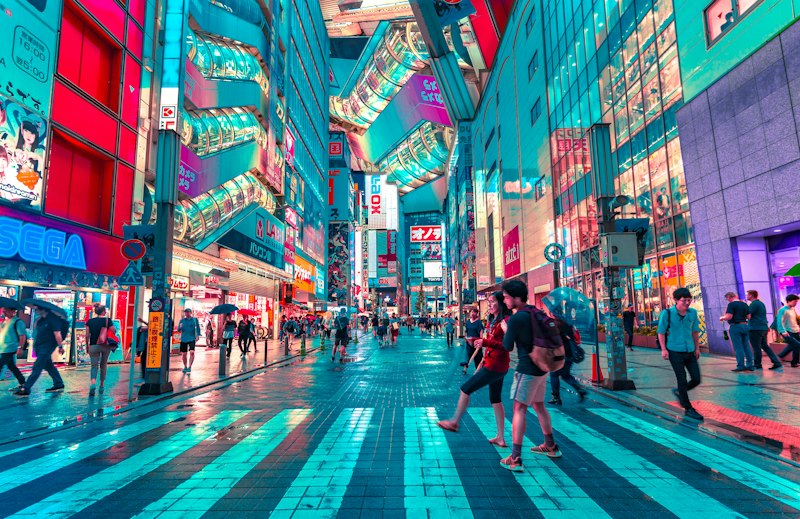
Now that you're well-versed in what to look for, it's time to hit the lively streets of Akihabara! This district is wonderfully dense, and many of the finest shops, as you’ll discover, are often tucked away on the upper floors of narrow, unassuming buildings—part of the local charm, perhaps?
What follows is our exhaustively researched, independently verified guide to the absolute finest shops for TCG and photocard supplies in Akihabara, accurate as of 2026. Please be aware that business hours in Akihabara can occasionally vary, particularly around holidays, but the information below reflects the established baseline for these cherished locations.
1. Suruga-ya Akihabara Trading Card & Board Game Hall (駿河屋 秋葉原トレカ・ボードゲーム館)
If your time in Akihabara allows for just one mega-store visit for your hobby pursuits, Suruga-ya should undoubtedly be at the very top of your list. While they have multiple specialized buildings across Akihabara (including locations entirely dedicated to retro games, which we cover in our Akihabara Retro Game Collecting 2026 Guide), this specific branch is a paradise for tabletop gamers and card collectors.
This particular branch truly excels, not only in its impressive selection of single cards but also in the sheer volume of supporting infrastructure it offers. You'll discover massive walls dedicated to card sleeves, premium deck boxes, playmats, and a wide array of board game accessories. As a delightful bonus, the store features fun gashapon (capsule-toy) machines on-site, inviting you to try your luck at miniature anime merchandise while you meticulously browse for sleeves.
A Quick Note: Historically, an older 2017 source once mentioned a free duel/play space on the 2nd floor, accessible via an outdoor staircase. However, given the significant shifts in retail layouts we’ve seen post-pandemic, we advise visitors to consider the existence of a free play space as unconfirmed until you check locally, as floor spaces are often flexibly repurposed for new retail inventory.
- Location: 2nd floor of the building in Sotokanda 3-chome. (Look for the distinctive blue Suruga-ya signage).
- Address: 3 Chome-15-4 Sotokanda, Chiyoda City, Tokyo 101-0021.
- Hours: Monday–Thursday 11:00–21:00; Friday, Saturday, Sunday, and public holidays 9:00–21:00.
- Access: A 7-minute walk from JR Akihabara Station; a 3-minute walk from Tokyo Metro Suehirocho Station.
- Phone: 03-3258-7096
- Amenities: Sells trading cards, TCG supplies (sleeves, binders, toploaders), board games, and houses gashapon machines. Free Wi-Fi is available in-store, which is incredibly helpful for tourists needing to translate Japanese product labels using their smartphones.
2. CardRush Akihabara (カードラッシュ 秋葉原)
CardRush, with its multiple locations dotted across Akihabara (you'll often see them labeled as Store 0, Store 1, Store 1.5, and Store 2), is widely renowned for offering some of the most competitively priced single cards in the entire city. Beyond this, their supply sections are commendably practical and aggressively priced, a true boon for collectors.
We enthusiastically recommend CardRush, especially if you're looking to acquire bulk quantities of essential inner and outer sleeves. For those building multiple Commander decks for Magic: The Gathering, or needing to meticulously sleeve a complete master set of Pokémon cards, you'll find yourself needing hundreds, if not thousands, of sleeves. CardRush reliably stocks the highly coveted KMC Perfect Size sleeves and Yanoman Over-guards in generous bulk quantities. Their layout is commendably tight and focused, truly designed for discerning players who know precisely what they require.
- Location: CardRush Akihabara Store 1 is located right on the edge of the main Chuo Dori strip, easily accessible.
- Address: 1 Chome-8-11 Sotokanda, Chiyoda City, Tokyo 101-0021 (This maps to their prominent Store 2, which is excellent for supplies).
- Hours: Typically 13:00–21:00 on weekdays; 11:00–21:00 on weekends (Hours vary slightly by specific CardRush branch, so arrive in the afternoon for safety).
- Access: Approximately a 3-to-5 minute walk from JR Akihabara Station (Electric Town Exit).
3. Toreca Sunrise Tokyo Akihabara (トレカサンライズ東京秋葉原店)
Toreca Sunrise is a truly excellent, well-regarded mid-sized card shop, perfectly situated in the heart of Sotokanda 3-chome. While they proudly showcase impressive displays brimming with high-end Pokémon and Yu-Gi-Oh! cards, their carefully curated supply rack is, in our opinion, a delightful hidden gem for visitors.
In contrast to the sprawling, sometimes overwhelming mega-stores, Toreca Sunrise presents a thoughtful, carefully curated selection of the most essential supplies. Should you have just landed an incredible pull from a booster pack and require immediate, top-quality protection to ensure its safe journey home, Toreca Sunrise thoughtfully stocks premium rigid toploaders, robust magnetic acrylic cases, and crystal-clear, high-clarity sleeves. Their experienced staff are well-accustomed to assisting high-end collectors and can expertly guide you to the perfect UV-protective cases for your treasured grails.
- Location: 2nd Floor of the Lock 2 Building in Sotokanda.
- Address: 3 Chome-11-2 Sotokanda, Chiyoda City, Tokyo 101-0021 (Lock 2 Bldg 2F).
- Hours: Generally 12:00–20:00 (Weekdays), 11:00–20:00 (Weekends).
- Access: About a 5-minute walk from the JR Akihabara Station Electric Town Exit, heading north toward Suehirocho.
4. Yellow Submarine Magicard/RPG Shop (Akihabara Radio Kaikan)
If one were to identify a central monument to otaku culture here in Akihabara, it would undoubtedly be the iconic Radio Kaikan building, standing proudly just outside the JR Akihabara Electric Town exit. This towering yellow skyscraper is a treasure trove, brimming with dozens of specialized hobby shops. Among them, you'll find Yellow Submarine, an absolute titan in the tabletop and TCG realms.
Yellow Submarine’s supply section is, quite simply, legendary. They dedicate entire aisles strictly to sleeves, meticulously categorized by millimeter sizing. This truly is the ideal spot in Japan to physically experience and discern the nuanced differences between "matte," "super matte," "embossed," and "glossy" sleeve backs, as they thoughtfully provide small sample displays. Furthermore, they boast an immense selection of premium deck boxes, versatile multi-row cardboard storage boxes for bulk cards, and a delightful range of high-end dice and counter accessories. For any standard TCG supplies, Yellow Submarine is an absolutely essential stop.
- Location: 6th Floor of the Akihabara Radio Kaikan building.
- Address: 1 Chome-15-16 Sotokanda, Chiyoda City, Tokyo 101-0021.
- Hours: 10:00–20:00 daily.
- Access: A 1-minute walk from JR Akihabara Station (Electric Town Exit). You can see the Radio Kaikan building the moment you exit the station gates.
5. Card Labo (C-labo) Akihabara Radio Kaikan
Also nestled within our iconic Radio Kaikan building (occupying various parts of the 1st, 2nd, and 9th floors, depending on the specific specialty branch), Card Labo is yet another absolutely essential stop for collectors.
While Yellow Submarine brilliantly excels in utilitarian, competitive play supplies (think plain colored sleeves and robust rigid boxes), Card Labo truly reigns as the king of Character Sleeves and Playmats. Should you be seeking sleeves adorned with your favorite anime waifu or husbando, Card Labo presents massive racks overflowing with official Bushiroad, Broccoli, and Ensky sleeves. They also proudly offer thousands of official rubber playmats. Given that character sleeves often become highly sought-after collector's items themselves once they go out of print, you’ll frequently find Card Labo’s glass showcases featuring rare, out-of-print character sleeves at premium prices – a testament to their enduring appeal.
- Location: Multiple floors inside Akihabara Radio Kaikan (primarily 9th floor for the main card shop).
- Address: 1 Chome-15-16 Sotokanda, Chiyoda City, Tokyo 101-0021.
- Hours: 10:00–20:00 daily.
- Access: 1-minute walk from JR Akihabara Station (Electric Town Exit).
6. MINT Akihabara
For the discerning high-end collector dealing in serialized cards, meticulously graded PSA/BGS slabs, or treasured sports cards, MINT is your ultimate sanctuary. Indeed, MINT stands as Japan’s premier chain for exquisite sports cards (from baseball to soccer and NBA) and high-tier TCGs.
Given that their esteemed clientele handles incredibly valuable pieces of cardboard, MINT responsibly stocks the absolute highest tier of protective supplies. This is the definitive destination to acquire robust, UV-resistant Ultra PRO magnetic cases, specialized one-touch holders, precise exact-fit sleeves for PSA graded slabs (designed to prevent the plastic slab itself from any potential scratching), and luxurious zip-up portfolios meticulously bound in vegan leather. If you have invested 100,000 yen or more in a single card, we wholeheartedly recommend securing its display case right here at MINT.
- Location: 2nd floor of the Akiba TOLIM building (often accessed easily via the station area).
- Address: 1-6-5 Kanda Sakumacho, Chiyoda-ku, Tokyo 101-0025 (TX Akihabara Hankyu Building 2F).
- Hours: 11:00–21:00 daily.
- Access: Literally attached to the JR Akihabara Station complex / Tsukuba Express Akihabara Station. Less than a 1-minute walk from the central ticket gates.
7. AKIHABARA Gamers Main Store (AKIHABARAゲーマーズ本店)
Pivoting slightly from the more intense competitive TCG stores, we now arrive at Gamers. While Gamers is primarily a beloved emporium for anime and voice actor goods, they proudly boast an incredibly robust section dedicated to Oshikatsu (idol support) and character merchandise.
Should you be searching for K-Pop or anime photocard display supplies, Gamers is, without a doubt, vastly superior to a standard TCG shop. Here, you will discover entire captivating displays devoted to "Deco-sleeves" (those delightful holographic and border-printed sleeves that lend an extra touch of kawaii charm to your photocard), sturdy hard acrylic keychain frames, and exquisitely bound display binders crafted to resemble elegant photo albums rather than utilitarian competitive gaming portfolios. This is truly the prime destination where the passion of idol collecting beautifully converges with the art of trading card protection.
- Location: Gamers Main Store Building, directly outside the station.
- Address: 1 Chome-14-7 Sotokanda, Chiyoda City, Tokyo 101-0021.
- Hours: 11:00–21:00 daily (1st and 2nd floors generally open 10:00–21:00).
- Access: 0-minute walk from JR Akihabara Station (Electric Town Exit). It is one of the first major buildings you see when stepping outside the station.
8. Animate Akihabara (アニメイト秋葉原)
Much like Gamers, our massive Animate Akihabara complex (which, excitingly, recently expanded into two adjacent buildings!) is an absolute treasure trove for photocard collectors.
Animate dedicates an immense amount of its expansive floor space to the beloved "Sanrio Enjoy Idol Series." This particular product line is truly legendary within the photocard community. Sanrio masterfully produces high-quality cardholder keychains, charmingly shaped like iconic characters such as Hello Kitty, Pompompurin, and Kuromi, all perfectly sized to cradle a standard Japanese trading card or K-Pop photocard. They also offer specialized 4-pocket binders, convenient ticket holders, and delightful plush display frames. If you envision your card supplies embracing a distinctly kawaii aesthetic rather than a more traditional, perhaps 'hyper-masculine' tabletop gaming look, Animate should be your primary destination.
- Location: The two-building complex along Chuo Dori.
- Address: 4 Chome-3-2 Sotokanda, Chiyoda City, Tokyo 101-0021.
- Hours: 11:00–21:00 (Weekdays); 10:00–20:00 (Weekends/Holidays).
- Access: A 4-minute walk up Chuo Dori from JR Akihabara Station (Electric Town Exit).