
[PR] This article contains affiliate links.
Tokyo is a metropolis that constantly redefines the boundaries between traditional culture and cutting-edge contemporary art. For international tourists visiting Japan in 2026, the city offers an overwhelming array of sensory experiences, but few are as visually intoxicating as the Art Aquarium Museum GINZA.
Tucked away in the luxurious heart of Tokyo’s premier shopping district, this attraction is a mesmerizing fusion of Edo-period aesthetics, dynamic lighting, custom scent profiles, and thousands of living, swimming goldfish (kingyo). However, 2026 marks a crucial juncture for this specific installation. As you plan your Tokyo itinerary, it is essential to have the absolute latest information, understand precisely what this venue is (and isn't), and know how to navigate the strict entry rules.
This massive, completely exhaustive 2026 guide covers everything you need to know about the Art Aquarium Museum GINZA, from ticket prices and transportation logistics to photography tips, cultural history, and the best nearby spots to round out your day in Ginza.
Important 2026 Alert: The Final Ginza Exhibition
Before diving into the logistics of your visit, it is critical for 2026 travelers to be aware of the current operational status of the museum.
Currently, the venue is hosting the "Ginza Goldfish Hyakka Exhibition" (銀座の金魚百華展), which runs from October 2, 2026, through January 6, 2027.
Crucially, the official website (artaquarium.jp) has billed this specific showcase as the last special exhibition at the Ginza venue. Because this location is explicitly highlighted as potentially closing its doors after this current run, this may be your final opportunity to experience the Art Aquarium inside Ginza Mitsukoshi.
Tourist Advice: Do not assume this venue will remain open long-term into late 2027 or beyond. Always confirm the current operating status on the official website before traveling. Furthermore, do not confuse this permanent-style installation in Ginza with the entirely separate, unrelated pop-up event called the "Art Aquarium Exhibition Saitama 2026" being held at the Saitama Super Arena. This guide is specifically focused on the Ginza Mitsukoshi location.
Understanding the Concept: Art Installation vs. Traditional Aquarium
One of the most common mistakes international tourists make is misunderstanding what the Art Aquarium Museum GINZA actually is.
This is an immersive art installation, not a conventional marine aquarium.
If you are expecting to see diverse marine life—such as sharks, penguins, dolphins, sea turtles, or coral reef ecosystems—you must adjust your expectations. Visitors looking for a standard aquarium experience with varied sea creatures should know this in advance and perhaps look toward destinations like the Maxell Aqua Park in Shinagawa or the Sumida Aquarium near the Tokyo Skytree.
The Medium is the Goldfish
The sole focus of the Art Aquarium is the goldfish. However, the goldfish are not presented in standard glass viewing tanks. Instead, they are displayed as living art inside artistically designed, heavily illuminated, and architecturally complex vessels.
The experience is heavily curated. The venue utilizes a combination of:
- Dynamic Lighting: The illumination shifts through vibrant hues—deep crimsons, icy blues, and emerald greens—altering the mood of the rooms and the appearance of the fish.
- Sound Production: Original ambient music, often featuring traditional Japanese instruments mixed with modern electronic beats, plays throughout the venue to dictate the emotional pacing of the exhibit.
- Scent Production: Custom aromas are pumped into different zones to evoke feelings of seasonal Japanese landscapes, such as blooming cherry blossoms or deep cypress forests.
The intention is to recreate the Edo-period culture of goldfish viewing, elevating it with 21st-century theatrical production. The fish are the brushstrokes, and the glowing acrylic tanks are the canvas.
Essential 2026 Visitor Information: Tickets, Hours, and Rules
To ensure a smooth visit, you must familiarize yourself with the strict rules and current pricing structure.
Ticket Prices (2026 Official Rates)
The ticketing system for the Art Aquarium Museum GINZA is straightforward. Notably, there is no day/night price split (a flat rate applies regardless of what time you enter) and there is no officially verified student ticket price.
- Web Ticket (Timed Entry): 2,500 yen
- Walk-up / Same-Day Ticket: 2,700 yen
Recommendation: You should absolutely purchase the 2,500 yen Web Ticket in advance via their official ticketing portal (ticket.artaquarium.jp). Not only do you save 200 yen, but you also secure a timed entry slot. Ginza is one of Tokyo's busiest districts, and same-day tickets can sell out during peak tourist seasons or on rainy days when indoor activities are in high demand. If you are paying for your tickets online, it is helpful to read up on Cash vs Card in Japan 2026: How Much Cash Do You Need? to ensure your international credit cards are ready for Japanese web portals.
Operating Hours and Closures
- Standard Hours: 10:00 – 19:00
- Last Entry: 18:00 (One hour before closing)
Note: The official site explicitly notes that these hours are subject to change. Always verify before your arrival.
- Closed Days: The Art Aquarium does not have a fixed weekly closed day (unlike many Japanese museums which close on Mondays). Instead, the venue follows the closure schedule of the Ginza Mitsukoshi department store in which it resides. Additionally, there are occasional irregular closures for maintenance and tank care.
Strict Venue Policies (Read Before You Go)
The aesthetic environment of the Art Aquarium requires tight crowd control and spatial management. Because of the delicate nature of the tanks and the narrow, darkened pathways, the museum enforces several strict rules that significantly impact inbound tourists:
- No Strollers Allowed: You cannot bring a baby stroller into the exhibition. There is no stroller parking inside the venue. If you are traveling with an infant, you must bring a wearable baby carrier.
- No Luggage Lockers on Site: There are absolutely no coin lockers or luggage holding services at the Art Aquarium itself. You cannot drag a rolling suitcase through the exhibit. If you are transiting between hotels or heading to the airport, you must store your luggage elsewhere before arriving at the 9th floor. (We will cover nearby locker solutions later in this guide).
- No Pets Allowed: Service animals may have specific exceptions under Japanese law, but standard pets are strictly prohibited.
- No Flash Photography: The sudden burst of light from a camera flash is highly stressful to the goldfish and ruins the lighting design of the installation. Ensure your camera or smartphone flash is forced off.
- No Tripods or Selfie Sticks: The walkways are too crowded and narrow to safely allow tripods or extended selfie sticks.
Detailed Location and Access Guide
Finding the Art Aquarium Museum GINZA can be slightly confusing for first-time visitors because it is located inside a massive, historic department store.
Official Address: Ginza Mitsukoshi New Building, 8F (entrance on 9F) 4-6-16 Ginza, Chuo-ku, Tokyo
Navigating the Train Lines
Ginza is incredibly well-connected, but picking the right train line will save you a lot of walking. If you are unsure which transit card to use for these journeys, consult our guide on What is the Best IC Card for Tourists in Japan 2026? | Suica vs Pasmo vs ICOCA.
1. Ginza Station (Tokyo Metro Ginza, Marunouchi, and Hibiya Lines)
- Distance: Directly connected.
- Access: This is the easiest and most highly recommended route. Do not even go outside. From the ticket gates of Ginza Station, follow the yellow underground signs for Ginza Mitsukoshi (usually Exits A7, A8, or A11). You can enter the department store directly from the underground concourse and take the elevator straight up.
2. Higashi-Ginza Station (Toei Asakusa Line & Tokyo Metro Hibiya Line)
- Distance: About a 2-minute walk.
- Access: You can reach the venue via a convenient underground passage that connects Higashi-Ginza to Ginza Station. This is perfect if you are coming directly from Haneda or Narita airports on the Asakusa line, though remember you cannot bring your luggage to the venue.
3. Ginza-itchome Station (Tokyo Metro Yurakucho Line)
- Distance: About a 5-minute walk.
- Access: Use Exit 9. When you emerge onto the street level, orient yourself towards the main Ginza intersection (the one with the large Wako clock tower). Ginza Mitsukoshi is on the southeast corner of that main intersection.
4. JR Yurakucho Station (JR Yamanote Line & Keihin-Tohoku Line)
- Distance: About a 9-minute walk.
- Access: Use the Central Exit or Ginza Exit. Walk east toward the main Ginza district. You will pass the Tokyo Kotsu Kaikan building and eventually hit Chuo-dori (the main street of Ginza). Take a right on Chuo-dori and walk down to the Mitsukoshi building.
Finding the Entrance Inside Ginza Mitsukoshi
The exhibition itself occupies the 8th floor of the Ginza Mitsukoshi New Building. However, the entrance and ticketing area are on the 9th floor.
When you enter Ginza Mitsukoshi, bypass the escalators and look for the main elevator banks. Take the elevator up to the 9th floor (which is also home to the Ginza Terrace, an outdoor garden space). You will find the distinct entry gates and queuing area for the Art Aquarium Museum GINZA there. After checking your ticket, you will be guided down an internal escalator to the 8th-floor exhibition space.
Luggage Solutions: Where to Store Your Bags
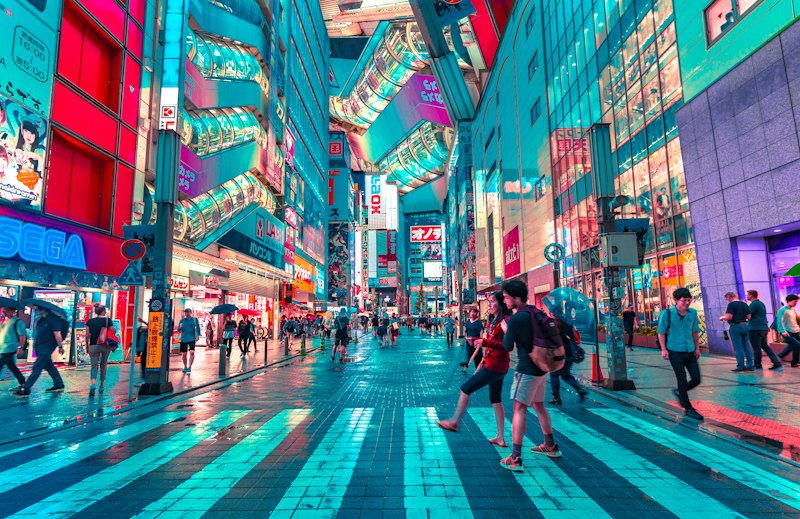
Because the Art Aquarium explicitly prohibits luggage and does not provide lockers, you must solve this problem before going up to the 9th floor.
- Ginza Station Coin Lockers: The underground concourse of Ginza Station has several banks of coin lockers (accepting both 100-yen coins and IC cards like Suica). The largest concentration is near the Hibiya Line gates and along the underground passage connecting to Higashi-Ginza.
- JR Yurakucho Station Lockers: If you are arriving via the JR loop, there are massive banks of lockers near the Central Exit of Yurakucho Station.
- Mitsukoshi Cloakroom (Shoppers Only): Ginza Mitsukoshi does have a cloakroom/baggage storage service for customers, but this is intended for people making significant purchases at the department store, not necessarily as a public locker for museum attendees. It is much safer to rely on station coin lockers.
The Cultural Context: Why Goldfish?
To fully appreciate the Art Aquarium Museum GINZA, it helps to understand the profound cultural significance of goldfish (kingyo) in Japan.
Goldfish were introduced to Japan from China around the early 16th century (during the Muromachi period). However, it wasn't until the Edo period (1603–1867) that keeping and viewing goldfish became a massive cultural phenomenon among both the samurai elite and the common townspeople of Edo (modern-day Tokyo).
Before the invention of glass aquariums, goldfish were traditionally viewed from above (top-viewing), kept in shallow ceramic basins or wooden tubs. This is why many traditional Japanese goldfish breeds—like the bumpy-headed Ranchu or the wide-tailed Ryukin—have been selectively bred for centuries to look incredibly beautiful when viewed from the top down.
The Art Aquarium plays with this history. While it uses modern, clear acrylic to allow side-viewing, many of the installations feature shallow, basin-like designs that force the viewer to look down upon the fish, replicating the perspective of an Edo-period aristocrat.
The goldfish is also a staple of the Japanese summer festival (matsuri), famous for the game of kingyo-sukui (goldfish scooping). By elevating this common festival fish into a dramatic, high-art setting, the creator of the Art Aquarium aims to stir a sense of deep nostalgia and wonder in Japanese visitors, while providing a stunning visual spectacle for international tourists.
Photography Guide for the Art Aquarium
The Art Aquarium Museum GINZA is undeniably one of the most photogenic spots in Tokyo, heavily popularized on Instagram and TikTok. However, getting a good photo is notoriously difficult due to the challenging lighting conditions.
- The Challenge: You are trying to photograph fast-moving subjects (fish) through thick acrylic and water, in an incredibly dark room, lit by intensely colored, shifting LED lights.
- No Flash: As a reminder, flash photography is strictly banned.
- Smartphone Settings: If using a modern smartphone, turn off "Night Mode." Night mode works by slowing down the shutter speed to let in more light. If the shutter speed is slow, the swimming fish will become blurry streaks. Instead, lower the exposure manually (tap the screen and drag the sun icon down) to make the colors richer and increase the shutter speed to freeze the fish's motion.
- Avoid Reflections: To avoid capturing the reflection of the room (or yourself) in the glass, put your smartphone lens as close to the acrylic tank as possible without actually touching or bumping the artwork.
- Patience with Lighting: The lights in the tanks shift colors (from red to blue to green). Red light tends to blow out smartphone sensors, making everything look like a glowing blur. Wait for the cycle to shift to white, blue, or purple lighting for the sharpest, most natural-looking captures of the goldfish scales.
Expanding Your Day: 7 Highly Recommended Spots Near Ginza Mitsukoshi
Since a typical visit to the Art Aquarium Museum GINZA takes about 45 to 90 minutes, you will have plenty of time to explore the surrounding area. Ginza is Tokyo’s answer to Fifth Avenue or the Champs-Élysées, but it also hides incredible niche shops and affordable gems.
Here are seven specific locations within a 15-minute walk of the Art Aquarium that are perfect for international tourists in 2026.
(Note: All access instructions assume your starting point is Ginza Mitsukoshi).
1. Itoya Ginza (Stationery Heaven)
Just a 3-minute walk down Chuo-dori from Mitsukoshi is Itoya, a staggering 12-story tower dedicated entirely to stationery. Even if you aren't a pen enthusiast, this is a must-visit. Entire floors are dedicated to luxury fountain pens, traditional Japanese washi paper, travel journals, and greeting cards. They even have an indoor hydroponic farm on the 11th floor where they grow lettuce for their 12th-floor cafe.
- Access: Walk 3 minutes north on Chuo-dori (the main street).
2. Uniqlo Ginza Global Flagship Store
If you want to shop for high-quality, affordable clothing, the Uniqlo Ginza Global Flagship is a staggering 12 floors of retail space. It features exclusive Ginza-only collaborations, custom t-shirt printing (UTme!), and a massive tax-free counter. It is one of the best places in Japan to stock up on Heattech or Airism depending on the season.
- Access: Located essentially across the street and one block south of Ginza Mitsukoshi.
3. Don Quijote Ginza Honkan
After a refined experience at the Art Aquarium, dive into the chaotic, bargain-filled aisles of Don Quijote. The Ginza branch is open extremely late and is the perfect place to buy Japanese snacks, quirky souvenirs, cosmetics, and character goods tax-free. For a deeper dive into making the most of this store, read our Don Quijote Shopping Guide | Late Night Tax-Free Discounts.
- Access: About an 8-minute walk west toward the Shimbashi area.
4. Tsujiri Ginza (Matcha Desserts)
Located inside the Ginza Six shopping complex, Tsujiri offers some of the most exquisite matcha parfaits and soft serve ice cream in Tokyo. The deep, bitter notes of the premium green tea perfectly balance the sweetness of the mochi and azuki beans. If you are a fan of Japanese sweets, be sure to explore our larger list of the Best Matcha Desserts in Tokyo | Top Sweets Shops.
- Access: A 4-minute walk south down Chuo-dori to the Ginza Six building.
5. Kyukyodo Ginza
If the Art Aquarium gave you an appreciation for traditional Japanese aesthetics, you must visit Kyukyodo. Founded in 1663, this store specializes in traditional Japanese incense, calligraphy brushes, washi paper, and seasonal postcards. It is the perfect place to find a lightweight, highly traditional, and beautifully scented souvenir.
- Access: Located directly across the main intersection from Ginza Mitsukoshi.
6. Nissan Crossing
Located diagonally across from Ginza Mitsukoshi is the striking, architecturally futuristic Nissan Crossing building. Even if you don't care about cars, head up to the second-floor cafe. You can order a "Macchi-Art" where they use a machine to print any photo from your phone (including a picture you just took of the goldfish!) directly onto the foam of your latte.
- Access: Walk 1 minute across the main Ginza intersection.
7. Yurakucho Gado-shita (Dining Under the Tracks)
If you finish your Ginza shopping and want a gritty, authentic dining experience to contrast the luxury, head toward the JR Yurakucho station. The area beneath the elevated train tracks (Gado-shita) is packed with smoky yakitori stalls, izakayas, and tiny bars. It’s a fantastic place to grab dinner. If you are wondering how meal prices here compare to simpler options, check out our guide on How Much Does Food Cost in Japan? 2026 Konbini vs Restaurant.
- Access: A 10-minute walk west toward the JR tracks.
Suggested Itineraries Including the Art Aquarium
To help you maximize your time, here are two ways to fit the Art Aquarium Museum GINZA into a broader Tokyo day trip.
Itinerary 1: The Luxury & Culture Day (Ideal for Weekends)
Note: On weekends, the main street of Ginza (Chuo-dori) is closed to cars and becomes a massive pedestrian paradise. This is the best time to visit.
- 10:00 AM: Arrive at Ginza Station and head straight up to the 9th floor of Ginza Mitsukoshi.
- 10:15 AM - 11:30 AM: Explore the Art Aquarium Museum GINZA while the morning crowds are still relatively light.
- 11:30 AM - 1:00 PM: Head down to the lower floors of Ginza Mitsukoshi to explore the Depachika (the basement food hall). Marvel at the $100 melons and pick up some high-end bento boxes or pastries.
- 1:00 PM - 3:00 PM: Walk down Chuo-dori. Visit Itoya Ginza for stationery and the Uniqlo Flagship for clothing.
- 3:00 PM - 4:00 PM: Take a tea break at Tsujiri Ginza inside Ginza Six.
- 4:00 PM Onward: Head into the neighboring Tsukiji area (an easy walk) or take the Hibiya line up to Akihabara. If you are heading to Akiba, consider booking one of the Best Hotels Near Akihabara 2026 | Value Location Convenience.
Itinerary 2: The Rainy Day Indoor Retreat
Because it is entirely indoors and directly connected to the subway system, the Art Aquarium is one of the best rainy-day activities in Tokyo.
- 2:00 PM: Arrive via the underground passages at Ginza Station to avoid the rain.
- 2:15 PM - 3:30 PM: Take in the atmospheric lighting of the Art Aquarium. The dark environment makes you completely forget the gloomy weather outside.
- 3:30 PM - 5:00 PM: Stay dry by exploring the vast interconnected underground malls of Ginza and Yurakucho. You can walk all the way to Higashi-Ginza or Yurakucho almost entirely underground.
- 5:00 PM: Grab a coffee at the Nissan Crossing cafe, watching the rain fall on the busy intersection below.
Practical Preparation: What Tourists Need to Know
Hydration and Comfort
The interior of the Art Aquarium is kept quite warm and humid, mimicking a summer evening in Japan and maintaining a healthy environment for the fish. Since you will be walking slowly through dense crowds, it is easy to get warm. Dress in light, breathable layers. If you get thirsty, remember that Japan's tap water is perfectly safe. For peace of mind on this topic, review our guide: Can You Drink Tap Water in Japan? | City by City Guide 2026.
Dealing with Crowds
The venue employs a one-way system. Once you pass through a section, it is very difficult to go backward against the flow of traffic. Take your time in each room. Don't rush through the initial displays, because you cannot easily backtrack if you realize you missed a photo opportunity.
Souvenir Shopping at the Museum
The exit of the Art Aquarium naturally funnels you into a gift shop. This is a fantastic place to buy exclusive, goldfish-themed merchandise that you cannot find anywhere else in Tokyo. Popular items include traditional folding fans (sensu), wind chimes, high-end Japanese sweets shaped like goldfish, and beautiful acrylic keychains. Be prepared to spend a little time here, as the quality of the merchandise is excellent.
Frequently Asked Questions (2026 Edition)
Is the Art Aquarium Museum GINZA suitable for young children? Yes, children are allowed and generally captivated by the moving fish and bright lights. However, remember the strict no stroller policy. You will be carrying infants or holding the hands of toddlers through dark, crowded corridors with fragile acrylic tanks.
Are there different prices for day and night entry? No. In 2026, the official ticketing site shows a single flat admission price: 2,500 yen for web tickets and 2,700 yen for same-day tickets. There are no day/night tiers.
Can I get a student discount? No. While some secondary tourist blogs from past years mention a student rate of 2,200 yen, the live 2026 official page does not offer this. Expect to pay the standard adult admission price.
How long does it take to see the whole exhibition? Most visitors spend between 45 minutes and 1.5 hours inside. It depends entirely on how many photos you take and how crowded the venue is.
Is this the same event as the Art Aquarium Exhibition Saitama 2026? Absolutely not. The Saitama event at the Saitama Super Arena is a separate installation. Your ticket for Ginza will not work in Saitama, and vice versa.
Why does the website say this might be the last exhibition? The current "Ginza Goldfish Hyakka Exhibition" (Oct 2, 2026 – Jan 6, 2027) has been billed as the last special exhibition at the Ginza Mitsukoshi location. While future plans are not entirely public, tourists visiting in late 2026 should treat this as a potentially final opportunity to see the art in this specific venue. Always check their official site for breaking news regarding closures or relocations.
Can I leave and re-enter? No. Re-entry is not permitted. Make sure you have used the restroom (located outside the exhibition area on the department store floor) before scanning your ticket at the entrance.
What happens if I miss my timed web ticket slot? The staff at the entrance are generally understanding if you are a few minutes late due to train delays, but your entry is not guaranteed if you arrive significantly outside your designated window. Aim to arrive at the 9th floor about 10 minutes before your time slot begins.
Conclusion: A Fleeting Moment of Beauty
The Art Aquarium Museum GINZA encapsulates much of what makes Tokyo such an incredible city for inbound tourists. It takes a concept steeped in centuries of Japanese history—the quiet appreciation of the ornamental goldfish—and rockets it into the future with neon lights, pumping soundscapes, and flawless architectural design.
As we progress through late 2026 toward early 2027, the fleeting nature of the "Ginza Goldfish Hyakka Exhibition" makes it all the more poignant. If this truly is the final showcase at the Ginza Mitsukoshi venue, missing it would be a true shame.
By utilizing the web ticketing system, respecting the strict no-luggage and no-stroller rules, and pairing your visit with a broader exploration of the luxury and culinary delights of the Ginza district, you are guaranteed to have an unforgettable day in Tokyo. Book your 2,500 yen timed-entry ticket, leave your bags in a coin locker, turn off your camera flash, and prepare to be hypnotized by the swimming jewels of Japan.
FAQ
Q: Is the Art Aquarium Museum GINZA suitable for young children?
Yes, children are allowed and generally captivated by the exhibits. However, there is a strict no stroller policy, so you must use a wearable carrier or hold the hands of toddlers through the dark, crowded corridors.
Q: Are there different prices for day and night entry?
No. In 2026, there is a single flat admission price of 2,500 yen for web tickets and 2,700 yen for same-day tickets, regardless of what time you enter.
Q: Can I get a student discount?
No. The live 2026 official page does not offer a student rate. Expect to pay the standard adult admission price.
Q: How long does it take to see the whole exhibition?
Most visitors spend between 45 minutes and 1.5 hours inside. It depends entirely on how many photos you take and how crowded the venue is.
Q: Is this the same event as the Art Aquarium Exhibition Saitama 2026?
Absolutely not. The Saitama event at the Saitama Super Arena is a separate installation. Your ticket for Ginza will not work in Saitama, and vice versa.
Q: Can I leave and re-enter?
No. Re-entry is not permitted. Make sure you have used the restroom located outside the exhibition area before scanning your ticket at the entrance.