[PR] This article contains affiliate links.
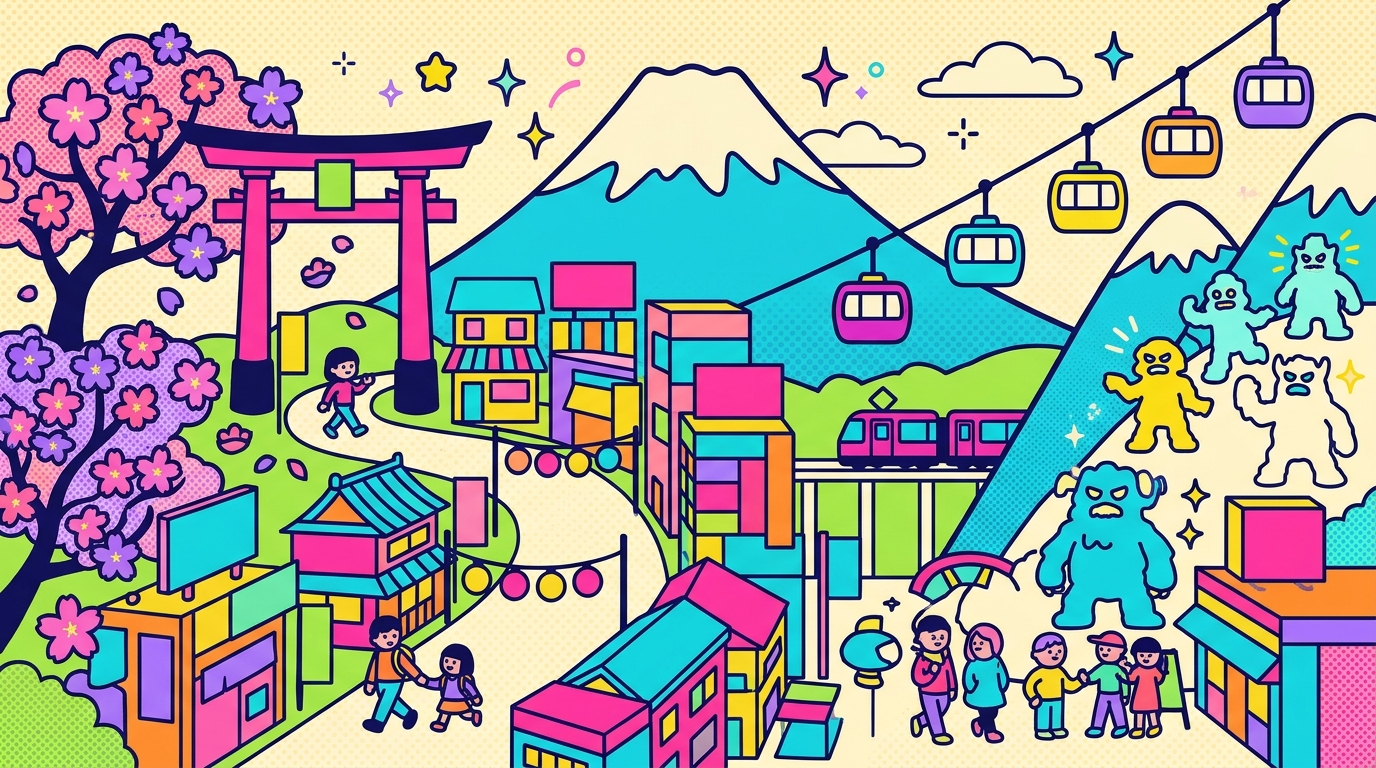
If there is one winter spectacle in Japan that feels truly otherworldly, it is the Juhyo (樹氷)—the legendary "Snow Monsters" of Zao Onsen in Yamagata Prefecture. High in the mountains of the Tohoku region, an incredible confluence of meteorological phenomena transforms the slopes into a sprawling army of massive, misshapen snow-and-ice figures. Standing in the freezing winds at the summit, surrounded by these towering white giants under the glow of night illuminations, is an experience that borders on the surreal.
For the upcoming 2026-2027 winter season, Zao Onsen remains one of Japan’s most highly sought-after winter destinations. However, successfully witnessing the Snow Monsters—particularly during the dramatic evening light-ups—requires careful planning, an understanding of the region's intense weather, and a realistic grasp of travel logistics.
This exhaustive, comprehensive guide is designed for inbound tourists planning a trip to Zao Onsen for the 2026-2027 season. We will cover everything from the complex science behind the monsters to confirmed 2026-2027 ropeway dates and prices, realistic transit advice from Tokyo, the uncertainty surrounding the exact illumination schedule, and deep-dive recommendations for where to eat, soak, and stay in the historic hot spring town below.
1. What Exactly Are Zao’s "Snow Monsters" (Juhyo)?
Before diving into the logistics of your 2026-2027 trip, it is vital to understand exactly what you are traveling so far to see. The Snow Monsters are not sculpted by human hands; they are a rare, naturally occurring phenomenon that only takes place in a few very specific mountainous regions in the world, with Zao being the most famous and accessible.
The Science Behind the Monsters
The term Juhyo literally translates to "frost-covered trees" or "ice trees," but that simple translation does not do justice to the sheer scale of the formations at Zao. The process requires three highly specific elements to align perfectly:
- The Maries' Fir Trees (Aomori Todomatsu): The summit of Mount Zao is populated by an evergreen conifer known as the Maries' fir. These trees have a specific branch structure that allows ice and snow to anchor to them rather than simply falling off under the weight.
- Supercooled Water Droplets: During the winter, powerful northwesterly winds blow across the Sea of Japan from Siberia. As this frigid air travels over the relatively warmer ocean currents, it picks up immense amounts of moisture. By the time it hits the peaks of the Ou Mountain Range (where Zao sits), this moisture has turned into supercooled water droplets—liquid water that remains unfrozen despite being well below the freezing point.
- Extreme Winds and Snow accretion: When these supercooled droplets violently collide with the needles and branches of the Maries' firs, they instantly freeze on contact, creating a hard rime ice. As the brutal, relentless winds continue to blast the trees, snow gets trapped in the ice, freezing over and over again in layers.
The result is an organic, chaotic growth of ice and snow that builds up heavily on the windward side of the trees. By the peak of winter, the original shape of the tree is completely obscured, leaving only a massive, lumpy, monstrous silhouette that can weigh several tons.
An Endangered Phenomenon
It is worth noting for environmentally conscious travelers that the Zao Snow Monsters are currently facing long-term existential threats. A combination of warming winter temperatures due to climate change and a severe infestation of bark beetles and moths that have been damaging the Maries' fir trees over the last decade means that the Juhyo may not exist forever. Forestry officials in Yamagata are actively working on conservation efforts, planting new saplings and trying to protect the old growth, but seeing the Snow Monsters now is a privilege that future generations may not have.
2. The 2026-2027 Zao Season: Critical Dates and Scheduling
When planning a trip to Zao Onsen, you must differentiate between the general ski resort season, the natural viewing window for the snow monsters, and the highly specific (and often limited) evening illumination events.
Confirmed: Zao Onsen Ski Resort 2026-2027 Season
The Zao Onsen Ski Resort—which operates the Zao Ropeway necessary to reach the Snow Monsters—has officially confirmed its overall operating season for the 2026-2027 winter:
- Opening Date: December 12, 2026
- Closing Date: May 5, 2027
This means the ropeways will be running and the slopes will be open for skiing and snowboarding during this entire window (snow conditions permitting). However, the Snow Monsters do not exist for this entire duration.
The Daytime Juhyo Viewing Window
If you are planning to view the Snow Monsters during regular daylight hours, you do not need to worry about the specific light-up event schedule. The natural life cycle of the Juhyo generally follows this pattern:
- Late December: The ice begins to form. The trees start turning white, but their original shapes are still visible. They are more "snow trees" than "monsters" at this stage.
- January: The accretion rapidly accelerates. The monsters grow thick and lose their arboreal shapes.
- February to Early March: PEAK SEASON. This is when the monsters are at their absolute largest, most imposing, and most photogenic. If your primary goal is to see the classic, massive Juhyo, you should aim your trip between late January and the end of February.
- Mid-to-Late March: As temperatures rise, the monsters begin to collapse and melt.
CRITICAL CAVEAT: The 2026-2027 Juhyo Light-Up (Night Illumination) Schedule
For many inbound tourists, the ultimate draw is the Juhyo Light-Up (樹氷ライトアップ). During these specific evenings, the Zao Ropeway runs after dark, and the snow monsters near the summit are illuminated by powerful, eerie, multi-colored LED lights, creating a breathtaking, alien landscape.
Important Notice for Travelers: At the time of this comprehensive guide's research, the official, finalized dates for the 2026-2027 Night Illumination have NOT been definitively published by the Zao Ropeway authority or the Yamagata Tourism Board. On resort-adjacent sources, the exact schedule is explicitly listed as "undetermined."
However, we can provide highly educated estimates based on strict historical precedents and third-party projections based on the typical annual pattern:
- Projected Illumination Window: Roughly December 27, 2026 – February 21 or 23, 2027.
- Operational Days: The light-up does not happen every single night. It is heavily weekends-focused (typically Fridays, Saturdays, Sundays, and national Japanese holidays), with a concentrated run of consecutive nights during the New Year holiday period.
- Reference Point: During the 2025-2026 season, the event ran from Dec 27, 2025, to Feb 22, 2026, but only operated on 36 actual nights within that two-month span.
- Hours: On illumination nights, the ropeway typically operates for night viewing from 17:00 to 21:00 (with the last ascent usually capped around 19:50).
Actionable Advice: Because the light-up is restricted to roughly 36 to 40 specific nights, you must verify the official calendar before booking your flights or non-refundable ryokan stays. Check the official Zao Ropeway website (zaoropeway.co.jp) starting in late October or November 2026 for the final, official calendar drop. Do not blindly book a Tuesday night in late January assuming the lights will be on.
3. Navigating the Zao Ropeway: Routes, Stations, and 2026-2027 Prices
To see the Snow Monsters, you do not need to be a skier or snowboarder. The vast majority of tourists simply ride the Zao Ropeway (蔵王ロープウェイ) up the mountain as foot passengers.
It is crucial to know that there are multiple different ropeways and lifts in Zao Onsen town. To see the monsters, you specifically need the Zao Ropeway, which departs from the Sanroku Station at the far right (eastern) side of the town if you are looking up at the mountain.
The Ropeway Route
The journey to the summit is broken into two distinct legs:
- Zao Sanroku Station (Base - 855m) to Juhyo-kogen Station (Mid-station - 1,331m): You will board the Sanroku Line, a large gondola that holds up to 52 passengers. This ride takes about 7 minutes. You will glide over beautiful snowy forests, but you will not see the massive Snow Monsters yet.
- Juhyo-kogen Station to Jizo-sancho Station (Summit - 1,661m): At the mid-station, you must exit the large gondola, walk briefly through the station building, and transfer to the Sancho Line. This is a "funitel" system utilizing smaller, 18-passenger cars that run continuously. The ride takes about 10 minutes. As you climb higher, you will literally fly directly over the heads of the sprawling army of Snow Monsters. The view from the window here is spectacular.
Official 2026-2027 Ropeway Pricing
The official round-trip and one-way prices for foot passengers (sightseers) have been confirmed for the 2026-2027 season.
To Jizo-sancho Station (The Summit - Highly Recommended for the Best Views):
- Adult (Middle school age and up): Round-trip 4,400 yen / One-way 2,200 yen
- Child (Elementary school): Round-trip 2,200 yen / One-way 1,100 yen (Note: Preschoolers are generally free with a paying adult, up to one preschooler per adult).
To Juhyo-kogen Station (The Mid-Station - Only if you do not want to go all the way up):
- Adult: Round-trip 2,200 yen / One-way 1,200 yen
- Child: Round-trip 1,100 yen / One-way 600 yen
Pro-Tip: If you are traveling as a foot passenger to see the monsters, you will almost certainly want the 4,400 yen round-trip ticket to Jizo-sancho Station. The mid-station has some frosty trees, but the true, massive "monsters" are clustered near the summit.
Wait Times and Ticketing Logistics
During the peak of the season (February weekends and illumination nights), the Zao Ropeway can become extremely crowded. Wait times to board the first gondola at Sanroku Station can easily exceed 60 to 90 minutes.
Because you will be standing in line, often outdoors or in unheated vestibules, warm clothing is essential even before you get on the mountain. To smooth your journey, ensure you know your payment methods; the ticket windows accept cash and major credit cards. (If you are wondering about how much physical currency to carry in Japan's rural areas, we recommend reading our guide on Cash vs Card in Japan 2026: How Much Cash Do You Need? for broader context).
4. Daytime vs. Nighttime Viewing: Which Should You Choose?
Many tourists struggle with deciding whether to visit the Snow Monsters during the day or during the night illumination. If time permits, doing both offers two completely different, magnificent experiences. If you must choose, here is what you need to know.
Daytime Viewing: Clarity, Scale, and the Jizo Statue
Pros:
- If you are lucky enough to get a "Bluebird Day" (clear, sunny, cloudless skies), the stark contrast between the bright white snow monsters and the deep blue sky is a photographer's dream.
- You can fully appreciate the immense scale of the Juhyo fields stretching endlessly into the distance.
- You can visit the Zao Jizo Bosatsu, a famous stone statue located about 100 meters from the summit station. Built in 1775 to pray for the safety of travelers, this statue is 2.34 meters tall. In peak winter, the snow piles up so high that only the very top of the Jizo's head is visible above the snowpack!
- You can watch skiers and snowboarders weave effortlessly through the monsters on the Zangezaka and Juhyogen courses.
Cons:
- Mount Zao is notorious for rapidly changing, fierce weather. On many winter days, the summit is engulfed in a total whiteout blizzard. Visibility can drop to less than 10 meters, making it difficult to see the monsters clearly, let alone photograph them.
Night Illumination: The Alien Landscape
Pros:
- The atmosphere is undeniably magical. The multi-colored LED lights (often shifting between greens, purples, blues, and stark whites) cast deep shadows, making the ice formations look genuinely monstrous and alive.
- Because it is dark, you lose the sense of the horizon, making the immediate illuminated area feel like an isolated, fantastical bubble floating in the void.
- Even in moderate snowfall, the illuminated flakes falling against the dark sky look beautiful, whereas daytime snow often just contributes to a featureless whiteout.
Cons:
- It is aggressively cold. Once the sun drops, summit temperatures plummet to -10°C to -15°C (14°F to 5°F), with wind chills making it feel much colder.
- Photography is extremely difficult without proper gear. Smartphone cameras struggle with the low light, the extreme contrast of the LEDs, and the fact that cold batteries drain in minutes.
- You are limited to the immediate walking area around the summit station. You cannot wander far in the dark.
5. How to Get to Zao Onsen: The Honest Truth About Access
The single biggest mistake inbound tourists make when planning a trip to Zao is underestimating the travel time and treating it as a casual day trip from Tokyo.
Let us be completely honest and upfront: This is NOT a simple Tokyo day trip. While it is mathematically and physically possible to go from Tokyo to Zao Onsen and back in a single day, doing so is exhausting, deeply stressful, and leaves almost no margin for error—especially if your goal is the night illumination.
Here is the exact, step-by-step breakdown of how you get to Zao Onsen from central Tokyo.
Step 1: The Yamagata Shinkansen (Tokyo to Yamagata Station)
You will begin your journey at Tokyo Station or Ueno Station, boarding the JR Yamagata Shinkansen (the "Tsubasa" train).
- Travel Time: Approximately 2 hours and 30 minutes to 2 hours and 45 minutes, depending on the specific train.
- Cost: Roughly 11,500 yen to 12,000 yen one way. (This route is fully covered by the nationwide Japan Rail Pass or the JR East Tohoku Area Pass).
- Transit Note: Ensure you have reserved seats, especially during winter weekends. If you are using digital IC cards for travel elsewhere, note that Shinkansen reservations require specific linking if you aren't using physical tickets. For a deeper understanding of transit cards, see our guide on What is the Best IC Card for Tourists in Japan 2026? | Suica vs Pasmo vs ICOCA.
Step 2: The Yamakou Bus (Yamagata Station to Zao Onsen)
Once you arrive at JR Yamagata Station, follow the signs to the East Exit. Head down to street level, where you will find the bus terminal. Look for Bus Stop No. 1.
- This is the dedicated stop for the Yamakou Bus bound for Zao Onsen Bus Terminal.
- Travel Time: Approximately 40 to 45 minutes up winding mountain roads.
- Cost: 1,000 yen one way (Adult). Payment can generally be made via cash or major IC cards upon exiting the bus.
- Frequency: Buses typically depart once an hour during the day, with a few extra departures added during peak morning and evening hours.
Step 3: Walking to the Ropeway
The Yamakou Bus terminates at the Zao Onsen Bus Terminal, located in the center of the village. From here, you must walk to the Zao Ropeway Sanroku Station.
- Travel Time: It is approximately a 10 to 15-minute walk.
- Conditions: The walk is uphill. The roads and sidewalks in Zao Onsen are often covered in packed snow, slush, or hidden ice patches. You will be walking through a working ski town.
The Alternative Route: Kaminoyama Onsen Shuttle
If you are approaching from the south or staying in the neighboring castle town of Kaminoyama, there is a dedicated winter shuttle bus.
- Operation Dates: Confirmed for December 19, 2026 - March 7, 2027.
- This shuttle bus from Kaminoyama Onsen features added afternoon departures specifically designed to cater to tourists wanting to see the light-up nights, making it a viable alternative to routing through Yamagata Station if you book accommodation in Kaminoyama.
Why You Should NOT Do a Same-Day Round Trip from Tokyo
Let’s do the math on a Tokyo day trip for the Night Illumination:
- The illumination starts at 17:00.
- By the time you queue for the ropeway (60 mins), ride to the top (20 mins), view the monsters (45 mins), queue to get back down (45 mins), and ride down (20 mins), it will be roughly 20:10.
- You must then walk 15 minutes downhill in the dark and cold to the Zao Onsen Bus Terminal.
- The final bus back to Yamagata Station usually departs around 19:50 or 20:40 (schedules vary slightly by year). If you miss the final bus, a taxi down the mountain will cost roughly 7,000+ yen, if you can even find one.
- Once at Yamagata Station, the final Shinkansen back to Tokyo departs around 20:45 or 21:00.
- Missing any single connection leaves you stranded in a snowy mountain prefecture at night.
Our Expert Recommendation: Do not rush this. Book at least one night of accommodation in Zao Onsen or nearby Yamagata City. This transforms a stressful marathon into a relaxing, magical winter holiday, allowing you to enjoy the hot springs, local food, and the illumination without watching your watch every five minutes.