[Disclosure] This article contains affiliate links. We may earn a commission at no extra cost to you.

The Tokyo to Osaka corridor is the most heavily trafficked tourist route in Japan. But since the massive JR Pass price hike, the old strategy of "just flash your pass and hop on the bullet train" is dead for budget-conscious travelers. If you are traveling between these two mega-cities in 2026, you face a stark choice: pay out-of-pocket for a morning Shinkansen, or endure an overnight highway bus to save cash and a night of hotel fare.
Which is actually better? That depends entirely on how much you value your spine, your vacation time, and your wallet. Generic travel blogs will tell you that night buses are a "fun, cheap adventure." We are here to tell you that booking the wrong tier of night bus will absolutely ruin your first day in Osaka with crippling lower back pain.
In this guide, we are breaking down the exact 2026 math, comfort levels, and logistical realities of the morning Nozomi Shinkansen versus premium and budget overnight buses.
What You'll Get From This Guide
- Exact 2026 Pricing: Real ticket costs in ¥ and USD, not outdated pre-pandemic estimates.
- The 3-Row vs. 4-Row Bus Divide: Why spending ¥4,000 more on a bus ticket is mandatory.
- Luggage Realities: Strict dimension limits that might force you onto the train anyway.
- The Hidden "Exhaustion Tax": Why arriving in Osaka at 6:30 AM isn't the hack you think it is.
- Head-to-Head Data Tables: Direct comparisons of seat pitch, amenities, and travel time.
Option 1: The Morning Shinkansen (Nozomi)
If you value speed and comfort, the Tokaido Shinkansen is unparalleled. We are specifically looking at the Nozomi, the fastest train class, which departs Tokyo Station as early as 6:00 AM.
The Cost & Time Reality
In 2026, a standard reserved seat on the Nozomi from Tokyo Station to Shin-Osaka Station costs ¥14,920 (~$99 USD) during regular season, creeping over ¥15,300 (~$102 USD) during peak holidays like Golden Week or Obon.
The journey takes exactly 2 hours and 27 minutes. If you catch the 6:00 AM train (Nozomi 1), you arrive at Shin-Osaka at 8:27 AM. You can easily Book Tokyo Skyliner / Haruka Express / Shinkansen on Klook to secure reserved seats with oversized luggage space before you even land in Japan.
The Tourist Mistake: The 6:00 AM Departure
Many tourists eagerly book the 6:00 AM Shinkansen thinking they will maximize their day. Here is the local reality: Osaka does not wake up early.
If you arrive at Shin-Osaka at 8:30 AM, transfer to the Midosuji Subway Line, and get to Namba by 9:00 AM, you will find Dotonbori completely dead. Aside from a 24-hour Ichiran Ramen or a Matsuya beef bowl shop, almost all retail, cafes, and major attractions (like the Umeda Sky Building) don't open until 10:00 AM or 11:00 AM. Unless you are heading directly to Universal Studios Japan (USJ), booking an 8:30 AM departure (arriving at 11:00 AM) is a much better use of your morning.
Option 2: The Night Bus (Willer Express)
Taking an overnight highway bus from Tokyo to Osaka saves you the cost of one night's accommodation (averaging ¥12,000 / ~$80 USD in Tokyo for a mid-range business hotel). But not all buses are created equal.
The Overrated Budget Trap: The 4-Row Bus
The cheapest buses (often operated by Willer Express or VIP Liner) use a standard 4-row layout (2x2 seating). These tickets cost between ¥3,500 and ¥5,000 (~$23–$33 USD).
Do not book these. The seat pitch is a meager 80cm, the recline is barely 120 degrees, and you will be rubbing shoulders with strangers for 8.5 hours. You will arrive at the Willer Bus Terminal Umeda (Umeda Sky Building Tower East 1F) at 7:00 AM feeling like you've been folded into a suitcase.
The Local Tip: The 3-Row Independent "Shell" Seat
If you are taking a night bus, you must upgrade to a 3-row independent seat configuration. Willer Express's "ReBorn" class or VIP Liner's "Royal Blue" are the gold standards.
These cost between ¥8,800 and ¥12,500 (~$58–$83 USD). While this approaches the cost of a Shinkansen ticket, remember you are still saving a night of hotel fare.
The Willer ReBorn seat features a hard fiberglass shell (so reclining doesn't crush the person behind you), a 155-degree recline, and a motorized leg rest. You board at Busta Shinjuku (4th Floor) at 10:30 PM, sleep genuinely well, and arrive in Osaka at 7:00 AM. A high-quality neck pillow from Amazon Japan (nekku piroo) is still recommended, but the physical toll is drastically reduced.
Head-to-Head Comparison: Cost, Time, and Comfort
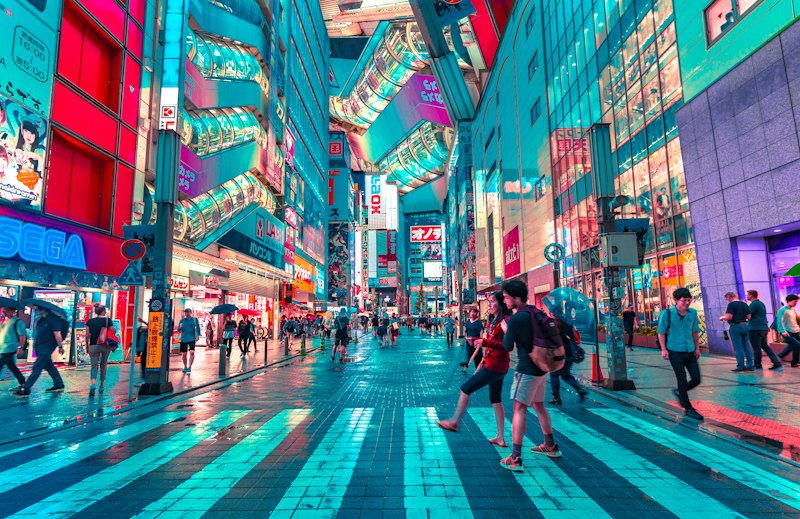
Table 1: Cost & Time Breakdown
| Transport Method | 2026 Ticket Price | Tokyo Departure | Osaka Arrival | Total Time | Hotel Savings? |
|---|---|---|---|---|---|
| Nozomi Shinkansen | ¥14,920 (~$99) | 8:30 AM (Tokyo Stn) | 10:57 AM (Shin-Osaka) | 2h 27m | No |
| 3-Row Bus (ReBorn) | ¥9,800 (~$65) | 10:40 PM (Busta Shinjuku) | 7:15 AM (Umeda) | 8h 35m | Yes (~¥12,000) |
| 4-Row Bus (Standard) | ¥4,000 (~$26) | 11:00 PM (Busta Shinjuku) | 7:30 AM (Umeda) | 8h 30m | Yes (~¥12,000) |
Table 2: Comfort & Amenities
| Feature | Nozomi Shinkansen | 3-Row Night Bus | 4-Row Night Bus |
|---|---|---|---|
| Seat Pitch (Legroom) | 1,040 mm | 1,580 mm | 800 mm |
| Max Recline | ~130 degrees | 155 degrees | 120 degrees |
| Wi-Fi / Outlets | Free Wi-Fi / Every seat | No Wi-Fi / 1 Outlet | Free Wi-Fi / 1 Outlet |
| Luggage Allowance | 2 pieces (max 250cm total)* | 1 piece (max 155cm total) | 1 piece (max 155cm total) |
| Restroom Onboard? | Yes (Multiple) | Varies (Frequent rest stops) | No (Frequent rest stops) |
*Shinkansen pieces over 160cm total dimensions require a free but mandatory "Oversized Baggage" seat reservation.
The Hidden Costs Most Tourists Ignore
1. The Strict Bus Luggage Limits
Highway buses in Japan do not have the massive cargo holds of American Greyhound buses. Willer Express strictly limits you to one piece of luggage per person, with total dimensions (Height + Width + Depth) not exceeding 155cm. If you are traveling with two massive suitcases or an oversized snowboard, you will be denied boarding. The Shinkansen is your only viable option.
2. The "Morning Exhaustion" Tax
If you take the night bus, you arrive in Umeda around 7:00 AM. Your hotel check-in isn't until 3:00 PM. What do you do for 8 hours?
Most tourists end up paying for large coin lockers at Osaka Station (¥700 / ~$4.50 USD), buying multiple coffees at Komeda's Coffee just to sit down (¥1,500 / ~$10 USD), or checking into a Manga Kissa (internet cafe) like Kaikatsu Club near Dotonbori for 3 hours just to shower and take a nap in a padded booth (¥1,800 / ~$12 USD). When you factor in these "survival" costs, the financial gap between the bus and the Shinkansen shrinks considerably.
Frequently Asked Questions
Q: How much does the Shinkansen from Tokyo to Osaka cost in 2026?
A standard reserved seat on the Nozomi Shinkansen from Tokyo Station to Shin-Osaka Station costs ¥14,920 ($99 USD). Unreserved seats are slightly cheaper at ¥13,870 ($92 USD), but we do not recommend them if you are boarding at Shinagawa, as window seats will likely be taken by those who boarded at Tokyo Station. If you want luxury, a Green Car (First Class) ticket will run you ¥19,760 ($131 USD). A major local tip: if you book exactly 28 days in advance via the smart-EX app or website, you can snatch the "Hayatoku-28 Wide" discount, dropping a standard reserved seat to ¥12,240 ($81 USD).
Q: Are overnight buses in Japan safe for solo female travelers?
Yes, overnight buses in Japan are exceptionally safe for solo female travelers, and operators go out of their way to ensure comfort. Willer Express and VIP Liner both offer designated "Female-Only" seating zones at the back of the bus, or entirely female-only buses. Furthermore, modern 3-row buses feature wrap-around privacy hoods (like Willer's canopy) or full privacy curtains that separate your seat from the aisle and your neighbor. Incidents of theft or harassment are incredibly rare, but you should still keep your passport and wallet in a small cross-body bag at your seat rather than in the overhead rack.
Q: Can I bring large luggage on the night bus to Osaka?
This is where many tourists get stranded. Highway buses in Japan have very strict luggage rules. You are generally allowed only one suitcase per passenger in the trunk hold, and the total dimensions (length + width + height) must not exceed 155cm (61 inches). The trunk staff will measure questionable bags. You cannot buy a second luggage allowance. If you have two large suitcases, or an oversized item like a surfboard or a giant musical instrument, you will be turned away at Busta Shinjuku. In that scenario, you must take the Shinkansen and reserve an "Oversized Baggage" seat.
Q: What's the best time to take the morning Shinkansen to Osaka?
Tourists constantly make the mistake of booking the 6:00 AM Nozomi, arriving in Osaka before 8:30 AM. Unless you are rushing straight to Universal Studios Japan to line up for Super Nintendo World, this is a terrible idea. Osaka is a late-night city that sleeps in. Shops in Shinsaibashi and Dotonbori, and major department stores in Umeda, do not open until 11:00 AM. We highly recommend booking an 8:30 AM or 9:00 AM Shinkansen. You will arrive in Osaka around 11:00 AM, just in time to drop your bags at your hotel and head straight to an Okonomiyaki restaurant for lunch when they open.
Q: Will the JR Pass save me money for a Tokyo-Osaka round trip?
Absolutely not. Since the massive price hike in October 2023, the JR Pass is no longer viable for simple round trips. In 2026, a 7-Day ordinary Japan Rail Pass costs exactly ¥50,000 ($333 USD). A round-trip ticket between Tokyo and Osaka on the Nozomi Shinkansen costs about ¥29,840 ($198 USD). You would need to add significant extra travel—like a round trip to Hiroshima and another to Kanazawa—just to break even. For 90% of travelers only doing the "Golden Route" (Tokyo-Kyoto-Osaka), buying point-to-point tickets or using regional JR passes is the mathematically correct choice.
Bottom Line
If you have the budget, the Nozomi Shinkansen remains the undisputed king of Tokyo-to-Osaka travel. It is fast, allows for more luggage, and spares you the physical exhaustion of overnight transit. Just remember to book a departure around 8:30 AM so you don't arrive in a closed, sleepy Osaka.
However, if you are strictly trying to cut costs, a 3-Row independent night bus like the Willer ReBorn is a fantastic hack that saves you $100 on transit and $80 on a hotel room.
Who is the night bus NOT for? Anyone traveling with multiple large suitcases, travelers over 6'2" (188cm) who will find the leg rests too short, and anyone tempted to book the ¥3,500 4-row budget bus. Trust us—the $25 you save on the cheap bus will be spent on painkillers and missed vacation hours the next day.
📝 この記事について
監修・運営: Futuristic Imagination LLC
専門分野: 日本旅行・インバウンド
AI技術と専門家の知見を組み合わせ、信頼性の高い情報をお届けします。