[Disclosure] This article contains affiliate links. We may earn a commission at no extra cost to you.
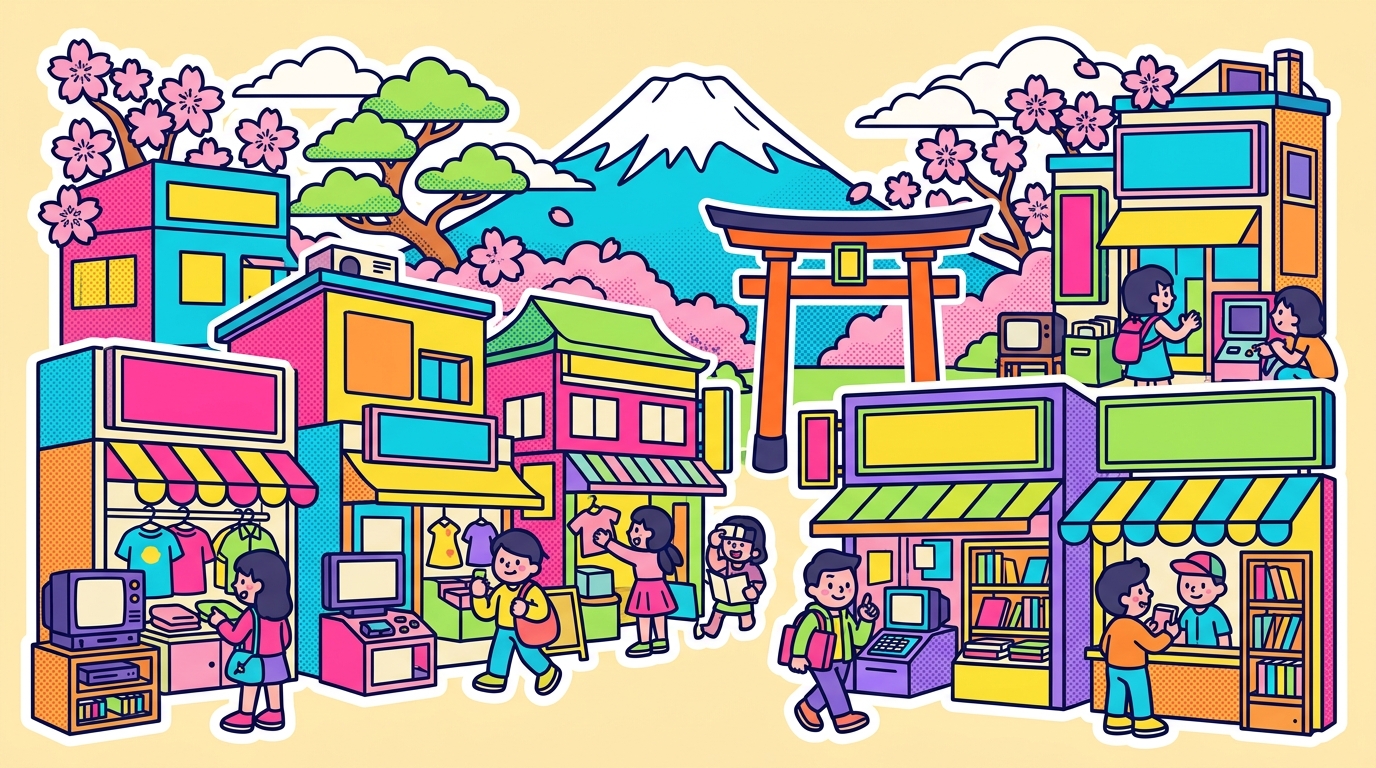
Japan's recycle shops, epitomized by the ubiquitous "Off" chain (Hard Off, Book Off, Mode Off, Hobby Off, Off House), are not just thrift stores; they are portals to unique Japanese culture, incredible bargains, and often, unexpected treasures. For the English-speaking traveler who has moved beyond the basic tourist spots and wants to truly experience local Japan, these shops offer an unparalleled opportunity to delve deeper. This guide cuts through the generic advice, providing you with 2026-specific data, locations, pricing strategies, and local insights to transform your shopping from mere browsing into a genuine treasure hunt. You'll learn where to go, what to look for, how much to pay, and crucially, how to get the best deals that even many long-term residents overlook.
What You'll Get From This Guide
- 2026 Pricing Realities: Current prices for popular second-hand items in Yen and USD.
- "Off" Chain Demystified: A breakdown of Hard Off, Book Off, Mode Off, Hobby Off, and Off House – what each specializes in.
- Strategic Hunting Locations: Specific shop recommendations in and outside major cities.
- Insider Tips for Bargains: How to spot a deal, decipher condition ratings, and utilize discount cycles.
- Beyond the Chains: Alternative second-hand spots for niche interests.
- What NOT to Buy: Honest advice on items that aren't worth the baggage space or cost.
The "Off" Ecosystem: Your Gateway to Japanese Second-Hand Goods
The "Off" family of recycle shops dominates Japan's second-hand market, each brand specializing in different categories. Understanding their focus is crucial for an efficient treasure hunt. Unlike a chaotic Western thrift store, these shops are generally clean, well-organized, and staff-attended.
Hard Off: Electronics, Instruments & Gadgets
Hard Off is your go-to for anything electronic, musical, or gadget-related. This includes retro gaming consoles, cameras, audio equipment, guitars, effect pedals, and even PC components. They categorize items by condition, from "ジャンク" (Junk - untested, potentially broken, no warranty) to "美品" (Excellent Condition - nearly new, often with warranty).
-
Key Items to Hunt:
- Retro Gaming Consoles & Games: Nintendo Famicom, Super Famicom, Game Boy, PlayStation 1/2, Sega Saturn. A working Super Famicom console (console only) might fetch ¥3,000 / ~$20 USD (good condition) or ¥800 / ~$5 USD (junk).
- Used DSLR/Mirrorless Cameras: Older models (e.g., Canon EOS Kiss X50/Rebel T3) with a kit lens can be ¥15,000-¥25,000 / ~$100-165 USD. Lenses are also plentiful.
- Musical Instruments: Electric guitars (e.g., Fender Japan models), effect pedals (Boss, Ibanez), keyboards. A Boss DS-1 distortion pedal in good condition might be ¥4,500 / ~$30 USD.
-
Location Tip: The Hard Off in Kichijoji (Tokyo), located on the 2nd floor of a building about a 5-minute walk from the North Exit of Kichijoji Station, is a popular spot, but expect slightly higher prices due to its urban location. For real deals, venture to suburban branches like Hard Off Sagamihara Machida Sohken Store (Kanagawa), a 15-minute bus ride from Machida Station, where prices for similar items can be 10-20% lower.
Book Off: Books, Manga, CDs, DVDs & Games
Book Off is the king of media. Here, you'll find mountains of Japanese books, manga, CDs, DVDs, and video games (current and retro). Prices are often fixed based on category and condition, making bargaining non-existent but finding deals straightforward.
-
Key Items to Hunt:
- Manga Sets: Complete sets of popular manga can be incredibly cheap. A full set of "Attack on Titan" (34 volumes, Japanese) in good condition might be ¥4,000 / ~$27 USD, whereas individual volumes are ¥110 / ~$0.75 USD.
- CDs & DVDs: Older Japanese pop/rock CDs are often ¥250-¥500 / ~$1.70-3.30 USD.
- Japanese Video Games: Current-gen used games (e.g., Nintendo Switch titles like "Splatoon 3") might be ¥3,500 / ~$23 USD. Retro Famicom cartridges are usually ¥110-¥550 / ~$0.75-3.60 USD depending on rarity.
-
Location Tip: The Book Off Shinjuku Store (B1F-5F, 3-minute walk from Shinjuku-sanchome Station Exit C1) is massive and generally well-stocked. For a calmer experience and potentially unique finds, try a smaller neighborhood branch like Book Off Shimokitazawa (2F, 4-min walk from Shimokitazawa Station South Exit).
Mode Off, Hobby Off & Off House: Fashion, Collectibles & Homeware
These specialized "Off" stores cater to specific needs:
- Mode Off: Fashion. From high-end designer brands to everyday wear, often with decent quality. Expect a used Uniqlo shirt to be ¥500 / ~$3.30 USD, while a used designer handbag could be ¥15,000 / ~$100 USD.
- Hobby Off: Figures, plastic models, trading cards, idol merchandise. A common prize figure (e.g., from Bandai Spirits) in good condition can be ¥1,500-¥3,000 / ~$10-20 USD. Rare Gashapon figures might be ¥500 / ~$3.30 USD.
- Off House: General household goods, furniture, sporting equipment, children's items. Great for kitchenware or unique Japanese decor if you have baggage space.
Treasure Hunting Strategy: Decoding the System
The real skill in recycle shop hunting isn't just knowing what to buy, but how to buy it.
Condition Grades & Pricing: Don't Assume "Junk" is Junk
Hard Off, in particular, uses condition grades. "ジャンク" (Junk) items are sold as-is, no returns. However, many "junk" items merely lack an accessory (like a power cable) or have minor cosmetic damage, but are fully functional. This is where the biggest bargains hide. A "junk" Canon PowerShot camera might be ¥500 / ~$3.30 USD because it's missing a battery charger, which you can easily find online for ¥1,000 / ~$7 USD. Always check the item thoroughly, if possible, for hidden gems within the junk bin.
Timing Your Visit: The "New Arrival" Rush
While not as strict as some vintage shops, many recycle shops put out new stock daily, often in the morning. Weekdays tend to be less crowded than weekends. Consider visiting first thing in the morning (around 10:00-11:00 AM) or an hour before closing (7:00-8:00 PM) for quieter browsing. Major discount events are rare, but some suburban Hard Offs might have 10-20% off certain categories a few times a year – look for signs outside the store.
The Power of Suburban Stores: Local Tip
Tourists often flock to recycle shops in central Tokyo areas like Akihabara or Shinjuku. While these stores are convenient, their prices for popular items (especially retro games and collectible figures) are often inflated due due to high demand from both tourists and local collectors.
Local Tip: For better deals and a wider variety of "everyday" items, head to Hard Offs and Book Offs located in the suburbs or even smaller cities a short train ride away from Tokyo. Stores in areas like Machida (Tokyo), Sagamihara (Kanagawa), or Kawagoe (Saitama) often have lower prices because they cater to locals clearing out their homes, not necessarily aiming for collector's market value. These shops get a constant influx of varied items and are less picked over. You'll need an internet connection to look up directions, navigate, and potentially check prices. Book Japan 4G LTE SIM Card (Airport Pick Up) on Klook to ensure you're always connected.
What to Buy (and What to Skip): 2026 Edition
Knowing what offers good value is key to a successful recycle shop run.
Top Buys for 2026
- Japanese Media: Manga, CDs, DVDs. Often ridiculously cheap. ¥110 manga volumes are a common sight.
- Retro Gaming: Consoles, cartridges, peripherals. A good condition PlayStation 2 console with controllers might be ¥4,500 / ~$30 USD.
- Camera Gear: Older DSLR/mirrorless lenses, film cameras (if you know what you're doing), and accessories can be a steal.
- Unique Fashion: For sizes M/L, you can find high-quality, lightly used Japanese brands for a fraction of new price at Mode Off.
- Musical Effect Pedals: Boss pedals are ubiquitous and often found in excellent condition.
- Gashapon & Prize Figures: Hobby Off is a goldmine for these.
What to Skip (Often Overpriced or Impractical)
- Large Furniture: Unless you're living in Japan long-term, shipping costs will negate any savings.
- Newer Electronics: For current-gen consoles or high-end cameras, the discount is usually not significant enough to justify buying used, especially without a solid warranty.
- "Junk" items you can't test: Unless you're a repair expert, avoid anything marked "ジャンク" that you can't verify functionality for.
- Brand-new items: If it's still sealed, it's likely not much cheaper than buying new, especially if it's a popular item. Check Don Quijote for new budget items – you can often find good deals there, especially with a discount coupon. Show the mobile Don Quijote coupon at checkout for up to 10% tax-free + 5% additional discount.
Tourist Mistakes: What Most Visitors Get Wrong
Many tourists believe everything in a Japanese recycle shop is incredibly cheap. This is a common misconception. While bargains abound, highly sought-after retro items (e.g., pristine Famicom games, specific vintage cameras) or popular current collectibles are often priced at market value, reflecting their demand among collectors. Don't expect to find a rare original Pokémon Red cartridge for ¥110. The true deals are often on less trendy items or in the "junk" bins for those willing to take a risk.
Recycle Shop Comparison: What to Expect in 2026
Here's a quick overview of what you'll typically find and the general price ranges. (Prices are estimates based on a 'good' condition used item in 2026, assuming ¥150 = ~$1 USD).
| Item Category | Typical Store | Price Range (¥) | Price Range (~USD) | Notes |
|---|---|---|---|---|
| Manga (single vol.) | Book Off | ¥110 - ¥550 | ~$0.75 - $3.60 | ¥110 often for older, common titles; higher for newer/rare. |
| Manga (full set) | Book Off | ¥2,000 - ¥8,000 | ~$13 - $53 | Varies greatly by popularity and number of volumes. |
| CD Album (used) | Book Off | ¥250 - ¥1,000 | ~$1.70 - $7 | Older J-Pop/J-Rock common finds. |
| Retro Game Console | Hard Off | ¥2,000 - ¥15,000 | ~$13 - $100 | N64 (¥4,000), PS2 (¥4,500), Famicom (¥3,000). Prices vary by model. |
| Retro Game (cart.) | Book Off/Hard Off | ¥110 - ¥3,000 | ~$0.75 - $20 | Common Famicom games are cheap; rare ones much higher. |
| DSLR Camera (body) | Hard Off | ¥10,000 - ¥40,000 | ~$67 - $265 | Older models (5-10 years old) are best value. |
| Electric Guitar | Hard Off | ¥15,000 - ¥70,000 | ~$100 - $465 | Entry-level to mid-range Japanese brands. |
| Branded T-Shirt | Mode Off | ¥800 - ¥3,000 | ~$5 - $20 | Uniqlo, Muji, local Japanese brands. |
| Anime Figure (Prize) | Hobby Off | ¥1,000 - ¥4,000 | ~$7 - $27 | Common prize figures; rare collectibles can be much higher. |