[Disclosure] This article contains affiliate links. We may earn a commission at no extra cost to you.
Hauling K-pop, J-pop, and anime idol goods back from Japan is thrilling—until you hit customs at your home airport and realize you might owe massive taxes on your binder of 300 photocards. This is the 2026 Japan Idol Goods Customs Guide, a hyper-specific roadmap for international fans who want to navigate Japanese tax-free shopping, airport exit procedures, and home-country import duties without getting financially penalized.
Most generic travel guides tell you to "just declare everything" but fail to explain whether a customs officer views a stack of rare Wonyoung or Snow Man photocards as "personal effects" or "commercial goods." Worse, they give outdated advice on Japan’s newly automated departure customs system. By reading this guide, you will learn the exact duty-free thresholds for major countries, how to safely pack high-value items without looking like a reseller, and how to maximize your yen while staying 100% legal.
What You'll Get From This Guide
- Exact 2026 customs exemption limits for the US, UK, Canada, and Australia.
- The "Reseller Trap": How bringing back bulk blind-packs triggers commercial tax audits.
- Step-by-step packing methods for delicate acrylic stands and lithium-powered lightsticks.
- Why the common "just mail it home" advice is a massive financial mistake in 2026.
- Where to buy the cheapest, highest-quality packing supplies in Tokyo.
Understanding Your Home Country's Duty-Free Limits
When you buy idol merch in Japan, you face two different customs hurdles: Japan's export rules (verifying you actually bought what you claimed for tax-free status) and your home country's import rules (charging you duty if you buy too much).
Your home country doesn't care if you're a dedicated fan; they only care about the total monetary value of goods entering the country. If you exceed your "Personal Exemption" limit, you are legally required to pay import taxes on the excess amount.
2026 Duty-Free Exemption Limits
| Country | Personal Exemption Limit (Per Person) | Flat Duty Rate (On Excess Amount) |
|---|---|---|
| United States | $800 USD | 3% on the next $1,000 USD |
| Australia | $900 AUD | 5% + 10% GST |
| United Kingdom | £390 GBP | 2.5% up to £630 |
| Canada | $800 CAD (if away 48+ hours) | Varies by province (around 5-13%) |
Note: Customs officers calculate duty based on the purchase price in Japan, not the secondary market value. Always keep your receipts.
Navigating Japan's Tax-Free Shopping in 2026
Japan offers a 10% consumption tax refund for tourists who spend over ¥5,000 (~$34 USD) before tax at participating stores on the same day. Idol merchandise—including CDs, DVDs, lightsticks, and photocards—falls under "General Goods."
The Carry-On Myth (Local Tip)
Tourist brochures and government signs often tell you that all tax-free items must be carried on board so Japanese customs can inspect them at the airport. This is highly misleading for idol goods.
Because idol goods are "General Goods" (not "Consumables" like cosmetics or snacks, which are sealed in special bags), you are absolutely allowed to pack them in your checked luggage. When you reach Narita or Haneda Airport, before you go through security, simply scan your passport at the automated customs kiosk. If an officer asks to see the goods, just tell them, "They are in my checked luggage." They will almost always wave you through. Carrying 15 heavy photobooks in your carry-on just to appease a misunderstood rule will only result in airline overweight baggage fees.
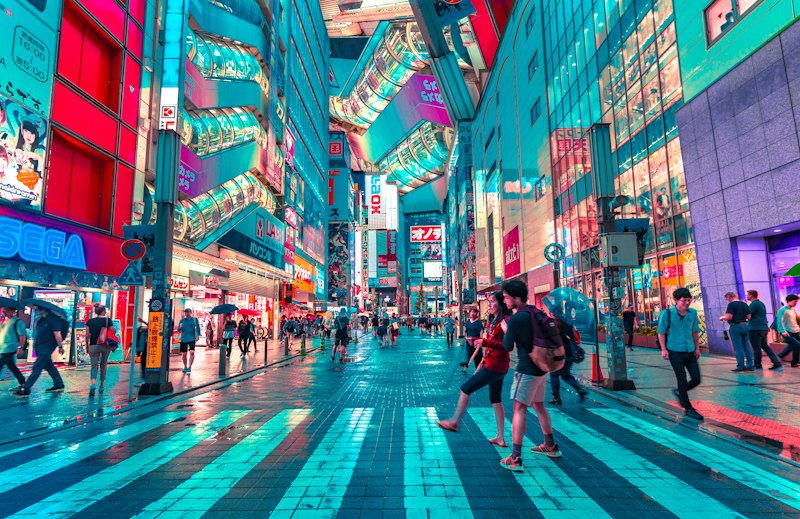
If you are planning an extensive shopping trip, base yourself near the major otaku hubs. Search best hotels in Japan on Booking.com to find accommodations in Ikebukuro or Akihabara so you don't have to haul heavy merchandise across the city on the subway.
The "Reseller Trap": Avoiding Commercial Flags
The biggest mistake foreign fans make in 2026 is buying massive quantities of identical blind-packs (e.g., 50 packs of random Nijisanji or Stray Kids trading cards) and keeping them sealed.
If a US or UK customs officer opens your bag and sees 50 sealed identical items, they will flag you as a commercial importer. Commercial importers do not get the $800 USD personal exemption—you will be taxed from dollar one, and the goods could be seized if you lack an import license.
How to avoid this: Unbox your random goods in your hotel room. Put the photocards directly into a binder or top loaders. Discard the foil wrappers. Once the items are unboxed and stored in personal binders, they are legally viewed as a personal collection, drastically reducing your risk of a commercial audit.
Where to Buy Packing Supplies in Tokyo
You need rigid protection for photocards and bubble wrap for acrylic stands (Aksta).
What's Overrated: Don Quijote (MEGA Donki in Shibuya). Tourists flock here for packing supplies, but their stationery section is overpriced and chaotic.
The Local Solution: Go to a large 100-yen shop like the Daiso inside Ikebukuro Sunshine City (Alpa 4th Floor). You can buy packs of B8-sized hard plastic cases (硬質ケース) for exactly ¥110 ($0.75 USD). Alternatively, if you need bulk supplies sent straight to your hotel before you fly out, skip the physical stores entirely. Use Amazon Japan: https://www.amazon.co.jp/s?k=硬質ケース. A 50-pack of high-quality top loaders costs about ¥600 ($4 USD) and arrives next-day, saving you precious vacation hours.
Packing Strategies for Delicate Merch
 In stock now on Rakuten¥2,023
You must pack strategically to survive baggage handlers and security checks.
| Merchandise Type | Packing Risk Level | Carry-on or Checked Baggage? | Notes |
|---|---|---|---|
| Photocard Binders | High (Theft/Warping) | Carry-on ONLY | Pressure in checked bags can bend rings, denting the cards. |
| Lightsticks (Penlights) | Medium (Battery rules) | Carry-on ONLY (if Lithium) | Must remove standard AAA batteries to prevent turning on. |
| Acrylic Stands (Aksta) | High (Snapping) | Checked (in hard case) | Sandwich between two pieces of cardboard, wrap in clothes. |
| Uchiwa (Jumbo Fans) | Medium (Bending) | Checked (flat at bottom) | Place perfectly flat against the bottom spine of your suitcase. |
Crucial 2026 Rule: Any lightstick with a built-in rechargeable lithium-ion battery MUST be in your carry-on. Aviation security will flag and remove them from checked bags due to fire risks.
Frequently Asked Questions
Q: Do customs officers check the secondary market value of my rare photocards?
No, customs authorities are primarily concerned with the actual price you paid to acquire the goods in Japan. If you bought a rare K-pop photocard at K-BOOKS K-POP Pavilion in Higashi-Ikebukuro for ¥15,000 (~$100 USD), that is the value you declare, even if it sells for $300 on eBay back home. The golden rule is to keep absolutely every receipt from stores like Surugaya, Mandarake, and Book-Off. If an officer decides to question the value of your binder, handing them a neat stack of itemized Japanese receipts immediately proves your declared value and ends the investigation on the spot.
Q: Can I ship my idol goods home via Japan Post to avoid airport customs?
Many tourists think mailing boxes home circumvents customs. This is false and often a massive financial mistake in 2026. While Japan Post is reliable, anything you mail home must have a CN22/CN23 customs declaration form attached. When the box arrives in your home country, the postal customs branch will inspect it. If the declared value is over your country's mail import threshold (which is strictly enforced for mailed packages), they will hold the box until you pay the import tax online, plus a hefty "postal handling fee" (often $10-$20 USD just for processing the tax). Keep high-value items in your luggage to utilize your generous personal traveler exemption limit.
Q: How do I claim Japan Tax-Free on second-hand idol goods?
Yes, you can absolutely get a tax refund on second-hand goods! Major second-hand retailers like Mandarake (e.g., the massive Shibuya branch in the BEAM building, B2F) and Surugaya offer tax-free shopping for tourists. You must spend over ¥5,000 (before tax) in a single transaction on the same day. Present your physical passport (with the entry stamp or trusted traveler sticker) to the cashier. They will deduct the 10% consumption tax directly at the register. Keep in mind that smaller independent stores in Nakano Broadway might not have the tax-free registry system, so always look for the red and white "Tax-Free Shop" sticker in the window before assuming you'll get a discount.
Q: What happens if I go over my $800 US customs allowance with idol merch?
If your total haul (including non-idol souvenirs, clothes, and snacks) exceeds the $800 USD personal exemption, you must declare it on your customs form or via the CBP Mobile Passport Control app. Going over is not illegal; you just have to pay a small tax. In the US, the typical duty rate on the next $1,000 worth of general merchandise is a flat 3%. So, if you bought $1,000 USD worth of goods, you are $200 over the limit. You will simply pay 3% of that $200, which is just $6. Paying $6 legally is vastly preferable to lying, getting caught, having your merch confiscated, and losing your Global Entry status forever.
Q: Is it safe to put my photocard binder in my checked luggage?
While it is technically allowed, putting a heavy, high-value photocard binder in checked luggage is highly discouraged due to both theft and physical damage risks. Airplane cargo holds undergo pressure and temperature shifts. More importantly, suitcases are often thrown by baggage handlers. The impact can cause the metal rings of standard binders to warp, which then presses down and dents the photocards closest to the rings. Furthermore, if TSA or local security opens your bag for a random inspection, binders can be haphazardly shoved back in, damaging the edges. Always keep your primary collection in your personal backpack under the seat in front of you.
Bottom Line
Bringing a massive haul of idol merchandise back from Japan is incredibly rewarding, provided you understand the basic tax math. Unbox your random goods to avoid looking like a reseller, carry your high-value photocards in your carry-on, and keep all your second-hand store receipts to prove your purchase value.
This guide is for the serious collector looking to stay within legal bounds while maximizing their purchasing power. It is not for commercial proxy buyers or bulk resellers, who are subject to entirely different corporate import tariffs and licensing laws. Buy smart, pack securely, and enjoy the unparalleled thrill of Japanese otaku shopping in 2026.
📝 この記事について
監修・運営: Futuristic Imagination LLC
専門分野: 日本旅行・インバウンド
AI技術と専門家の知見を組み合わせ、信頼性の高い情報をお届けします。