[Disclosure] This article contains affiliate links. We may earn a commission at no extra cost to you.
Japan's reputation as one of the safest countries in the world often precedes it, leading many English-speaking travelers to assume that walking alone at night, even in bustling city centers, is completely risk-free. While the overall crime rate remains remarkably low, and violent crime against tourists is exceedingly rare, this guide aims to peel back the layers of that perception. For the seasoned traveler who's already devoured generic "Japan is safe" articles, we're diving deeper into the specific nuances of nighttime safety in Japan's major cities in 2026, offering an honest, city-by-city breakdown of what to expect, where to be cautious, and how to navigate the few genuine pitfalls. You'll learn not just if it's safe, but how it's safe, and critically, where a "safe" reputation might mask minor inconveniences or cultural misunderstandings.
What You'll Get From This Guide
- Honest, City-Specific Safety Assessments: Beyond broad generalizations, we break down night safety for Tokyo, Osaka, Kyoto, and more.
- Real Risks & Annoyances: Understand the actual low-level issues you might encounter, like aggressive touts or drunk salarymen, not just tourist myths.
- Local Tips & Misconception Debunking: Learn what guidebooks often get wrong and how locals truly navigate their cities after dark.
- 2026 Data on Transport & Costs: Get up-to-date pricing for late-night taxis and alternative transport options, in both JPY and USD.
- Practical Advice for Solo Travelers: Specific strategies to enhance your personal safety and comfort, especially for solo female travelers.
The General Truth: Japan's Reputation vs. Reality
Japan's stellar safety record is not a myth. Low crime rates, ubiquitous koban (police boxes), and a strong sense of community responsibility contribute to an environment where you genuinely feel safe. This trust extends to leaving personal belongings unattended (though not advised), or seeing children commute independently. However, "safe" doesn't mean "zero incidents," and tourists, especially solo travelers at night, can sometimes encounter situations that, while not dangerous, can be uncomfortable or confusing.
Why Japan Feels So Safe (And Mostly Is)
Japan consistently ranks among the safest nations globally. The violent crime rate is minuscule, and street robberies are almost unheard of. Police presence, even if subtle, is effective, and the population's general respect for rules and order is palpable. For instance, the chance of being physically harmed while walking alone at 2 AM in most residential areas is virtually non-existent. The biggest "threat" is often getting lost due to complex street layouts or being unable to find an open convenience store.
The Nuances: What Tourists Miss
While major crime is rare, there are specific low-level issues that tourists, especially those venturing into entertainment districts at night, might encounter. These typically involve:
- Aggressive Touts: Particularly in areas like Kabukicho (Shinjuku) or Dotonbori (Osaka), touts might try to usher you into "hostess clubs" or "catch bars." These aren't inherently dangerous, but they can be a scam with exorbitant hidden fees (e.g., ¥5,000 / ~$33 USD cover charge for a single drink, then escalating charges).
- Drunk Salarymen: While rarely violent, intoxicated businessmen can sometimes be loud, stumble, or even collapse. They are generally harmless but can occasionally invade personal space or be disruptive.
- Lack of English Speakers: Outside of major tourist hubs, communicating a problem can be difficult, making minor issues feel more daunting.
Tokyo After Dark: A District-by-District Breakdown
Tokyo is a city that truly comes alive at night. Most areas are incredibly safe, but specific entertainment districts require a little more awareness.
Shinjuku & Kabukicho: Navigating the Red-Light District Safely
Kabukicho, Tokyo's infamous red-light district adjacent to Shinjuku Station, is bustling and brightly lit until the early hours. It's largely safe for walking, even alone, due to the sheer number of people and police presence. However, this is where aggressive touts are most common. They typically target foreign men, trying to lure them into bars. Politely but firmly decline ("Kekko desu," or "No thank you") and keep walking. Do not engage. Female travelers are generally left alone by these touts, but it's wise to remain aware of your surroundings. Shinjuku Golden Gai and Omoide Yokocho (Piss Alley), though small and packed, are popular and generally safe bar districts, frequented by locals and tourists alike.
Shibuya & Roppongi: Nightlife Buzz vs. Late-Night Concerns
Shibuya Crossing and the surrounding area are safe and energetic well past midnight. The main concerns here are crowds, especially after 11 PM when the last trains are running, and potential pickpocketing in very dense areas (though still rare). Roppongi is known for its international bar and club scene. While it's generally safe, particularly around Roppongi Hills and Tokyo Midtown, some smaller clubs and bars can occasionally have issues with drink spiking or inflated bills, though this is less common than it used to be. Stick to larger, reputable establishments if you're concerned.
Ginza & Marunouchi: Upscale Calm
These areas are primarily business and high-end shopping districts. After shops close, they become very quiet and peaceful. Walking alone here at night is exceptionally safe, with little to no concern beyond the occasional empty street making it feel a bit isolated. These areas are not nightlife hubs, so crowds thin out quickly.
Local Tip: Akabane's Hidden Izakayas – Safe but Different
Instead of the hyper-touristy Golden Gai, consider Akabane in northern Tokyo. It's a classic shitamachi (old Tokyo) area with several atmospheric yokocho (alleyways) like Akabane Ichibangai, packed with tiny, authentic izakayas. It's safe, lively with locals, and you'll experience a genuine slice of Japanese night culture without the touts or tourist traps. Expect to pay around ¥2,000-3,500 / ~$13-23 USD for food and a few drinks at one of these establishments. It's a direct train ride on the JR Saikyo Line from Shinjuku, taking about 15 minutes.
Osaka's Lively Nights: Dotonbori, Namba, and Shinsekai
Osaka has a more boisterous and approachable vibe than Tokyo, and its nightlife reflects this.
Dotonbori & Namba: High Energy, High Visibility
Dotonbori, famous for its neon lights and street food, is incredibly vibrant until late. The sheer number of people makes it very safe for walking alone. Namba, the surrounding district, is similarly lively. Like Shinjuku, aggressive touts can appear, particularly targeting solo male tourists for "massage" or "bar" scams. A polite but firm "No, thank you" (Iie, kekko desu) is usually sufficient. Keep an eye on your belongings in crowded areas, though actual theft is rare.
Shinsekai: Nostalgia with a Caveat
Shinsekai, with its retro charm and Tsutenkaku Tower, has a different atmosphere. While iconic, after shops and restaurants close around 9-10 PM, parts of the area can become quite deserted. It's not inherently dangerous, but the quiet, older vibe might feel less comfortable for some solo travelers than the perpetual motion of Dotonbori. Petty crime rates here are marginally higher than in other parts of Osaka, though still low by international standards. It's perfectly fine to visit during the evening, but if you're alone late at night, perhaps opt for a taxi back to your accommodation instead of walking long distances.
Kyoto's Serene Evenings: Gion, Pontocho, and Beyond
Kyoto's nights are generally quieter and more refined, focusing on traditional entertainment and dining.
Gion & Pontocho: Atmospheric but Quiet
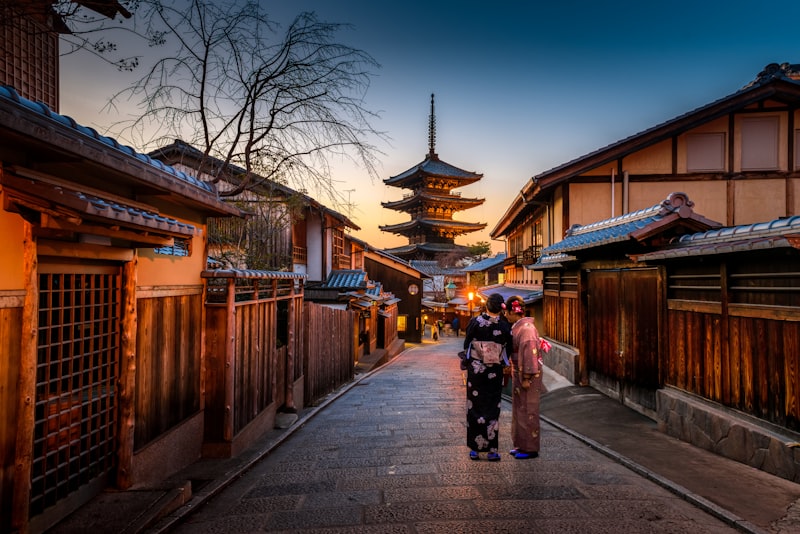
Gion, Kyoto's geisha district, and Pontocho Alley, known for its traditional restaurants and bars, are enchanting places to walk at night. They are exceptionally safe, with the main "concern" being the narrow, sometimes dimly lit alleyways. The atmosphere is serene and respectful. The biggest thing tourists get wrong here is trying to photograph geiko/maiko without permission or chasing them, which is incredibly disrespectful and can lead to fines. Enjoy the ambiance, but respect the privacy of residents and performers.
Arashiyama at Night: A Different Kind of Safety
Arashiyama Bamboo Grove is beautiful during the day, but at night, it becomes very dark and completely devoid of people. While there's no inherent danger of crime, getting lost in the unlit paths or stumbling on uneven ground is a real possibility. Public transport options also become scarce. Visiting the Bamboo Grove after dark is generally not recommended for solo travelers, simply for practical reasons of visibility and access.
Regional Cities: Fukuoka, Sapporo, Hiroshima Considerations
Fukuoka's Nakasu: Lively Entertainment District
Fukuoka is known for its friendly atmosphere and delicious food. Nakasu is its primary entertainment district, famous for its yatai (food stalls) along the Naka River. It's a lively and generally safe area. Like other major city entertainment zones, you might encounter touts for hostess clubs, but they are typically less aggressive than in Tokyo or Osaka. Enjoying the yatai is a quintessential Fukuoka experience, and they operate late into the night.
General Rule for Smaller Cities: Quieter but Quicker to Close
In regional cities like Sapporo, Hiroshima, or Kanazawa, the nightlife is typically concentrated around the main station or a specific downtown area. These areas are very safe, but they also tend to quiet down significantly earlier than Tokyo or Osaka, often by midnight or 1 AM. Public transport also stops earlier. This means that if you're out late, you'll find fewer people, and taxis become the only viable option. The lack of foot traffic doesn't imply danger; it simply means the city has gone to sleep.
Common Scams and Annoyances: What to Watch For
While serious crime is rare, awareness of these minor issues can prevent discomfort. This is where the tourist brochure version of "Japan is perfectly safe" needs a dose of reality.
Izakaya Touts (Catch Bar/Kyabakura)
This is the most common annoyance, particularly for solo foreign men. Touts will approach you near entertainment districts, speaking in English, promising "free drinks" or "girls" at a "new bar." These are almost always scams leading to vastly inflated bills (e.g., a "¥5,000 entrance fee + ¥2,000 per drink" you never ordered, totaling ¥20,000 / ~$130 USD for 30 minutes). Avoid eye contact, say "no thank you" firmly, and walk away. If you find yourself in such a situation, demand an itemized bill, refuse to pay outrageous amounts, and threaten to call the police (keisatsu). This often resolves the issue as they don't want police involvement.
Drunk Salarymen & Personal Space
Japan has a drinking culture, and public drunkenness, while not violent, is tolerated. You might encounter visibly intoxicated salarymen on trains or streets late at night. They are almost never a threat, but they might stumble into you, snore loudly, or simply emit a strong alcohol odor. A local tip here: if someone is blocking your path or seems unstable, give them a wide berth. Most are just trying to get home and pose no threat.
The Myth of "Zero Crime"
One of the biggest misconceptions about Japan is that there is zero crime. While severe crime is rare, petty theft, such as bicycle theft or minor shoplifting, does occur. For tourists, the biggest "crime" you might encounter is someone accidentally taking your umbrella from a shared stand or the occasional pickpocket in a very, very crowded train at rush hour. It's always wise to keep your valuables secure, even in Japan, simply as a good travel habit, rather than relying on an idealized "zero crime" expectation.