[Disclosure] This article contains affiliate links; we may earn a commission at no extra cost to you. Prices are approximate 2026 ranges — confirm in-store before buying.
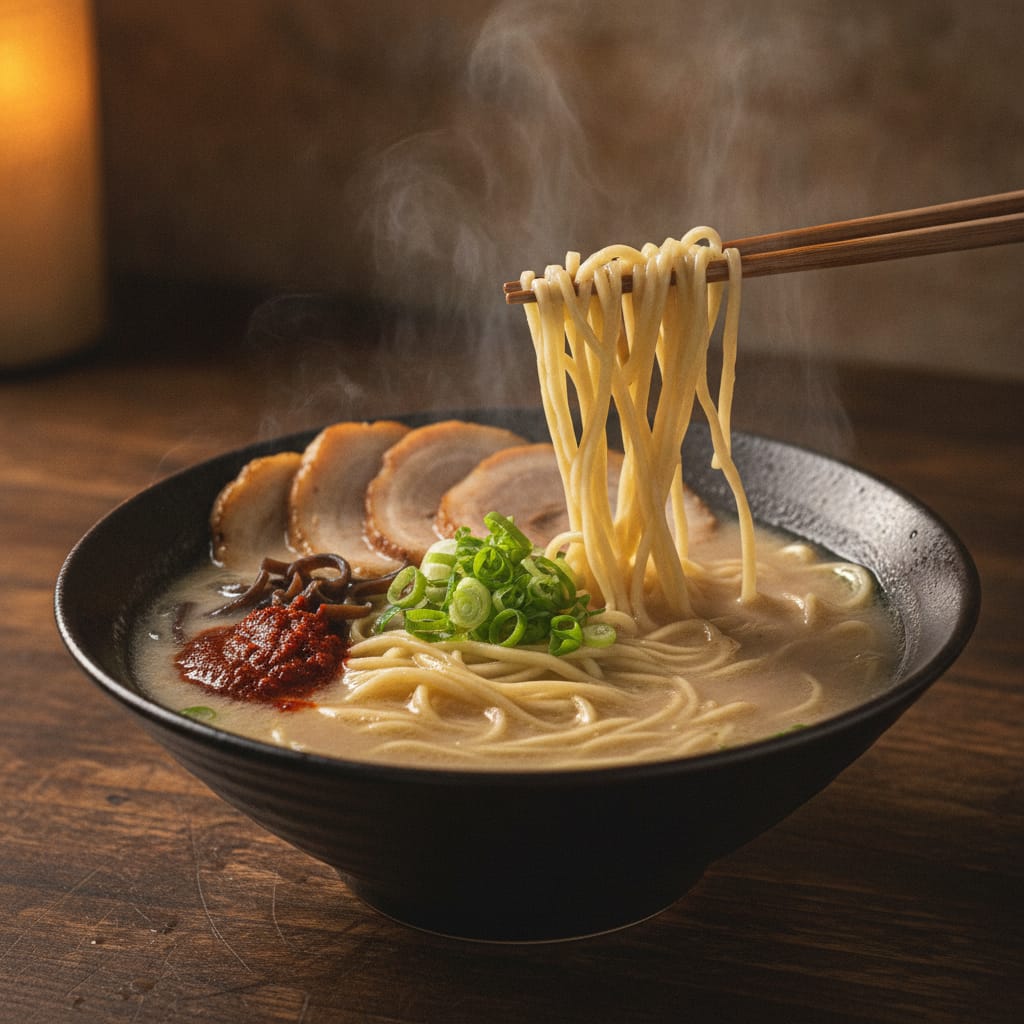
For first-time overseas visitors to Japan, grabbing a bowl at Ichiran Ramen is often right at the top of the culinary bucket list. Famous for its rich tonkotsu (pork bone) broth, signature spicy red sauce, and iconic solo dining booths, this Hakata-born ramen empire has become a must-do cultural and gastronomic experience. Whether you are craving a late-night meal after exploring the neon-lit streets of Shinjuku or simply want to try Japan’s famously efficient, zero-interaction dining, navigating your first bowl of Ichiran is an essential part of your trip.
What is Ichiran Ramen?
To understand the hype, you first have to understand the style of ramen Ichiran serves. Originating in 1960 as a food stall in Fukuoka (on the southern island of Kyushu), Ichiran specializes exclusively in tonkotsu ramen. This style is famous for its milky, cloudy broth created by boiling pork bones for hours until the collagen dissolves, resulting in an incredibly rich, creamy, and savory soup. Ichiran prides itself on a specialized filtration technique that removes the heavy "gaminess" sometimes associated with pork bone broth, making it highly accessible and universally loved by international palates.
Beyond the broth itself, Ichiran is instantly recognizable for its unique dining environment. To ensure customers focus entirely on the taste of their food, the chain pioneered the "Flavor Concentration Booth". Diners sit in partitioned, individual stalls. In front of you is a small serving window covered by a bamboo curtain. Staff members take your order and deliver your steaming bowl of ramen through this opening, meaning you never even have to see a waiter's face. It is the ultimate introverted dining experience and wonderfully low-stress for overseas visitors who might be nervous about speaking Japanese.
Step-by-Step: How to Order Like a Local
Walking into a bustling Japanese ramen shop can feel intimidating, but Ichiran has streamlined the process to a near science. The entire transaction is designed to be automated and frictionless. Here is exactly what to expect from the moment you walk through the door:
- The Vending Machine: Immediately upon entering, you will face a large ticket machine. Most modern locations have digital touchscreens with a clearly marked "English" button, while older locations have physical buttons with pictures. Insert your cash (or tap your IC card like Suica/Pasmo) first, then make your selections.
- Buy Your Tickets: Select the base "Natural Tonkotsu Ramen". From there, you can press buttons for any extras you want right away, such as a soft-boiled egg, extra chashu (sliced pork), a draft beer, or matcha pudding. The machine will spit out small paper tickets for each item. Grab your tickets and your change.
- The Seating Chart: Move further inside to find an illuminated seating panel. A glowing light with the character "空" (vacant) means a booth is open. Walk down the narrow corridor and take your assigned seat.
- Settle In and Press the Button: Once seated in your individual booth, you will find a paper customization sheet and a pen. Fill it out, place it on top of your purchased tickets at the front of your desk, and press the electronic call button.
- The Handoff: The bamboo curtain will rise slightly, a staff member will bow (you will only see their torso and hands), collect your tickets and sheet, and close the curtain. Minutes later, the curtain rises again, your custom bowl is delivered, and the curtain is shut for you to slurp in peace.
The Customization Sheet Explained
One of the best features of Ichiran is that you are the architect of your own bowl. The customization sheet is always available in English—if you sit down and only see Japanese, just ask the staff behind the curtain for an "English menu, please." Here is a breakdown of your choices:
- Flavor Strength (Dashi): This dictates the saltiness and umami punch of the underlying seasoning. Beginners should circle Medium.
- Richness (Oil): This dictates the amount of liquid pork fat in the soup. Medium is standard, but if you love a heavy, coat-your-mouth broth, go for Rich.
- Garlic: Ranging from none to one full clove. Tonkotsu and garlic are a match made in heaven; half a clove or a full clove is highly recommended.
- Green Onion (Scallion): You can choose without, thin white leeks, or thick green scallions. (Pro tip: You can actually circle both if you draw a circle perfectly straddling the line between them!)
- Chashu (Sliced Pork): Always circle "With" unless you strictly do not want meat (though remember, the broth is still heavily pork-based).
- Original Spicy Red Sauce: This is Ichiran’s secret recipe, blending chili peppers with 30 different spices. Half or Regular provides a gentle, flavorful heat. Level 2 through 10 will progressively test your spice tolerance.
- Noodle Texture: Hakata ramen noodles are uniquely thin and straight. Because they sit in hot soup, they soften quickly. Locals almost exclusively order them Firm or Extra Firm so they maintain a pleasant chew all the way to the bottom of the bowl.
Kaedama: The Hakata Noodle Refill
Because Hakata-style noodles are so thin, serving a massive portion right away would result in them becoming soggy before you finish. The traditional solution is Kaedama, or a noodle refill.
If you are hungry, you can buy a Kaedama ticket at the vending machine when you arrive. However, you can also order it directly from your booth. Look at the paper wrappers on your chopsticks—they double as an extra order form. Simply circle Kaedama, put the exact cash amount on top of the wrapper, and press the call button.
Crucial Tip: You need soup for your new noodles, so make sure you leave at least half of your broth in the bowl!
When you order a Kaedama via a pre-bought ticket, the staff gives you a small metal rectangular tray. When you are about halfway done with your first serving of noodles, place this metal tray onto the glowing electronic sensor at the front of your booth. This will trigger a quirky, chiming melody throughout the restaurant, alerting the kitchen to boil your fresh noodles. They will be handed to you on a small plate for you to dump directly into your leftover hot soup.
Famous Locations to Add to Your Itinerary
With over 80 locations across Japan, you are rarely far from an Ichiran, especially in major cities. However, some branches are more famous (and crowded) than others. Always check the official Ichiran website for the exact addresses and up-to-date operating hours before traveling, as they can occasionally change due to building maintenance.
- Shinjuku (Kabukicho), Tokyo: Located in the heart of Tokyo’s most famous nightlife district, this branch is known for staying open 24 hours a day. It is incredibly popular for late-night post-drinks dining, meaning you will often see lines wrapping down the stairs even at 3:00 AM.
- Shibuya, Tokyo: Just a short walk from the famous Shibuya Crossing, this is another heavily trafficked branch. It features long operating hours, often running 24 hours, but expect a queue during prime lunch and dinner rushes.
- Asakusa, Tokyo: Situated near Senso-ji Temple, this location tends to operate on more standard daytime and evening hours (for example, 9:30 AM to 10:00 PM, though always verify). It’s an excellent spot to refuel after temple hopping.
- Osaka Dotonbori: The Dotonbori area actually boasts multiple Ichiran locations right next to the canal. The Main Building features a massive, impossible-to-miss sign. The lines form beautifully along the riverside walkway. If the main building is packed, look for the nearby Dotonbori Annex.
- No Pork Branch (Namba, Osaka): If you have dietary restrictions, it is worth noting that Ichiran operates a specialized "100% Tonkotsu-free" branch in Osaka using chicken broth and beef toppings instead of pork.
2026 Estimated Price Guide
While ramen is generally an affordable fast-food option in Japan, Ichiran’s prices have steadily crept up over the years. Please note that prices are approximate ranges based on 2025/2026 data and will vary slightly depending on the specific location and the time of day (many 24-hour branches implement late-night surcharges after hours). Always confirm the exact prices at the vending machine before buying.
| Item / Customization | Approximate Price Range (JPY) |
|---|---|
| Classic Tonkotsu Ramen | 980 ¥ – 1,180 ¥ |
| Kaedama (Full Noodle Refill) | 210 ¥ – 230 ¥ |
| Half Kaedama (Half Refill) | 150 ¥ – 160 ¥ |
| Soft-Boiled Salted Egg | 140 ¥ – 160 ¥ |
| Extra Chashu (4 slices) | 260 ¥ – 290 ¥ |
| Oscaran Vinegar (Acidity) | 140 ¥ – 160 ¥ |
| Matcha Almond Pudding | 390 ¥ – 420 ¥ |
| Draft Beer | 580 ¥ – 650 ¥ |
| Late-Night Surcharge | ~10% added at select branches |
(Note: Expect to spend roughly 1,500 ¥ to 2,000 ¥ per person if you plan to order extra toppings, a noodle refill, and a drink.)
The Official Ichiran App: Worth Downloading?
Ichiran runs an official smartphone app (available for iOS and Android, listed as "一蘭公式アプリ" in Japan and as a separate "Ichiran Taiwan" version in some regions) that's genuinely useful for repeat visitors. It includes a GPS-based store locator to find your nearest branch, push notifications for new limited-time menu items and campaigns, and a daily visit-point system: check in once per day at any branch and accumulate points that can later be redeemed for free coupons, such as a complimentary Kaedama noodle refill or a soft-boiled seasoned egg. For a single one-off visit it's not essential, but if you're staying in Japan for a week or more and plan to eat at Ichiran multiple times, it can shave a small amount off your total bill.
Queue Tips and Best Times to Visit
Because Ichiran has exploded in popularity on international social media, long wait times are the reality at flagship locations. It is entirely common to see waits of 40 to 80 minutes at the Shinjuku, Shibuya, and Dotonbori branches during peak meal hours (12:00 PM – 2:00 PM, and 6:00 PM – 9:00 PM).
To avoid the lines, you need to strategize. Because many locations are open 24 hours, the absolute best time to eat is for breakfast at 9:00 AM, or during the awkward mid-afternoon lull around 3:30 PM to 4:30 PM. Late night (after 11:00 PM) used to be quiet, but thanks to the tourism boom, midnight queues are now common in major nightlife hubs.
Also, do not be afraid to skip the most famous branches. While Shibuya and Shinjuku draw massive tourist crowds, taking a short train ride to a quieter neighborhood branch (like Nakano, Ikebukuro, or Kichijoji) can drastically reduce your wait time for the exact same bowl of food.
Is It Actually Worth the Hype?
Ramen enthusiasts and purists will sometimes argue that there are better, cheaper, and more artisanal independent ramen shops hidden in the alleys of Tokyo and Osaka. While that is undeniably true, debating if Ichiran is the "best" ramen in Japan misses the point of why you should go.
For a first-time overseas visitor, Ichiran is absolutely worth the hype. The broth is engineered to be a consistent, creamy umami-bomb that appeals directly to comfort-food cravings. The private booth system is a fascinating cultural experience in itself, allowing you to completely decompress and focus entirely on your meal. The lack of a language barrier makes the ordering process a breeze, providing a huge confidence boost for travelers still getting used to navigating Japan. Don't let the ramen snobs deter you—grab a ticket, customize your bowl, and enjoy the slurp.
Q. Does the Ichiran ordering machine accept credit cards?
Historically, Ichiran was strictly cash-only. However, as of 2026, most updated touchscreen machines in major tourist hubs (like Shinjuku, Shibuya, and Dotonbori) accept IC cards (Suica/Pasmo, ICOCA) and major credit cards (Visa, Mastercard). That said, always carry some Japanese Yen (specifically 1,000¥ bills and coins) just in case you visit a neighborhood branch with an older push-button machine.
Q. Is there an English menu on the ticket machine?
Yes! All modern Ichiran touchscreen machines feature a prominent "English" language button on the start screen. Older physical push-button machines feature clear photographs of the food alongside English subtitles beneath the Japanese text.
TL;DR: Quick Guide to the Ichiran Ordering Machine
If you need a direct, step-by-step summary on how to use the Ichiran vending machine right at the entrance, follow this exact sequence:
- Change the Language: Look at the digital touchscreen and tap the "English" button before doing anything else.
- Insert Payment First: Japanese ticket machines require money before making a selection. Insert your Yen bills/coins, tap your IC Card (Suica), or insert your credit card (if supported).
- Select the Base Bowl: Press the button for "Natural Tonkotsu Ramen" (this is the standard bowl).
- Choose Your Add-Ons: Tap any extras you want, such as a "Soft-Boiled Egg," "Extra Chashu," or a "Kaedama" (noodle refill).
- Collect Your Tickets: Press the checkout/change button. The machine will print small paper tickets for each item.
- Take Your Change: Do not forget to grab your change from the dispenser.
- Head to Your Booth: Take your stack of printed tickets to your assigned solo booth, fill out your paper customization sheet, and hand everything to the staff behind the bamboo curtain.
FAQ
Q. Can I go to Ichiran Ramen with a group of friends or my family?
Yes, you absolutely can! While Ichiran is famous for its solo booths, groups are seated in a row right next to each other. In many newer or renovated locations, the wooden partitions between the booths can actually be unlatched and folded back, allowing you to converse with the person sitting directly next to you. However, you will still order and be served individually.
Q. Do I need cash, or do they accept credit cards?
Japan is slowly shifting toward a cashless society, and many Ichiran vending machines in major tourist hubs now accept IC cards (like Suica or Pasmo) and major credit cards. However, older machines and smaller neighborhood branches may still be cash-only. It is highly recommended to always carry some 1,000 yen bills and 100 yen coins just to be safe. You will also need exact cash if you want to order a spontaneous refill (Kaedama) at your seat using the chopstick wrapper.
Q. Are there vegan or vegetarian ramen options available?
No. Standard Ichiran ramen broth is heavily pork-based, and even the chashu (sliced pork) is central to the operation. Even if you ask for "no chashu" on your flavor sheet, the broth itself is made from boiling animal bones. As mentioned above, there is a specialized "No Pork" branch in Namba, Osaka that uses a chicken broth, but they do not currently offer a strict vegan or vegetarian tonkotsu alternative.
Q. What if I don't speak any Japanese at all?
You will fit right in. The entire Ichiran business model was built around zero interaction. The ticket machines have an English toggle button, the seating charts are color-coded, and the paper flavor customization sheets have full English translations. If you follow the step-by-step process of putting your tickets and paper on the desk and pressing the button, you won't need to speak a single word of Japanese.
Q. How spicy is the "Original Red Sauce"?
The red sauce is heavily concentrated chili pepper and secret spices. If you circle "Regular" (1x), it offers a mild, warming kick that most people can comfortably handle. Level 2 through 5 will make you sweat and are better suited for fans of spicy food. Anything above Level 5 will aggressively overpower the delicate pork flavor of the broth. If you have zero spice tolerance, you can safely choose "None" or "Half" to enjoy the natural, unadulterated flavor of the tonkotsu soup.