[PR] This article contains affiliate links.
The phenomenon of seichi junrei—literally translated as "holy land pilgrimage"—has transformed the way international tourists experience Japan. For decades, traveling to real-world locations featured in anime and manga was a spontaneous, grassroots fan activity. Devoted fans would meticulously match background art to physical street corners in Tokyo or shrines in the Kanto region. However, if you venture beyond the neon glow of Akihabara into Western Japan—the expansive regions of Chugoku, Shikoku, Kyushu, and the islands of Okinawa—you will discover a profoundly different story.
In western Japan, anime pilgrimage isn't merely fan-driven tourism; local governments, non-profit organizations, and massive regional conglomerates have actively built, funded, and fostered it. From prefectures erecting multi-million-yen bronze statues to aid earthquake recovery, to mayors personally cosplaying to promote their towns, the intersection of pop culture and regional revitalization (chiiki shinko) is nowhere more powerful than here.
This exhaustive guide covers the most deeply authenticated, real-world anime locations across Western Japan. If you are planning an extended trip using a JR Sanyo-San'in Area Pass or a JR Kyushu Rail Pass, this ultimate itinerary will take you through historic ports, misty ravines, quiet island piers, and towns completely rebranded in honor of their 2D counterparts.
Before embarking on this massive journey, be sure to read our primer, Anime Pilgrimage in Japan: A Beginner's Guide, to understand the etiquette of visiting these living communities.
Traveling Western Japan: Logistics & Essential Tips
Western Japan covers a massive geographic footprint. Unlike traversing the dense rail networks of Tokyo, a pilgrimage through Chugoku (Hiroshima, Okayama, Tottori, Shimane, Yamaguchi), Shikoku (Ehime, Kagawa, Kochi, Tokushima), and Kyushu requires careful logistical planning.
Getting Around: For international tourists, regional JR passes are incredibly cost-effective here. The JR Sanyo-San'in Area Pass (approx. 23,000 JPY for 7 days) covers the Shinkansen from Osaka down to Fukuoka, as well as the slower local San-in lines necessary for reaching Tottori. If you are focusing entirely on the southern island, the JR Kyushu Rail Pass (All Kyushu 3-Day for approx. 20,000 JPY) is indispensable. Keep in mind that IC cards (like Suica or Pasmo) are universally accepted in major hubs like Fukuoka or Hiroshima, but rural buses in Shikoku or local trains in deep Tottori often still require paper tickets or cash. Read more: What is the Best IC Card for Tourists in Japan 2026? | Suica vs Pasmo vs ICOCA.
Cash is Still King in the Countryside: While you can tap your phone to buy coffee in Fukuoka, rural shrines and local mom-and-pop udon shops in Shikoku or Kyushu largely run on physical yen. Always carry at least 10,000 to 20,000 JPY in small bills when venturing to coastal villages. Read more: Cash vs Card in Japan 2026: How Much Cash Do You Need?.
With your logistics sorted, let us begin our journey in the epicenter of government-backed anime tourism: Kyushu.
KYUSHU: The Masters of Anime Revitalization
Kyushu, Japan’s third-largest island, is a hotbed of geothermal activity, rich culinary history, and some of the most aggressive and successful anime tourism campaigns in the world. Following devastating natural disasters in the late 2010s, multiple Kyushu prefectures turned to their native manga artists and anime studios to breathe life—and tourist revenue—back into their communities.
1. Zombie Land Saga | Saga City & Saga Prefecture
The collaboration between Zombie Land Saga and Saga Prefecture is a masterclass in official regional revitalization, recently cited in academic papers as a textbook success story. Since 2021, the prefectural government has systematically installed official anime manhole covers across all 20 of its municipalities, while the governor himself has been known to cosplay and reenact scenes for public relations. The campaign's sheer scale is staggering: a 2019 stamp rally encompassed a massive 198 locations, Karatsu operates officially branded rental bicycles, and in 2026, Saga City proudly signed a renewed promotion agreement with the anime's production committee to keep the momentum going.
The Travel Experience: If you want to experience the heart of the campaign, start at Saga Station. The tourist information center often distributes physical maps of the manhole locations. From there, you can explore the Saga Prefectural Government Office, which boasts an observation deck (free entry, open 8:30 AM to 10:00 PM) that has featured Zombie Land Saga projection mapping events. While hunting for manholes, be sure to stop for a bowl of local Saga ramen (characterized by a raw egg yolk dropped into rich tonkotsu broth, usually around 800 JPY) at a local spot like Ramen Motomura.
*Access:* The Saga Prefectural Government Office is a 20-minute walk or a 5-minute bus ride from JR Saga Station.2. Yuri!!! on Ice | Karatsu, Saga
Saga Prefecture strikes twice, this time with the fictional town of "Hasetsu," which is explicitly based on the coastal city of Karatsu. In 2017, the official "Saga on Ice" tourism campaign drew over 20,000 documented visitors from 27 different countries over just two months, heavily driven by a printed pilgrimage guide and local restaurant tie-ins. The location is permanently enshrined on the Anime Tourism Association's official "88 Locations" list, and official commercial tours (such as Tasci Tours) were formally sold to cater to the massive international influx.
The Travel Experience: Karatsu is a gorgeous coastal castle town. The defining pilgrimage spot is JR Karatsu Station, where fans immediately recognize the station façade and the local architecture. You can also visit Karatsu Castle (admission 500 JPY, open 9:00 AM to 5:00 PM), whose sweeping coastal views feature heavily in the anime's scenic transitional shots. While in Karatsu, dining on local squid (yobuko ika) is a must. Many local seafood restaurants around the station offer fresh, translucent squid sashimi sets for roughly 2,500 to 3,500 JPY.
*Access:* Karatsu is easily reached via the JR Chikuhi Line, which connects directly to the Fukuoka City Subway. It takes about 1 hour and 20 minutes from Hakata Station.3. One Piece (Kumamoto Revival Project) | Kumamoto Prefecture
Following the devastating 2016 Kumamoto earthquakes, One Piece creator and Kumamoto native Eiichiro Oda donated an astonishing 800 million yen to his home prefecture's recovery efforts. In gratitude, the prefectural government launched an official revival project, erecting a magnificent bronze statue of Luffy outside the prefectural government building in 2018, followed by statues of the other nine Straw Hat crew members spread across nine earthquake-hit municipalities. This dedicated pilgrimage route is directly credited with boosting regional tourism revenue, culminating in a massive 2026 anniversary exhibition at the Kumamoto Prefectural Museum of Art that displayed the original statue prototypes.
The Travel Experience: Tracking down all ten statues requires a rental car and a couple of days, as they are spread far across the prefecture. However, the easiest starting point is the Luffy statue located right on the Kumamoto Prefectural Government Office promenade. The promenade is lined with ginkgo trees that turn brilliant gold in late November. After taking your photos (completely free and accessible 24/7), head into downtown Kumamoto to slurp down a bowl of Kumamoto Ramen—noted for its roasted garlic chips and dark mayu (garlic oil)—at the legendary Kokutei (approx. 950 JPY per bowl).
*Access:* Take a tram from Kumamoto Station to the Suizenji Park area, then walk about 15 minutes to the Prefectural Office.4. Natsume's Book of Friends (Natsume Yuujinchou) | Hitoyoshi & Kuma Area, Kumamoto
The serene, yokai-filled landscapes of Natsume's Book of Friends draw heavy visual inspiration from the Hitoyoshi and Kuma areas of Kumamoto, a connection reinforced by the production team's early scouting visits (Hitoyoshi Station reportedly served as the exact model for a station in Season 2, Episode 8). The local tourism board actively embraces this: the JR Hitoyoshi tourist information center runs an official-style, app-based stamp rally, and in 2026, the regional Kyushu Sanko Group heavily tied the anime into their Kumamoto Destination Campaign to aid the area's recovery following severe flooding in recent years.
The Travel Experience: Hitoyoshi is a historic onsen town tucked into the southern mountains of Kumamoto. While the JR Hisatsu Line suffered severe flood damage and is undergoing long-term repairs, highway buses from Kumamoto City to Hitoyoshi run regularly and take about 90 minutes (approx. 2,000 JPY one way). Stop by the Hitoyoshi Railway Museum MOZOCA Station 868 near the main station to rent a bicycle (around 500 JPY for a few hours) and ride through the misty, atmospheric streets that inspired the series. Hitoyoshi is famous for its sweet soy sauce and unagi (eel); a premium unagi lunch here will run about 3,500 to 4,500 JPY at legendary spots like Uemura Unagiya.
5. Hotarubi no Mori e | Takamori, Kumamoto
The quiet, moss-draped melancholy of the 2011 film Hotarubi no Mori e finds its real-world mirror in the Kamishikimi Kumanoimasu Shrine, located in Takamori. Multiple travel authorities, including Lonely Planet's official guide, identify this remote hilltop shrine as the visual model for the film's setting. The shrine's incredibly atmospheric approach—a seemingly endless flight of stone steps flanked by nearly 100 moss-covered stone lanterns beneath a dense canopy of towering cedar trees—perfectly matches the enchanting, spirit-filled forest of the anime.
The Travel Experience: This is one of the most visually breathtaking locations in Kyushu, anime connection or not. The shrine is free to enter and open year-round, though it gets very slippery during summer rains. Because it is highly remote, renting a car in Kumamoto City or Aso is highly recommended. If you rely on public transit, take the scenic Minamiaso Railway to Takamori Station, then take a local community bus or a 10-minute taxi ride. After your hike up the shrine steps, warm up at one of the nearby dengaku restaurants, where local root vegetables and tofu are slathered in miso and grilled around an open sunken hearth (a set meal costs around 2,000 JPY).
*Access:* About a 10-minute taxi ride (approx. 1,500 JPY) from Takamori Station on the Minamiaso Railway.6. Attack on Titan | Hita, Oita
The towering, claustrophobic walls of Attack on Titan were heavily inspired by the mountainous basin landscape of Hita City, the hometown of creator Hajime Isayama. In 2019, to honor the global phenomenon, Isayama himself cut the ribbon on crowdfunded bronze statues of Eren, Mikasa, and Armin, strategically placed at the base of the massive Oyama Dam to recreate the terrifying scale of the Colossal Titan peering over the wall. The city has fully leaned into the franchise: a stoic statue of Captain Levi stands proudly outside JR Hita Station, and an official "Attack on Titan in HITA" museum displays original drawings alongside an AR app that superimposes a Titan onto the real-world dam.
The Travel Experience: Hita is a lovely river town often called the "Little Kyoto of Kyushu." The Attack on Titan in HITA Museum (admission is free, open 9:00 AM to 5:00 PM, closed select weekdays) is a treasure trove of production sketches and childhood artwork by Isayama. To get to Oyama Dam to see the trio statues, you will need to take a taxi from Hita Station (about a 20-minute ride, costing around 3,000 JPY each way) as public buses are extremely sparse. While in downtown Hita, try Hita Yakisoba, characterized by its intensely crispy, pan-fried noodles mixed with bean sprouts, which costs around 850 JPY at beloved local diners like Sofuren.
*Access:* A 20-minute taxi ride south from JR Hita Station.7. Princess Mononoke | Yakushima, Kagoshima
Japan's official national tourism board states definitively that the ancient, primeval cedar forests of the Shiratani Unsuikyo ravine on Yakushima Island were used as direct visual inspiration by Kazuo Oga, the lead background artist for Studio Ghibli’s Princess Mononoke. The incredibly dense, vibrant green moss covering the granite rocks and twisted roots in this specific ravine is instantly recognizable as the realm of the Kodama (tree spirits) and the Shishigami (Forest Spirit), a fact widely echoed by international travel press and deeply cherished by visiting fans.
The Travel Experience: Yakushima is a wild, subtropical island off the southern coast of Kyushu. You can reach it via a high-speed hydrofoil ferry from Kagoshima Port (the "Toppy," taking about 2 to 3 hours and costing roughly 12,000 JPY round trip). Shiratani Unsuikyo is a protected nature park. The entrance fee is 500 JPY (used for forest maintenance). To reach the specific "Moss Covered Forest" (Koke-musu Mori), you must hike for about 2 hours along uneven, rocky, and wet trails. Sturdy hiking boots and rain gear are absolutely mandatory—Yakushima famously "rains 35 days a month." There are no restaurants in the deep forest, so you must order a hiking bento box (around 800 JPY) from your hotel or a local shop the night before to carry in with you.
8. Barakamon | Fukue Island, Goto Islands, Nagasaki
(Caveat: The real-world connections here are primarily fan-inferred and based on local geography rather than a massive organized government campaign, so treat this as a moderately verified cultural pilgrimage). The heartwarming calligraphy anime Barakamon is directly based on the real-world home island of author Satsuki Yoshino: Fukue Island in the remote Goto archipelago. Fans of the cult-favorite series frequently travel here to spot real-world visual references, such as the Goto-Fukue Regional Airport, and the local tourism department even received a special on-screen production credit during the anime's run. A 2023 live-action drama adaptation further cemented the connection by leaning heavily into filming on the actual island.
The Travel Experience: The Goto Islands offer a stunningly remote, oceanic escape with pristine white-sand beaches and historic hidden Christian churches. You can fly into Goto-Fukue Airport via small propeller planes from Fukuoka or Nagasaki, or take a Jetfoil ferry from Nagasaki Port (about 90 minutes, approx. 9,000 JPY one way). The island's culinary pride is Goto Udon, a unique thin noodle stretched with local camellia oil. You eat it by fishing the noodles out of a boiling iron pot (called jigoku-daki, or hell-boiling) and dipping them into raw egg and flying-fish broth. Expect to pay about 1,000 JPY for a generous set. You will absolutely need to rent a car to explore Fukue properly.
CHUGOKU: Historic Ports, Rural Coasts, and Yokai Streets
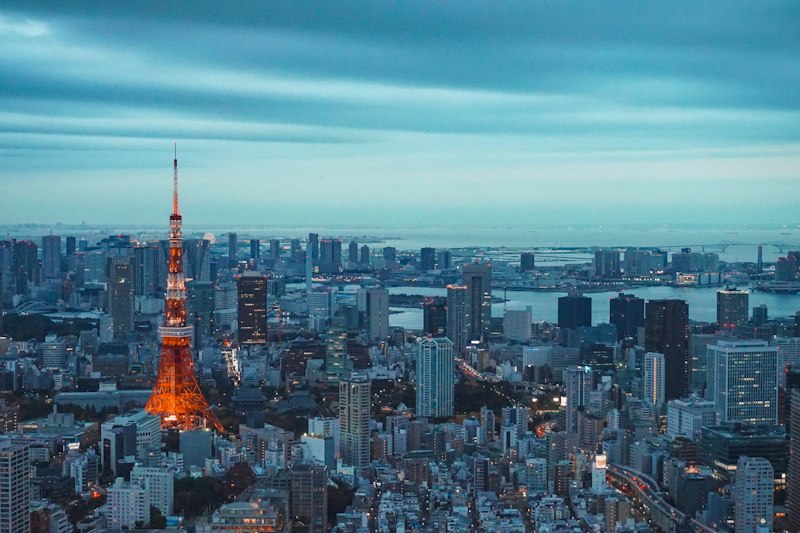
The Chugoku region encompasses the westernmost tip of Japan’s main island, Honshu. It is a region of contrasts, featuring the somber history and naval might of Hiroshima alongside the sparsely populated, deeply mythological coasts of Tottori and Shimane. Here, anime tourism has seamlessly integrated into urban planning, resulting in entirely rebranded towns and globally recognized civic art projects.
9. Detective Conan | Hokuei, Tottori
The town of Hokuei is a mature, long-running marvel of municipal tourism branding, famously known simply as "Conan Town." The entire infrastructure is dedicated to Detective Conan (Case Closed), honoring the birthplace of original author Gosho Aoyama. The local JR Yura Station was officially renamed "Conan Station," and the JR San-in Line operates a vividly wrapped Conan-liveried train five times daily. From the station, fans walk a 1.4-kilometer "Conan Street" lined with dozens of bronze statues and monuments, culminating at the Gosho Aoyama Manga Factory.
The Travel Experience: This is one of the most accessible and tourist-friendly pilgrimages in Japan. The Gosho Aoyama Manga Factory (admission 700 JPY, open 9:30 AM to 5:30 PM) offers interactive exhibits, original manga drafts, and exclusive merchandise. The town also features the Conan's House Beika Shopping Street, a small complex where you can buy themed souvenirs, sip coffee at a Poirot-themed cafe, and ring the doorbell at a replica of Shinichi Kudo’s house. Hokuei is famous for its watermelons and Chinese yams (nagaimo), so look out for local agricultural products in the nearby Michi-no-Eki (roadside stations).
*Access:* Take the JR San-in Main Line from Tottori Station or Yonago Station to Yura (Conan) Station.10. GeGeGe no Kitaro | Sakaiminato, Tottori
Sakaiminato is the subject of genuine academic study as a model of urban revival via pop culture, serving as a direct analog to traditional religious pilgrimage patterns. The city is the birthplace of Shigeru Mizuki, creator of the legendary yokai series GeGeGe no Kitaro. Today, an 800-meter stretch known as Mizuki Shigeru Road is lined with 177 bronze statues of his supernatural characters. Recognized by Japan's Ministry of Land, Infrastructure, Transport and Tourism as a masterpiece of public-art urban revival, the street's creation caused local visitor numbers to skyrocket from roughly 21,000 a year to nearly 400,000 by 1997, maintaining massive domestic popularity ever since.
The Travel Experience: Sakaiminato is an incredible place to spend a half-day. Arrive at Sakaiminato Station (the terminus of the JR Sakai Line, which features Yokai-painted trains departing from Yonago Station). The Mizuki Shigeru Memorial Hall at the end of the road (admission 700 JPY, open 9:30 AM to 5:00 PM) offers a profound look into the author's life, his harrowing experiences in WWII, and his lifelong fascination with spirits. Because Sakaiminato is a major commercial fishing port, the seafood here is incredibly cheap and fresh. A massive seafood bowl (kaisendon) loaded with local crab and yellowtail at a restaurant near the port will only set you back about 1,500 to 2,500 JPY.
11. Free! Iwatobi Swim Club | Iwami, Tottori
The coastal town of Iwami has been an active, documented pilgrimage site since the first season of Free! aired in 2013, drawing a highly dedicated international fanbase. Over the years, the town has hosted various official cross-promotional campaigns, including a highly publicized sightseeing map and stamp rally tied to the "Take Your Marks" film that ran from October to March of that year. While it operates more on time-limited campaigns rather than massive permanent installations, the town itself is incredibly welcoming to fans who come to photograph the real-world harbor, shrines, and breakwaters that perfectly match the Iwatobi setting.
The Travel Experience: Iwami is a quiet, stunningly scenic fishing village on the Uradome Coast. It is reachable via the JR San-in Main Line (get off at Iwami Station, about a 25-minute local train ride from Tottori Station). Be sure to stop by the local tourist information center adjacent to the station; they have historically maintained guestbooks for fans to sign and often display Free! memorabilia left by the community. You can rent a bicycle here (approx. 500 JPY) to ride along the dramatic, rocky coastlines. If visiting in the summer, the crystal-clear waters of Uradome Beach look exactly as inviting as they do in the anime.
12. In This Corner of the World | Kure, Hiroshima
The critically acclaimed historical film In This Corner of the World (Kono Sekai no Katasumi ni) meticulously recreated the wartime naval port of Kure, and the modern city has wholly embraced its role in preserving that history. The Hiroshima Prefecture government tourism site publishes an official "location tour" guide, and Kure City's official English site features a dedicated pilgrimage page. The most striking commitment is a full-scale physical replica of the protagonist Suzu’s house, which was constructed and donated by the original manga author, Fumiyo Kono, serving as a tangible bridge between the artwork and the city's wartime legacy.
The Travel Experience: Kure is deeply steeped in naval history. Beyond tracking down the terraced hillside streets depicted in the film, tourists flock to Kure to eat "Kaigun Curry" (Naval Curry). Every ship in the Japanese Maritime Self-Defense Force has its own unique curry recipe, and local Kure restaurants serve these official recipes to the public (typically ranging from 1,000 to 1,500 JPY). Kure is roughly a 35-minute ride on the rapid JR Kure Line from Hiroshima Station.
13. Space Battleship Yamato | Kure, Hiroshima
Kure’s anime connections don't stop with historical dramas; it is also the spiritual home of the 1970s sci-fi classic Space Battleship Yamato (known in the West as Star Blazers). The massive Yamato Museum is built on the actual historical site of the naval dockyard where the real WWII battleship was constructed. Acknowledging the franchise's massive postwar cultural impact, the museum features a dedicated "Future Prospects" exhibit wing specifically covering the anime's legacy. Furthermore, following a citizen-proposal contest run by the city in 2013, JR Kure Station officially adopted the anime's iconic theme song as its train departure jingle.
The Travel Experience: The Yamato Museum (official name: Kure Maritime Museum) is an absolute must-visit, drawing roughly 900,000 annual visitors pre-pandemic. Admission is 500 JPY (open 9:00 AM to 6:00 PM, closed Tuesdays). The centerpiece is a staggering 1/10th scale replica of the battleship Yamato. Right across the street is the JMSDF Kure Museum, shaped like a giant, real-world submarine (the Akishio) which you can walk inside for free.
*Access:* A 5-minute walk from JR Kure Station via a covered pedestrian overpass.14. Tamayura | Takehara, Hiroshima
The gentle, photography-focused slice-of-life series Tamayura is inextricably linked with Takehara, a town famous for its beautifully preserved Edo-period streetscapes. A local non-profit organization, Network Takehara, has formally partnered with the anime's production companies since 2010 to run joint tourism promotions—a relationship successful enough to be documented in academic tourism journals. An official tourist information desk located at the local Michi-no-Eki (roadside station) serves as the primary pilgrimage contact point, distributing maps and information to fans seeking the serene aesthetic of the show.
The Travel Experience: Takehara is often referred to as the "Little Kyoto of Aki." The historic preservation district is stunning, featuring old merchant houses, bamboo craft shops, and sake breweries (Takehara is the birthplace of Masataka Taketsuru, the founder of Nikka Whisky). Takehara Station is on the JR Kure Line, about 90 minutes east of Hiroshima Station. When visiting, stop by the Michi-no-Eki Takehara just outside the historic district to browse local agricultural goods and pick up your Tamayura maps.
15. Kamichu! | Onomichi, Hiroshima
Onomichi has a long-documented, prestigious reputation as a recurring filming location for both live-action cinema and anime. However, travel journalism frequently points to the 2005 slice-of-life/supernatural series Kamichu! as a pioneering example of the town’s anime pilgrimage appeal. The series faithfully and identifiably draws Onomichi’s steep hillside alleys, winding stone steps, bridges, and myriad small temples, capturing the nostalgic, seaside charm that makes the city famous.
The Travel Experience: Onomichi is a traveler's paradise. It is the starting point of the Shimanami Kaido, a world-famous 70km cycling route that crosses the Seto Inland Sea via spectacular suspension bridges to Shikoku. Renting a cross-bike for the day costs about 2,000 JPY. For the pilgrimage aspect, take the Senkoji Mountain Ropeway (500 JPY one way) to the top of the mountain and slowly walk down the winding "Temple Walk" back to town, passing the exact hillside vistas seen in Kamichu!. After your walk, reward yourself with a bowl of Onomichi Ramen, characterized by a soy sauce broth rich with floating morsels of pork back fat and flat wheat noodles (approx. 800 JPY at legendary spots like Shukaen).
*Access:* JR Onomichi Station is on the Sanyo Main Line, accessible via a short transfer from the Shinkansen at Fukuyama or Mihara stations.16. Tenchi Muyo! | Kurashiki & Asakuchi, Okayama
Recognized as one of the earliest documented anime pilgrimage cases in Japan, fans of the classic 1990s franchise Tenchi Muyo! have been traveling to Okayama Prefecture since roughly 1994. Creator Masaki Kajishima is from Okayama, and he deeply embedded local geography into the series: character names and settings are closely tied to real locations like Funao and Washu in Kurashiki. The most specific pilgrimage site is Tarojinja Shrine in the neighboring city of Asakuchi, which is near-identical to the anime's Masaki Shrine, drawing nostalgic Western fans from the early anime-club era.
The Travel Experience: Kurashiki is a major tourist destination in its own right, renowned for the Bikan Historical Quarter—a beautifully preserved canal area lined with weeping willows, white-walled storehouses, and denim shops. Read more: Ultimate Tokyo Denim Shopping Guide 2026: Best Stores & Brands (While Tokyo has great shops, Kurashiki is the true birthplace of Japanese denim). To find Tarojinja Shrine, you will need to venture a bit off the beaten path into Asakuchi. It is a quiet, unmanned local shrine tucked into a residential neighborhood.